

 Stories
October 12, 2026 • 3 min read
After 13 years of displacement, Khaled Qaddour Al-Sbeih finally returned home to Rakaya Kafr Sajnahs, southern Idleb, Syria, with his wife and six children. But the homecoming he had dreamed of came with new challenges, including access to something essential: safe water.
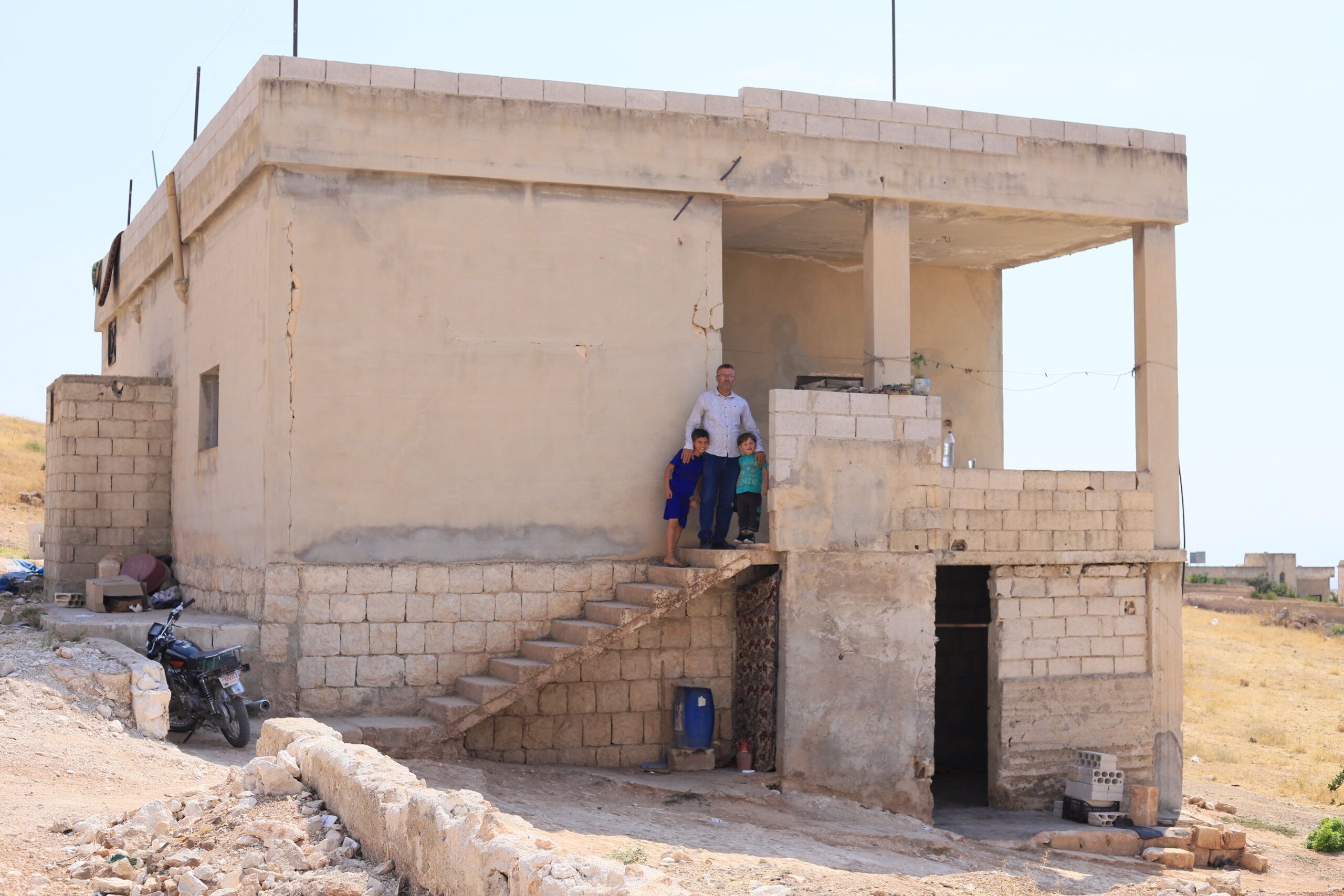
Khaled Qaddour Al-Sbeih, 41, stands with two of his six children outside their home in Rakaya Kafr Sajnahs, Idleb, after more than 13 years of displacement.
With funding from the Syria Humanitarian Fund (SHF), GOAL is working to restore water services in the area, offering families like Khaled’s hope for a more secure future.
“We had waited for this moment for years,” says Khaled, 41. “But our happiness was incomplete when we saw the destruction. It had affected everything: people, homes and trees.”
Up to US$45 a month for water
Since returning in late 2024, Khaled has taken on construction and rebuilding jobs to support his family. Yet a significant part of his limited income goes towards purchasing water.
Without a reliable water supply at home, his family depends on private deliveries costing approximately US$15 each. With two or three deliveries needed every month, Khaled can spend up to US$45 simply to meet his family’s basic water needs.
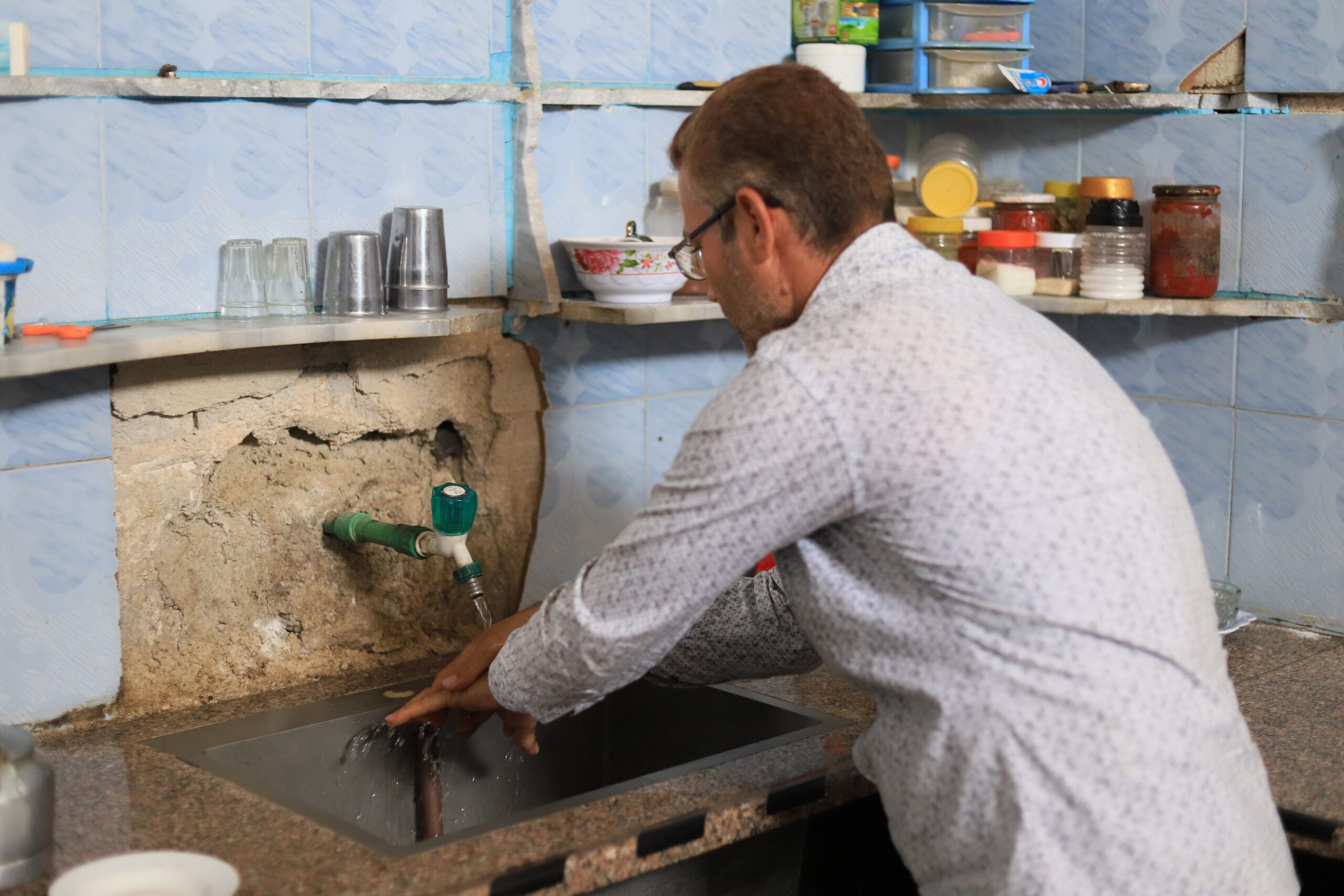
For Khaled, water means hope, and the chance to rebuild life at home.
“A person can go without many things, but not water,” he says. “Water is not only for drinking. We need it for cooking, cleaning, bathing, for everything in our lives.”
For Khaled, every dollar spent on water is money unavailable for food, medicine, his children’s education or repairs to their damaged home. Despite the expense, he remains concerned about the quality of the water his family receives.
“We don’t feel completely safe with it,” he explains. “But what can we do? It is what is available.”
Restoring water for 15,600 people
Across Syria, nearly two million internally displaced people have returned to their areas of origin since December 2024, according to UNHCR. Many are rebuilding their lives in communities where essential infrastructure and services remain severely damaged.
To help address these challenges, GOAL is rehabilitating eight water stations, including Rakaya Kafr Sajnahs Water Station and its network.
The rehabilitation includes repairing station equipment, installing a solar-powered energy system and upgrading the water network. Once completed, these improvements are expected to provide more reliable water services for approximately 15,600 people.
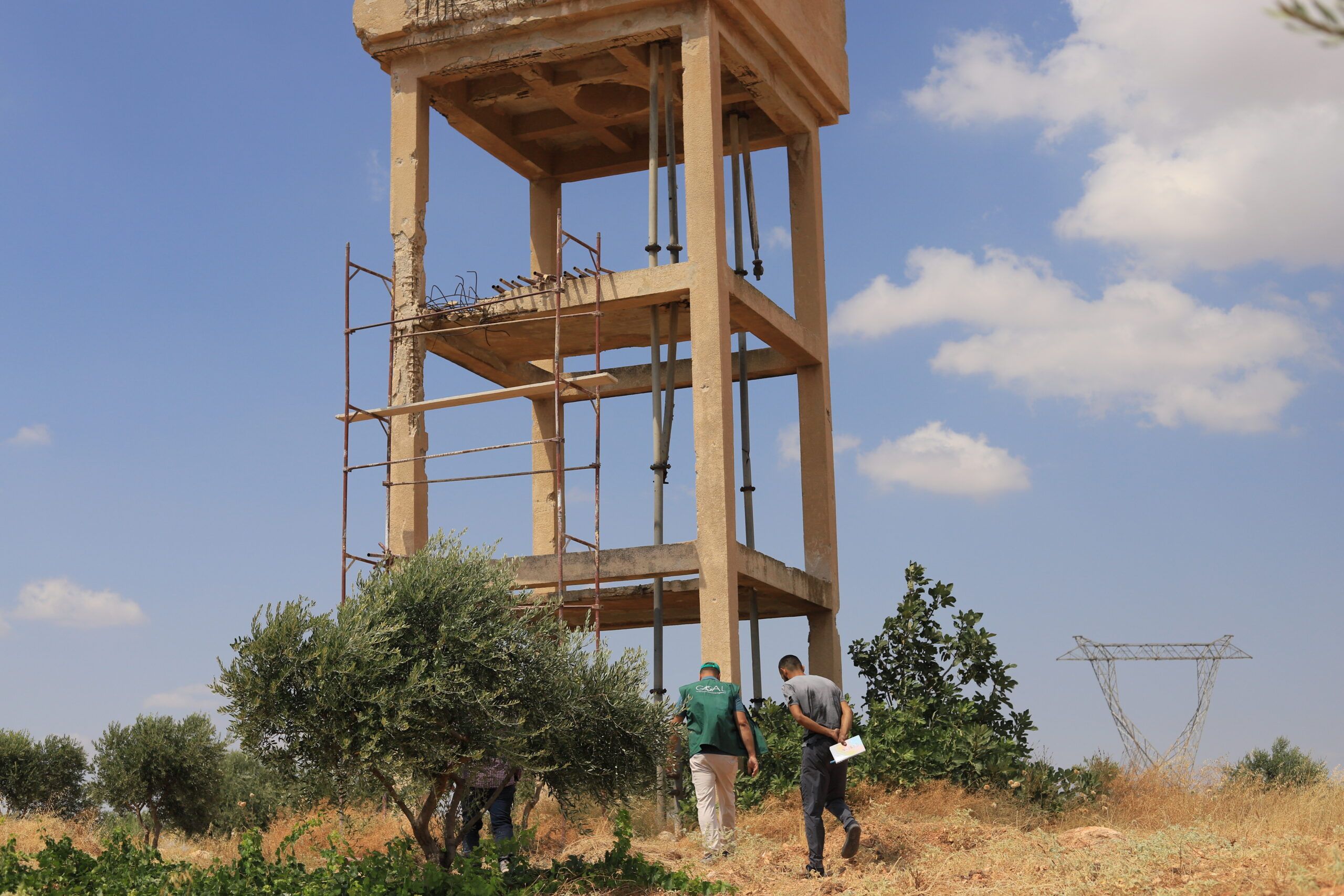
GOAL team members visit the water station in Kafr Sajnah, Idleb, where rehabilitation works are underway to help restore reliable access to water for returning families and the wider community.
For Khaled, the impact could be transformative. Reliable water access would mean fewer costly deliveries and more money available for his family’s other essential needs.
“We suffered a lot during those years,” he says. “Our dream was simply to return to our homes. Now that we have returned, we want to live here with dignity and safety.”
As winter approaches, Khaled continues repairing his home and working to provide for his children. His hope is that, one day soon, safe water will reach their doorstep.
“I just want to see water reach my home, to see my children living safely, and to see life return to our village again.”
“Where there is water, there is life.”
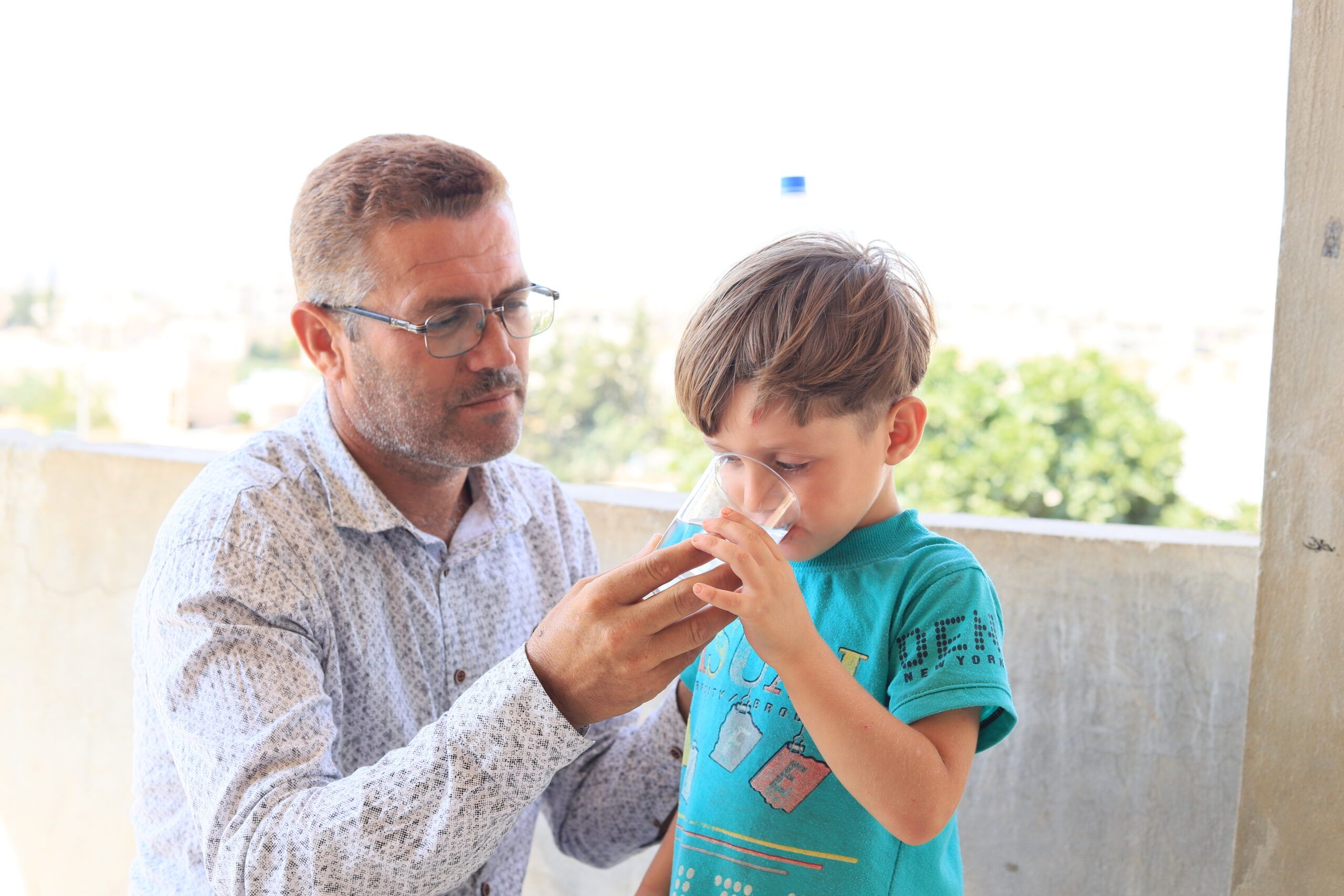
For Khaled, safe water means a healthier, more hopeful future for his children.
