
 Stories
December 1, 2025 • 5 min read
By December 2024, the Assad regime had fallen, marking a significant moment in Syria’s 14-year conflict. While this development brought cautious optimism for stability and recovery, millions of Syrians continue to face complex challenges, including displacement, damaged infrastructure, and limited access to essential services.
Displacement remains one of the most severe consequences of the crisis:
- More than 1.2 million Syrians have returned from neighbouring countries.
- Over 1.9 million internally displaced people have gone back to their home areas, including more than 1 million leaving IDP sites in the north.
- Around seven million people remain displaced inside Syria.
Through the EU-funded SANAD II programme, GOAL team is assisting thousands of households who are returning and working to re-establish themselves including families like that of Ali Azzeddeen Arnos. Cash support helps newly returned families secure essential needs, restore a sense of dignity, and rebuild stability in their daily lives.
Ali, 50, is from Baboulin village in Idlib governorate. He lives with his extended family of ten, including his married son and family. Their lives changed in April 2012, when heavy shelling, raids, and arrests forced them to flee their area.
“We left our home, our land, and a lifetime of memories… we carried only a few belongings and went searching for safety for our children,” he recalls.
The family initially fled to Nayara camp in northern Lebanon. They endured harsh winters in tents, with limited access to water and medicine, before moving into a rented house, but life remained extremely difficult, particularly as they pursued medical care for several family members.
Medical Challenges
Ali’s son, Hilal, 21, has lived with brain damage since infancy. Over time, his daughter Seham, 14, and one of his granddaughters developed similar symptoms, adding to the family’s medical and daily care responsibilities. His wife suffers from heart disease and requires ongoing medication, while Ali himself has undergone three surgeries (for gallbladder, ulcer, and appendicitis) and often experiences fatigue.
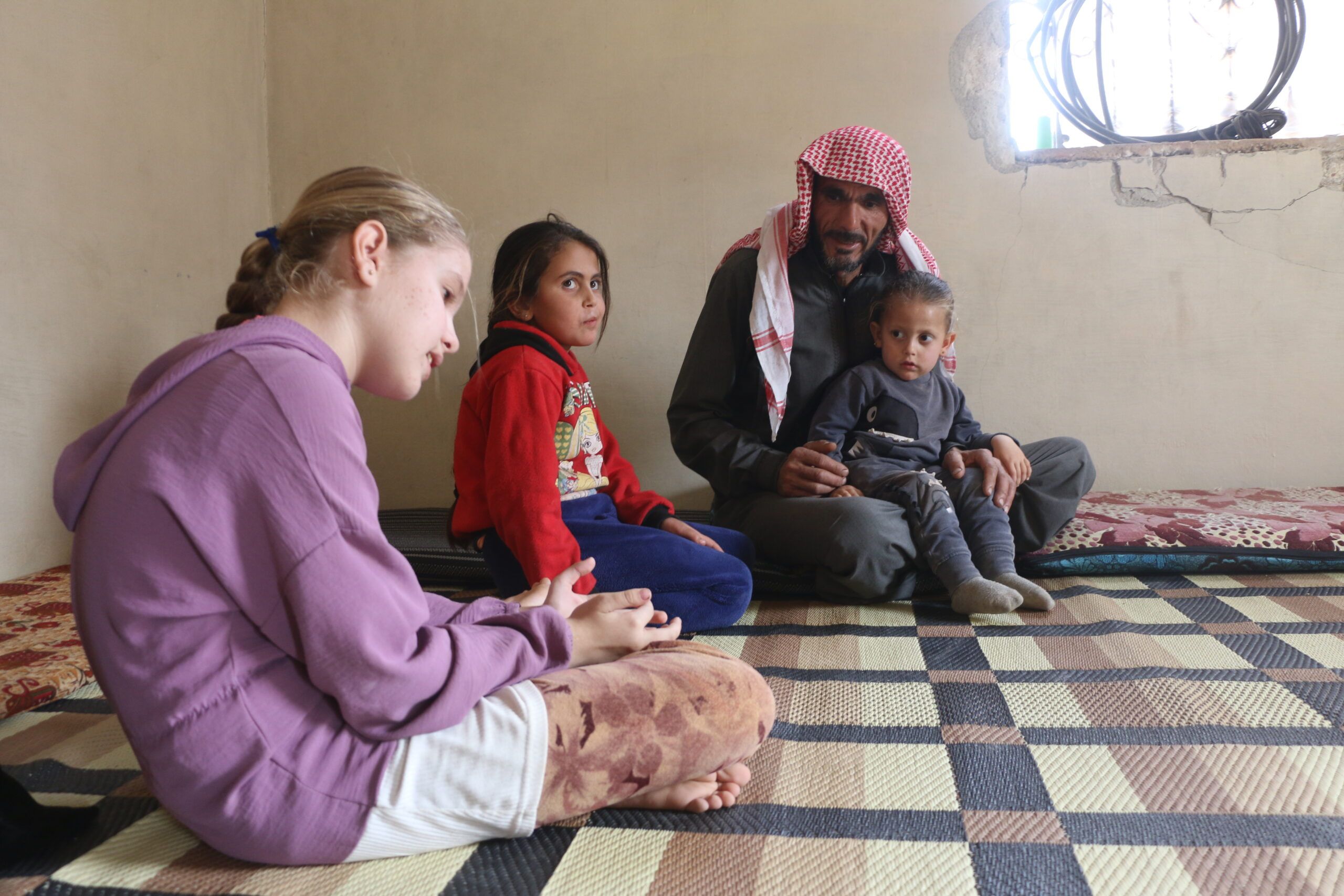
Ali spends time with his daughter Seham, 14, and his granddaughters at their home in Baboulin village, Idlib governorate, where the family is working to rebuild their lives after returning.
Returning Home
After the fall of the Assad regime, the family returned to Baboulin village in Idlib governorate which was a time full of joy but also brought nostalgia for the family. Their home area, however, has been left with damaged infrastructure: limited electricity and water access, and virtually no sewage systems. Income opportunities are scarce, and Ali’s casual labour work rarely brings in more than $4 per day. With debts reaching $6,000, even buying basic food like bread and rice has become a daily struggle.
“Sometimes the children ask for a piece of meat or sweets, and I cannot provide it,” he shares.
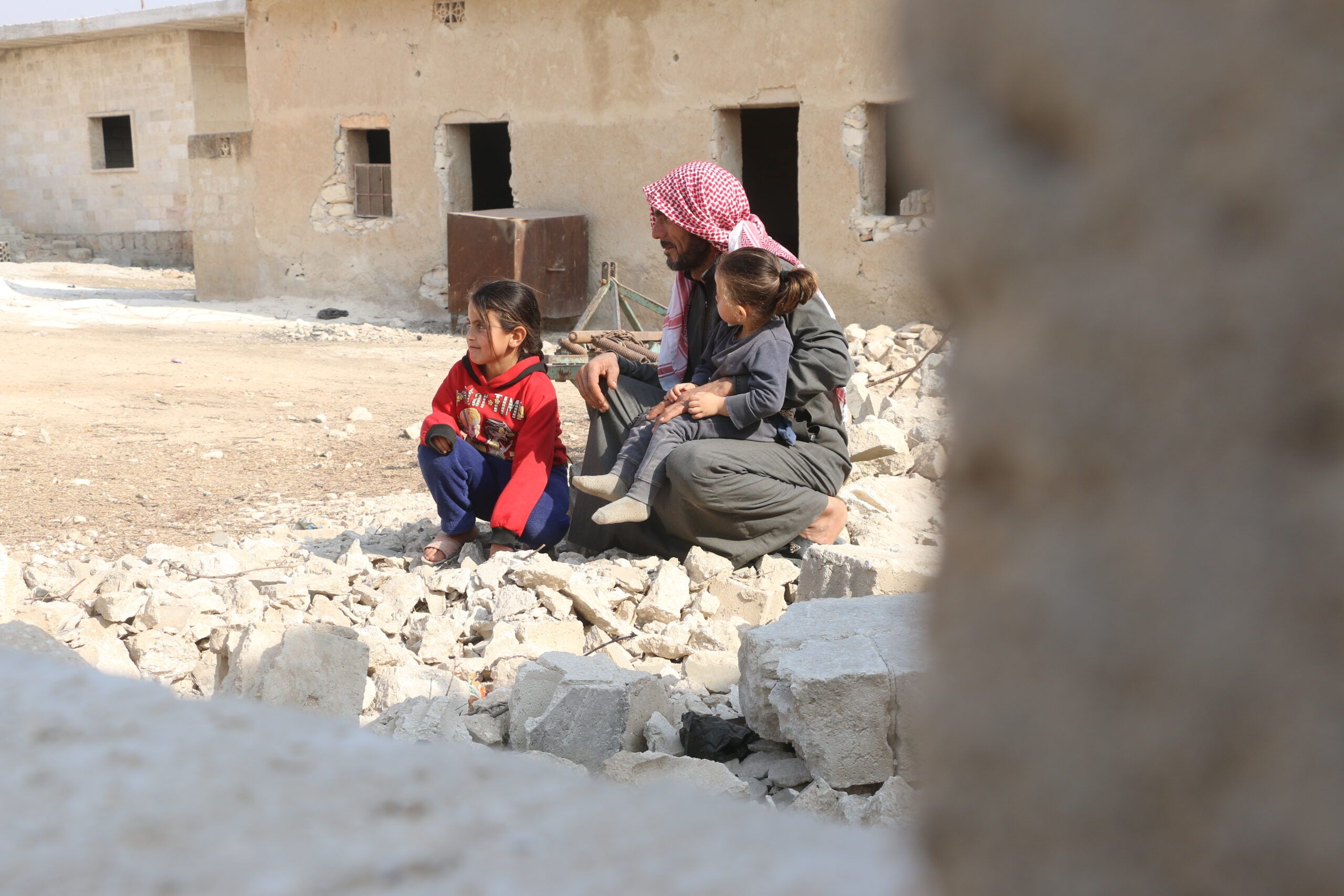
Ali and his granddaughters sit among the rubble of Baboulin village in Idlib governorate, where many homes and public structures were damaged during years of conflict. Families returning to the area continue to face challenging living conditions as they work to rebuild.
Winter makes life even harder: heating fuel and gas absorb much of their limited income, and firewood must often be bought in small quantities.
Despite these difficulties, the family holds onto moments of joy, sharing simple meals together and supporting one another through each setback.
GOAL’s Support
During an especially challenging period, the family received assistance through GOAL’s multi-purpose cash assistance (MPCA) programme, funded by the European Union. The cash provided crucial relief.
“Thank God… this money eased my burden a lot. I bought medicines for my wife, fed my children meat after a long time, and seeing their happiness was more important than anything else,” he says, smiling.

Ali, his wife, and their granddaughters enjoy a family meal in their home in Baboulin village, Idlib governorate.
Cash assistance not only supports households like theirs but also strengthens local markets, helping communities rebuild together.
GOAL teams work closely with returning families across the area. During the latest round of support, more than 2,500 verified households from Baboulin and nearby villages received cash assistance to help them meet urgent needs and remain in their communities.
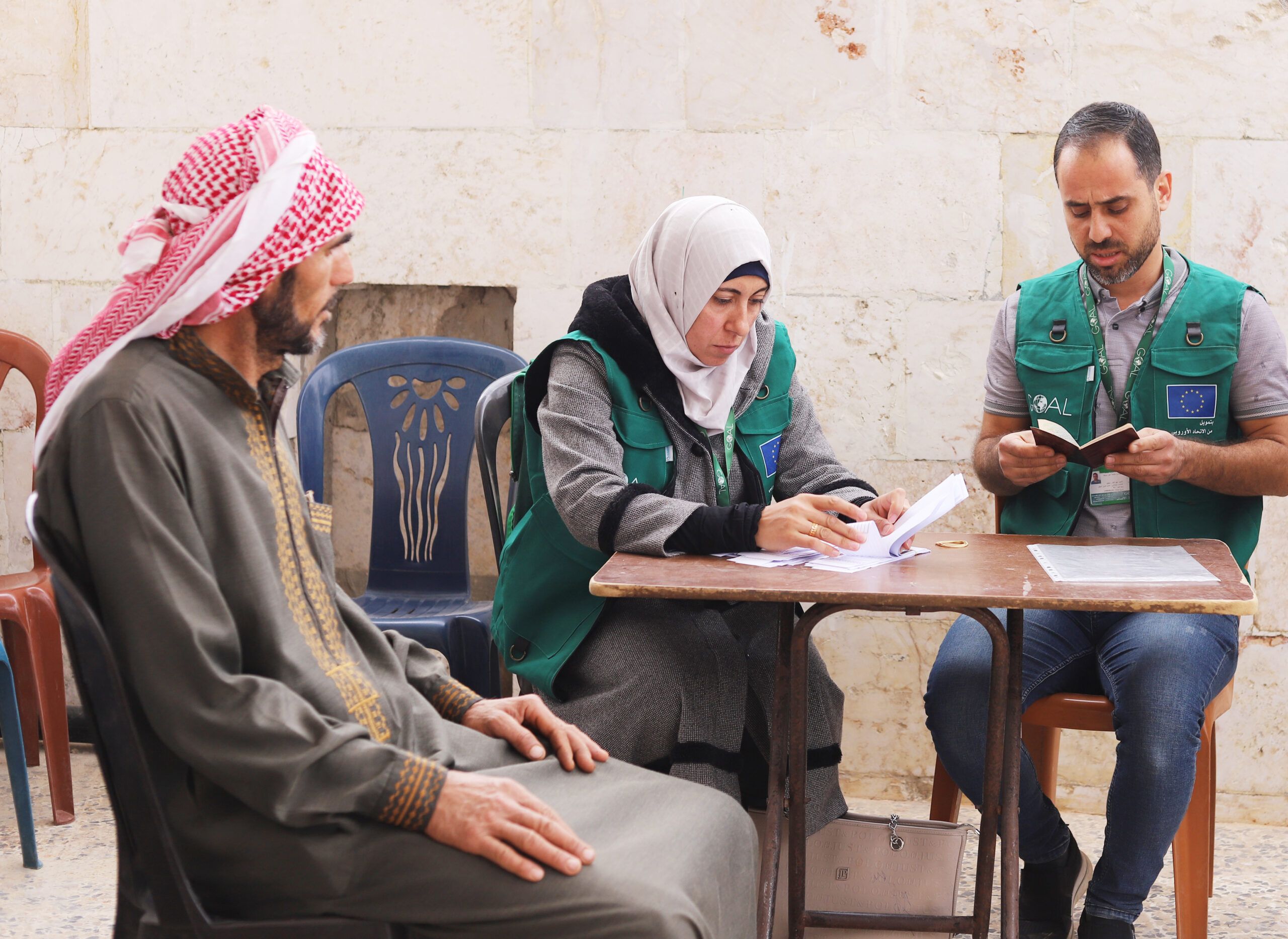
GOAL’s cash distribution team, including Lama Sanoon, Cash & Voucher Assistance Team member, speaks with Ali during a cash distribution in Baboulin village, Idlib governorate.
“These villages lack even the most basic services,” says Lama Sanoon, GOAL Syria’s Cash & Voucher Assistance Team member. “Cash assistance gives families dignity and flexibility, allowing them to prioritise food, medicine, fuel, and other essentials.”
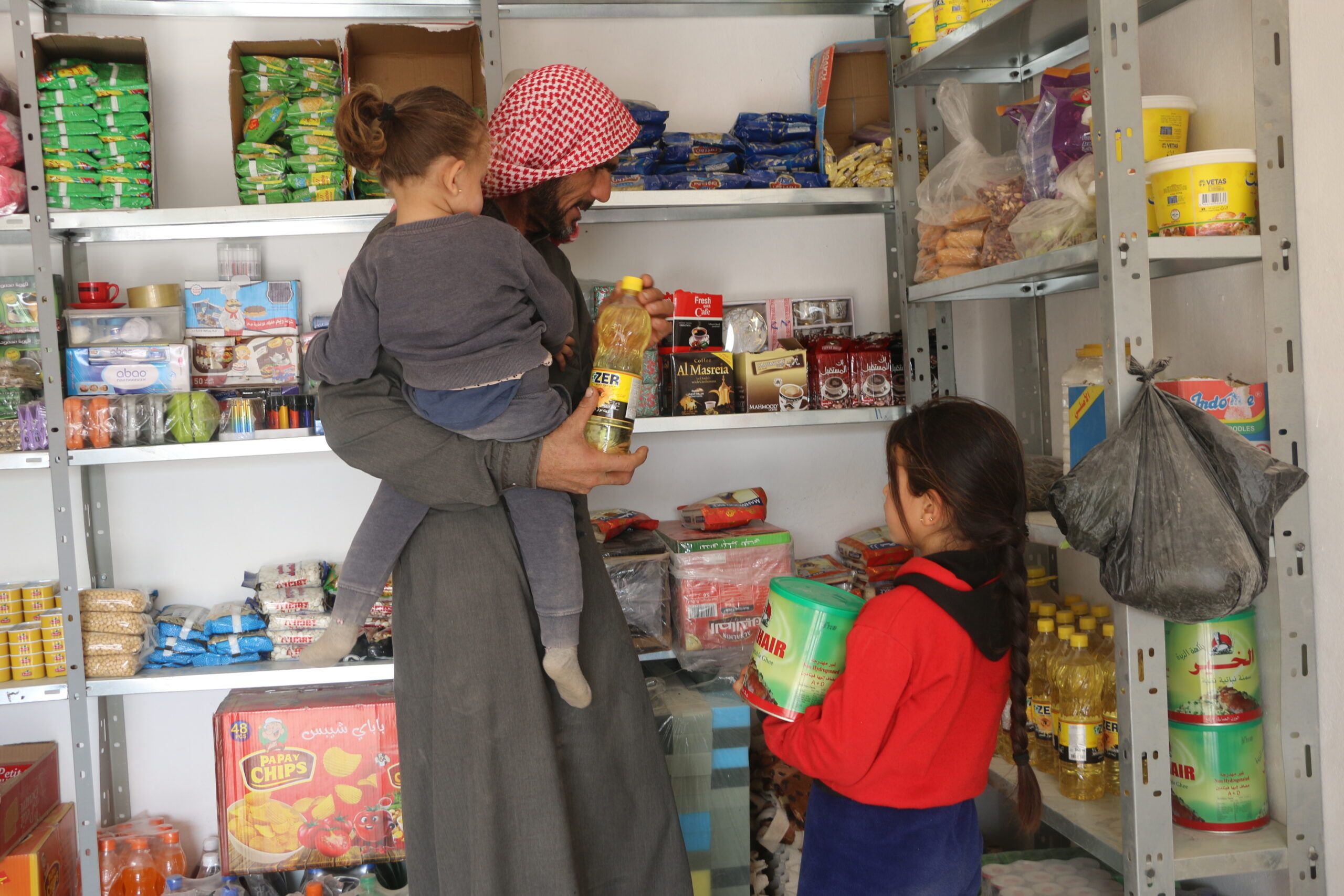
Ali, 50, and his granddaughters are shopping for essential supplies in Baboulin village, Idlib governorate, after receiving GOAL’s cash assistance.
In parallel, GOAL’s outreach teams visit communities regularly and support feedback and complaint mechanisms, including hotline channels and community consultations. This helps ensure transparency and responsiveness to the needs of the people GOAL serves.
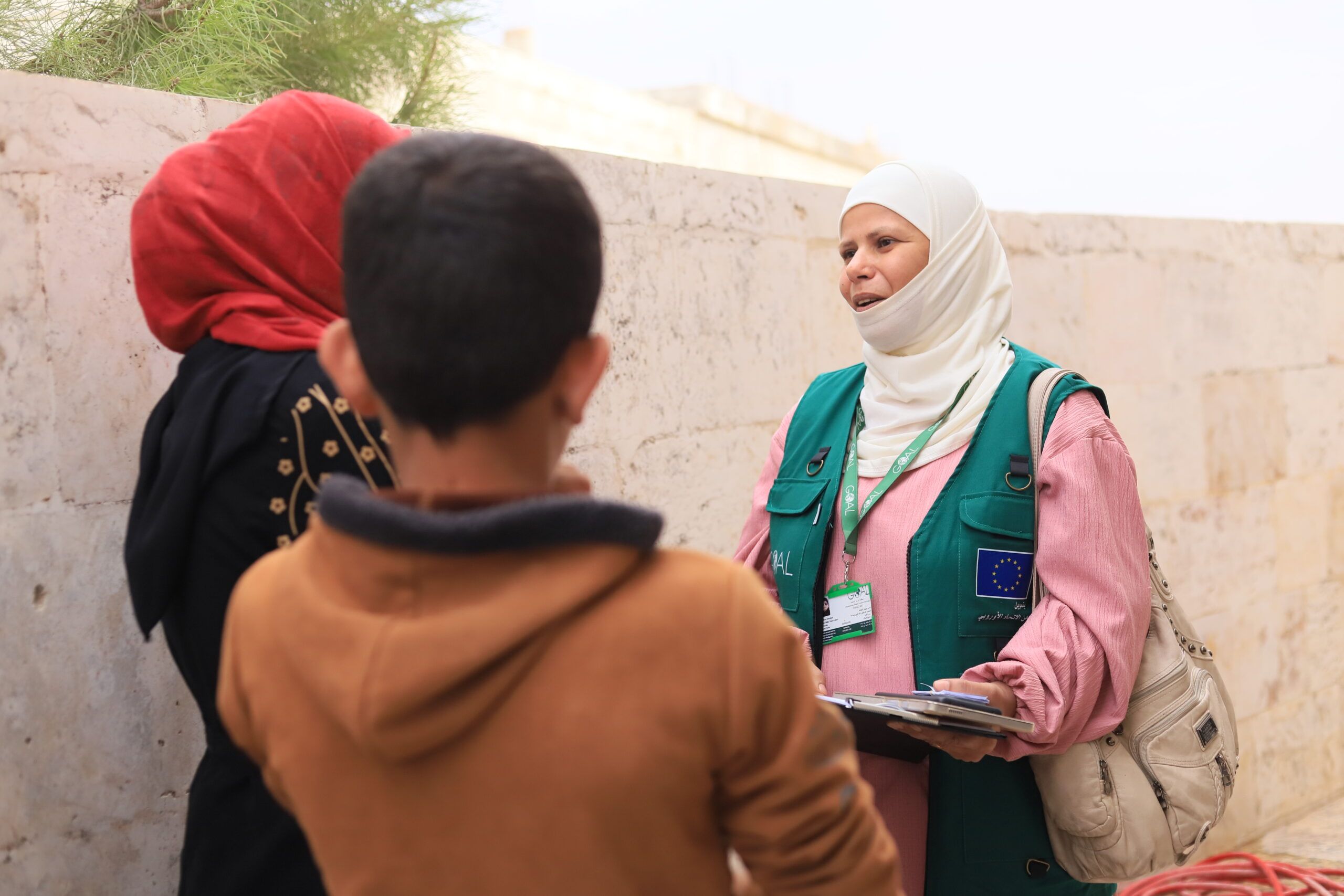
Jihan Alabdullah, GOAL Syria Accountability Outreach Team Leader, explains the feedback and complaints channels available to beneficiaries during the third round of cash distributions in Baboulin, Idlib governorate.
Despite years of suffering, the family remains hopeful. Every day, Ali looks into his children’s eyes for strength.
“My only wish is to see my children healthy… living a dignified life,” he says.
The MPCA programme is more than financial support; for returning families like his, it offers stability, dignity and a renewed sense of possibility.
About EU Civil Protection and Humanitarian Aid
The European Union and its Member States are the world’s leading donor of humanitarian aid. Relief assistance is an expression of European solidarity with people in need all around the world. It aims to save lives, prevent and alleviate human suffering, and safeguard the integrity and human dignity of populations affected by natural disasters and man-made crises.
Through its Civil Protection and Humanitarian Aid Operations department, the European Union helps millions of victims of conflict and disasters every year. With headquarters in Brussels and a global network of field offices, the European Union provides assistance to the most vulnerable people on the basis of humanitarian needs.