
 Stories
January 15, 2026 • 2 min read
The sudden withdrawal of donor support brought livestock health services to a standstill in Akobo country, revealing how fragile years of free provision had become. As access to veterinary care declined, former community-based animal health workers and newly graduated veterinarians organized themselves to respond to the growing need. With support from the THRIVE project, funded by UK Aid and implemented by a GOAL-led consortium, they began rebuilding the sector on a market-driven foundation. This transition is now helping communities embrace paid services, restoring animal health care while reinforcing long-term resilience and self-reliance.
For years, livestock owners in Akobo County relied heavily on free distributions of veterinary drugs and treatments from humanitarian agencies. While essential during periods of crisis, these handouts gradually fostered dependency and a sense of entitlement, weakening the local market for animal health services.
Community-based livestock health workers/community animal health workers (CAHWs), seconded to government structures, often struggled to operate sustainably, as livestock keepers expected services at no cost. Recent funding cuts revealed the unsustainable nature of this system, leaving the sector vulnerable and many workers unemployed.
A Sector in Crisis
“When the funding stopped, I was one of the community-based livestock health workers affected. It happened suddenly, and we weren’t sure what to do next,” reflected Kaong Bimhon, a community-based livestock worker/community animal health worker (CAHW). The sector that had long been supported by free handouts crumbled almost overnight, leaving communities with limited access to essential veterinary services delivery. After waiting for changes that never came, some of the laid-off workers and veterinary medicine graduates from the university came together to fill the growing vacuum in livestock care.
Building a Sustainable Market for Livestock Health
Recognising that livestock are the backbone of livelihoods in Akobo, the THRIVE project, generously funded by UK Aid and implemented by a GOAL-led consortium, identified the need to strengthen the livestock drug and treatment sector.
“The challenge was visible, but we couldn’t continue the free handouts,” said Reat Chuni, THRIVE Project Economic and Market System Development Officer with VSF Suisse in Akobo. “We approached the veterinarians’ group and explained that our approach focuses on building a market system, not providing giveaways, and they agreed.”
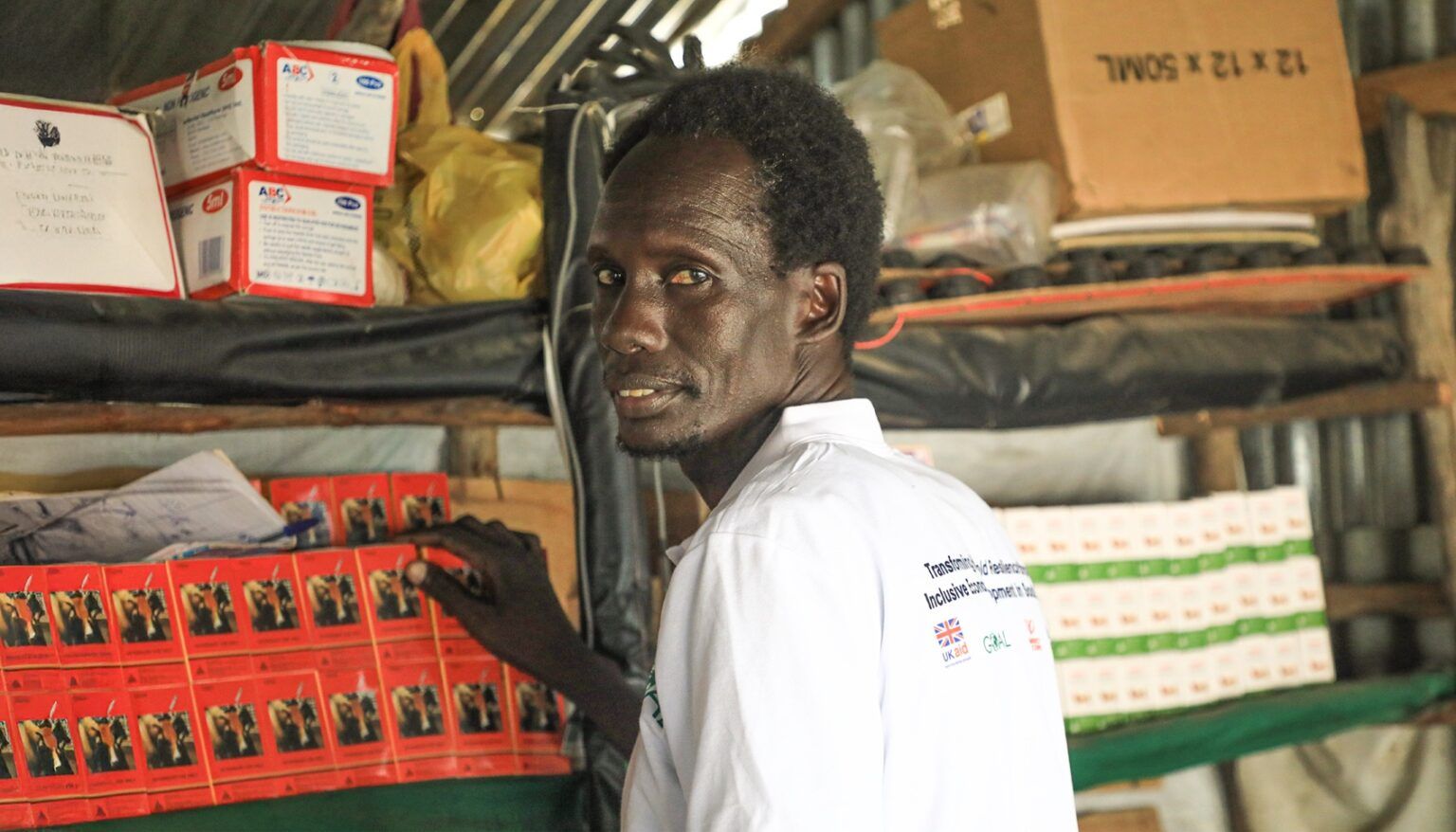
The laid-off livestock health workers and the graduates welcomed the opportunity. They identified a business location, constructed a drug store, installed shelves and storage facilities, and received a limited supply of livestock drugs from THRIVE to help jump-start their services.
“Our next challenge was to convince the local community that they needed to pay for treatments and drugs. It was an uphill battle, but over time, people began to adopt the new approach,” Kaong reflected.
Strengthening Services and Reducing Dependency
Today, the sense of entitlement created by years of free handouts is gradually shrinking, and the group of community-based workers is strengthening its services with plans to expand into neighbouring areas.
“We are grateful for UK Aid’s support; this would not have been possible without their financial backing,” Reat added. “I hope the group will expand its services and further strengthen the market system so it can continue independently after the project ends.”