

 Stories
September 30, 2026 • 3 min read
Denis and Josephine are raising two children, but disagreements over money, illness and household responsibilities were putting strain on their relationship. After joining Community Conversations, Denis began sharing cooking and childcare and accompanying Josephine to health facilities. For Josephine, the change means she no longer carries the responsibilities alone, helping create a more supportive and peaceful home.
Through Irish Aid’s Ireland’s Civil Society Partnership (ICSP) for A Better World programme, GOAL Uganda and its local partner FOKAPAWA are supporting communities to challenge harmful gender norms, improve household health and nutrition, and build more supportive relationships.
At just 26 and 22 years old, Denis and Josephine are already raising two young children; their eldest is nearly three, while the youngest is only two months old. Like many young parents, they have had to manage childcare, household responsibilities and financial pressures while still learning how to communicate and support one another.
“We would argue over small things,” Denis recalls. “Life was difficult, and we did not always know how to handle the challenges we were facing.”
The demands of caring for two small children often left Josephine exhausted. Household responsibilities were largely considered her role, while Denis focused on activities outside the home. When money was limited or one of the children became unwell, misunderstandings could quickly grow into disagreements. The tension affected more than their relationship. It made it difficult for them to plan together, share responsibilities, and provide the calm and supportive home environment their children needed.
A space for honest conversation
The turning point came when Denis and Josephine began attending Community Conversation sessions facilitated by FOKAPAWA, GOAL Uganda’s local implementing partner.
Community Conversations bring women, men, young people, caregivers and community leaders together in a safe and respectful space to discuss the challenges affecting their families. Rather than simply receiving instructions, participants reflect on their experiences, examine the social and gender norms shaping household relationships, and identify practical solutions they can apply in their daily lives.
This approach is gender-transformative because it enables communities to recognise and address harmful norms that limit women’s and children’s access to good health, adequate nutrition and meaningful participation in household decision-making.
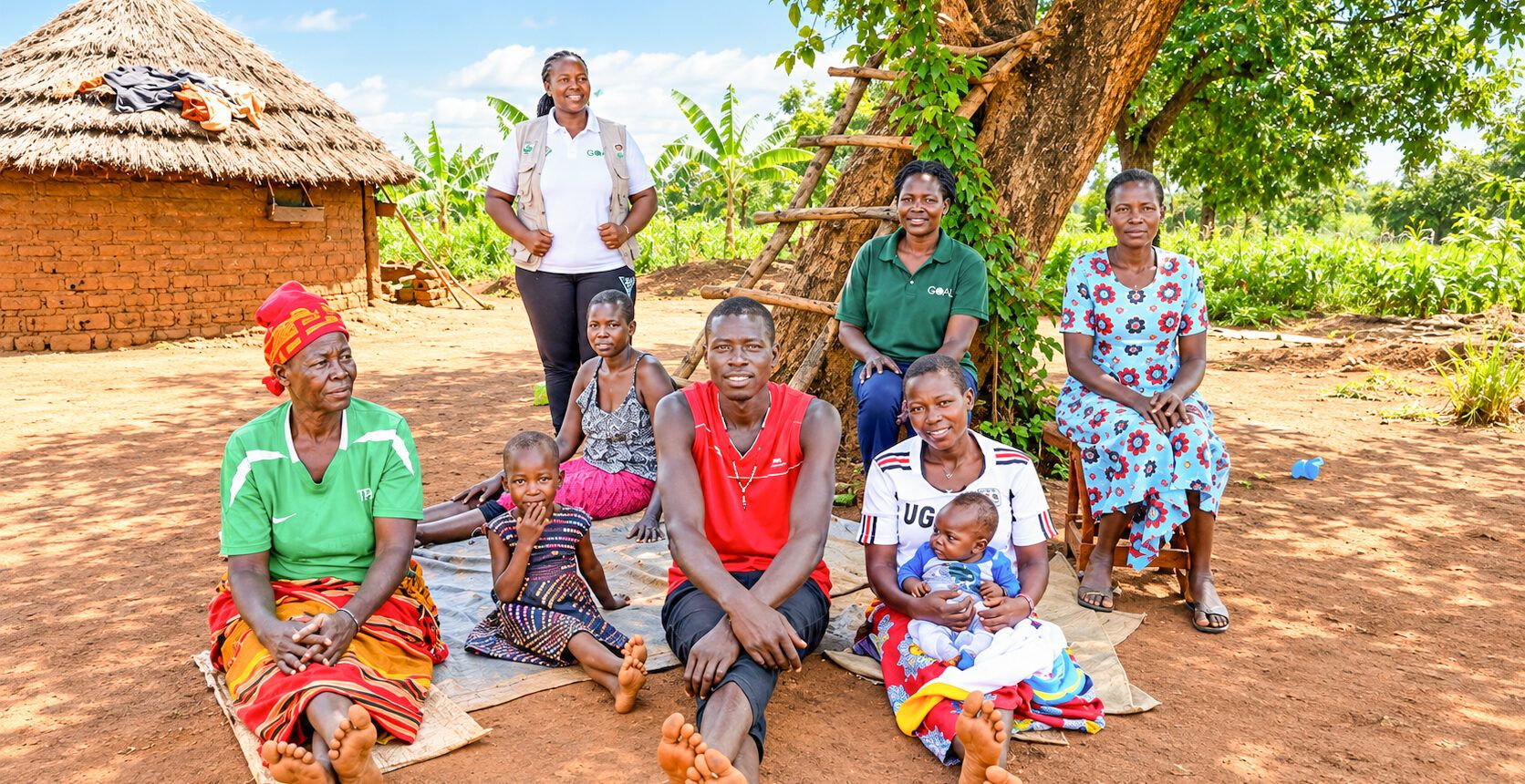
The sessions attended by Denis and Josephine covered maternal, newborn and child health, nutrition, hygiene, mental wellbeing, communication, peaceful conflict resolution, shared decision-making, and the importance of seeking healthcare promptly.
For Denis, the discussions challenged beliefs he had grown up accepting about the responsibilities of men and women. “I began to understand my wife better,” he says. “I realised that caring for the family is not only her responsibility. We have to work together.”
Change that can be seen at home
Denis began making practical changes. He now helps with cooking, bathing the children, cleaning the compound, and looking after the baby. When Josephine is unwell or needs to take one of the children to a health facility, Denis steps in to manage the home. Whenever possible, he accompanies her to appointments so that she does not have to carry the responsibility alone.
These may appear to be small actions, but for Josephine they have transformed daily life. “I no longer feel like I am carrying everything by myself,” she explains. “When I need help, Denis is there. We understand each other much better now, and our home is peaceful.”
Shared caregiving and joint decision-making are especially important during pregnancy and the first years of a child’s life. Uganda has made progress in maternal and child health, but significant challenges remain. Approximately 25 per cent of children under five are affected by stunting, while the country records about 52 deaths among children under five for every 1,000 live births. Uganda’s maternal mortality ratio is estimated at 189 deaths per 100,000 live births, and approximately 74 per cent of births are attended by a skilled health provider. These national challenges are often reflected at household level, where women continue to carry much of the caregiving burden with limited support, affecting their ability to access timely care, maintain adequate nutrition and provide optimal care for young children.
For Denis and Josephine, honest conversations have opened space to rethink, and challenge long held gender norms. Through this approach, they have learned to communicate better, share responsibilities, and face challenges together. “We still face challenges, but now we face them as a team,” Denis says.
