

 Stories
February 26, 2026 • 3 min read
The fall of the Al-Assad regime in December 2024 marked the end of a 14-year conflict, yet Syria remains one of the world’s most complex humanitarian crises. Displacement has been one of the war’s most devastating consequences: while more than 1.9 million internally displaced people (IDPs) have returned to their areas of origin, around 7 million remain displaced, many unable to return due to homes reduced to rubble, destroyed essential services, and minimal resources to rebuild their lives.
In response, GOAL, through the EU-funded SANAD II programme, has shifted focus from camp-based shelter assistance to shelter rehabilitation and community water, hygiene and sanitation (WASH) infrastructure improvements in areas of return. This support allows families like Abu Hussien’s to return safely, repair their homes with dignity, and begin restoring stability and resilience in their communities.
Abu Hussien’s Story: Return and Rehabilitation
Following the fall of the Assad regime, Abu Hussien returned to his hometown in Heish, Idlib governorate after nine years of displacement in camps, with his wife and eight children, including Marah (30), his eldest daughter, who has lived with brain damage since childhood.
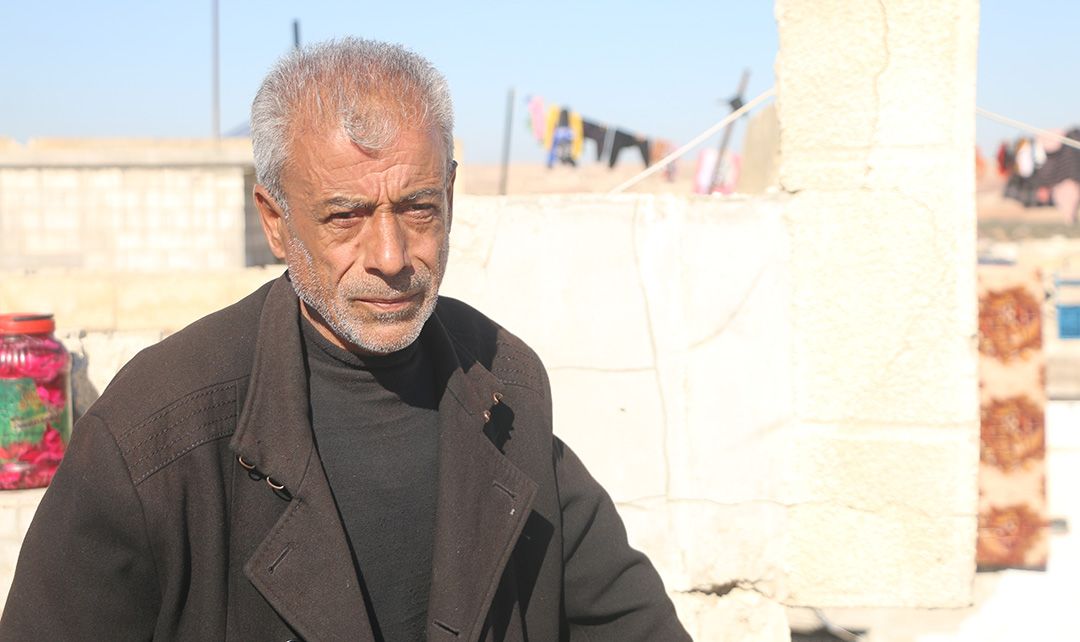
Abu Hussien observes reconstruction of his home after nine years of displacement
GOAL Rehabilitation Support
The family’s turning point came when, after completing the assessment process, they were selected to receive support through GOAL’s rehabilitation programme, implemented in coordination with the local municipal council and funded by the European Union.
According to Abdulhamid Qassoum, GOAL’s Rehabilitation Engineer, shelter rehabilitation is one of the most critical humanitarian interventions in rural Idlib governorate: “Most houses were heavily damaged during the conflict, and without rehabilitation, families would not be able to leave their tents and settle again in their original areas.”
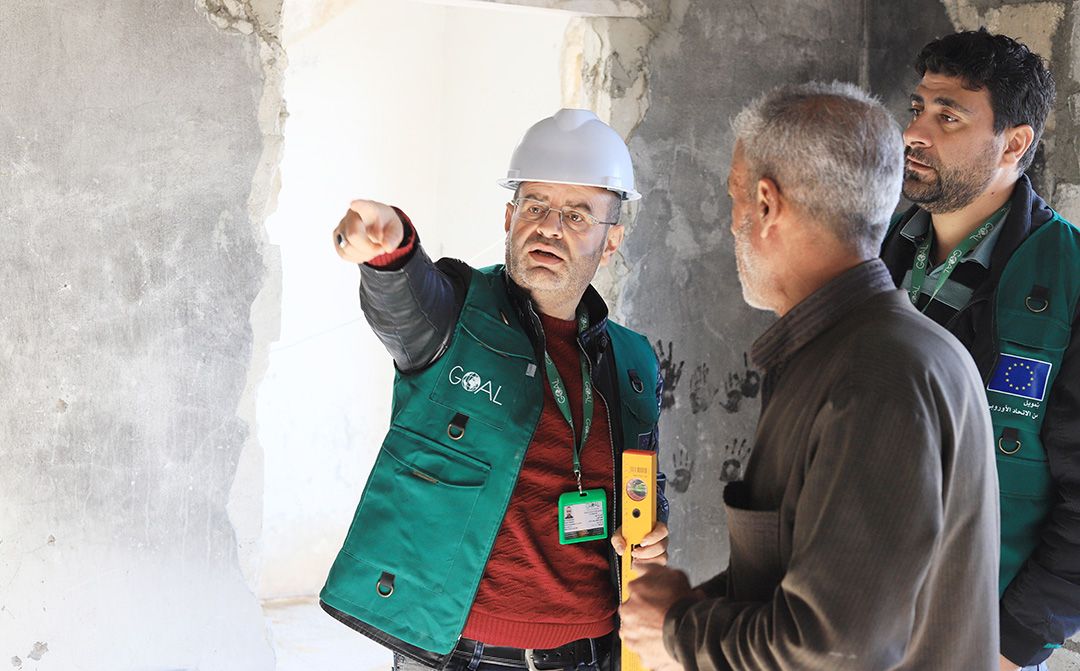
GOAL Rehabilitation Engineer Abdulhamid discusses the rehabilitation work with Abu Hussien inside his house, explaining the steps being taken to make the house safe, habitable, and resilient
In Heish town alone, 439 houses are identified for rehabilitation with moderate to heavy damage. Efforts transform unhabitable structures into safe, habitable, and resilient homes. These interventions represent a lifeline for families striving to rebuild stability and dignity in their daily lives.
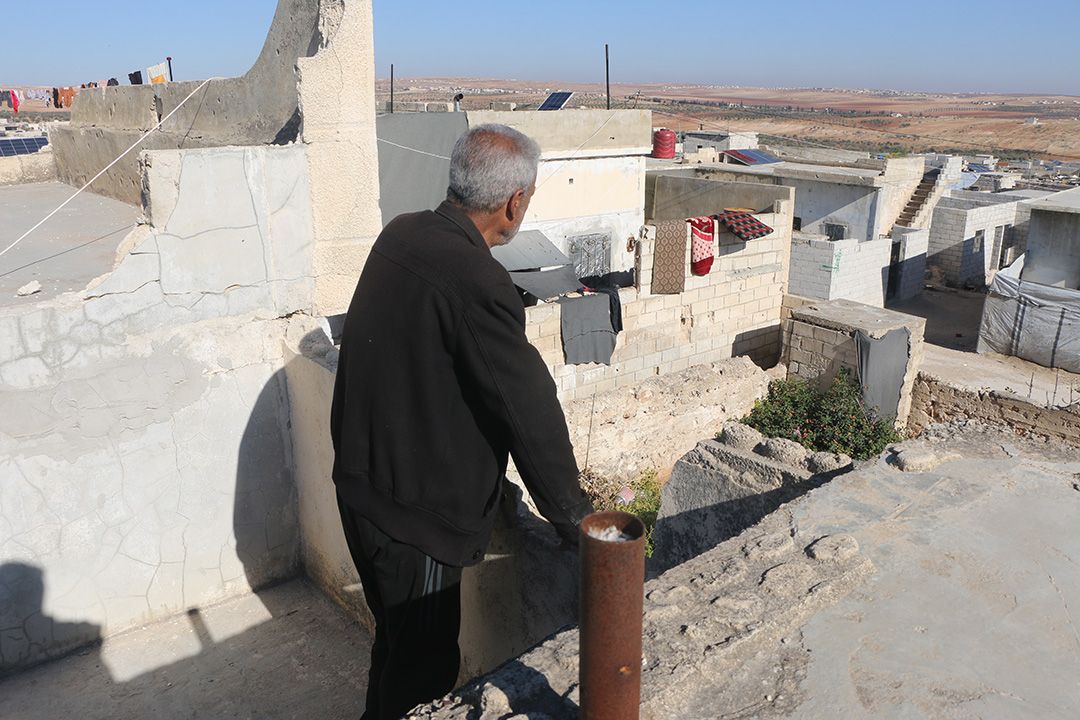
Abu Hussien, overlooks Heish town from the roof of his home, reflecting on returning to his community after years of displacement and conflict
“Rehabilitation was not just about building walls,” Abu Hussien says. “It was the return of hope and stability for all of us.” The impact extends beyond his family; secure homes have strengthened community stability, encouraged other families to return, and revived daily life after years of abandonment.
“Thank God the great fear is gone, and today we live more peacefully. I hope these humanitarian projects reach all affected villages, and that Syria will see better days, with goodness and stability for everyone,” he says.
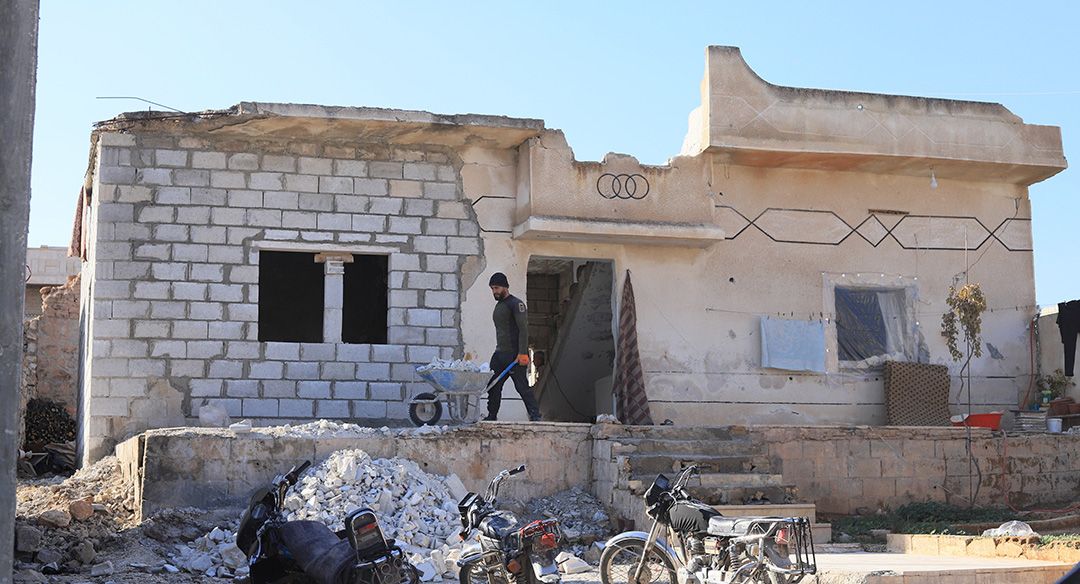
Exterior view of Abu Hussien’s house, as workers repair walls and restoring the structure to provide a safe and dignified home for the family
Ongoing needs
Despite the progress, significant challenges remain in Heish town. Schools are overcrowded, with up to 70 students per classroom, due to several schools being damaged to varying degrees. Health services are insufficient forcing residents to travel up to 20 kilometres for medical care, often without proper public transportation or paved roads. Electricity and water networks are dysfunctional, with families relying on costly water trucking to meet basic needs.
GOAL’s programmes, including support in education, healthcare, water, and electricity continue to be urgently needed to ensure that returns are sustainable and that families can rebuild their lives with dignity across towns throughout Syria.
About EU Civil Protection and Humanitarian Aid
The European Union and its Member States are the world’s leading donor of humanitarian aid. Relief assistance is an expression of European solidarity with people in need all around the world. It aims to save lives, prevent and alleviate human suffering, and safeguard the integrity and human dignity of populations affected by natural disasters and man-made crises.
Through its Civil Protection and Humanitarian Aid Operations department, the European Union helps millions of victims of conflict and disasters every year. With headquarters in Brussels and a global network of field offices, the European Union provides assistance to the most vulnerable people on the basis of humanitarian needs.