

 Stories
July 17, 2026 • 3 min read
For years, Fatmata K. Bangura and other women fish traders in Freetown’s Tambakula community struggled to protect their businesses from heavy rains, extreme heat and fish spoilage. Without a proper market structure and cold storage facilities, they spent significant amounts on ice to preserve their catch and reduce losses. With support from GOAL Sierra Leone, the new Eco Wave Fish Market Centre has provided safer working conditions, improved storage and reduced operating costs for traders. For Fatmata, the transformation means greater confidence, more savings and a stronger opportunity to support her family through her fish business.
A Daily Struggle Against Rain, Heat and Loss
Fatmata K. Bangura knows how quickly weather can turn a day of hard work into a financial loss.
For years, the widowed mother of three sold fish in Tambakula, a busy fishing community along Aberdeen Beach in Freetown, under harsh weather conditions. Like many women fish traders, she relied on umbrellas and tarpaulins that provided little protection from heavy rains or the intense coastal heat.
“When we sell in this open place, we face many challenges, especially during the rains. Rain beats us, and we only manage to use raincoats. Even though we have umbrellas, they are not enough to protect us from heavy rain,” Fatmata explains.
The dry season brought a different challenge. Under the scorching sun, traders had to spend significant amounts of money buying ice to prevent fish from spoiling.
“The dry season has its own challenges. The sun costs us. We spend so much to buy ice, and it melts quickly when the sun is hot. If we do not buy ice, our fish goes bad,” she says.
For Fatmata and other women traders, selling fish was a daily struggle against unpredictable weather, rising costs and the risk of losing their income.
A New Market Brings Protection and Opportunity
That reality began to change with the construction of the Eco Wave Fish Market Centre, supported by GOAL Sierra Leone.
When the new market opened, Fatmata and other traders moved from exposed roadside selling spaces into a safer and more organised trading environment equipped with cold storage facilities.
The market includes ten freezers, including two powered by solar energy, helping traders preserve fish for longer periods, reduce waste and manage their businesses more effectively.
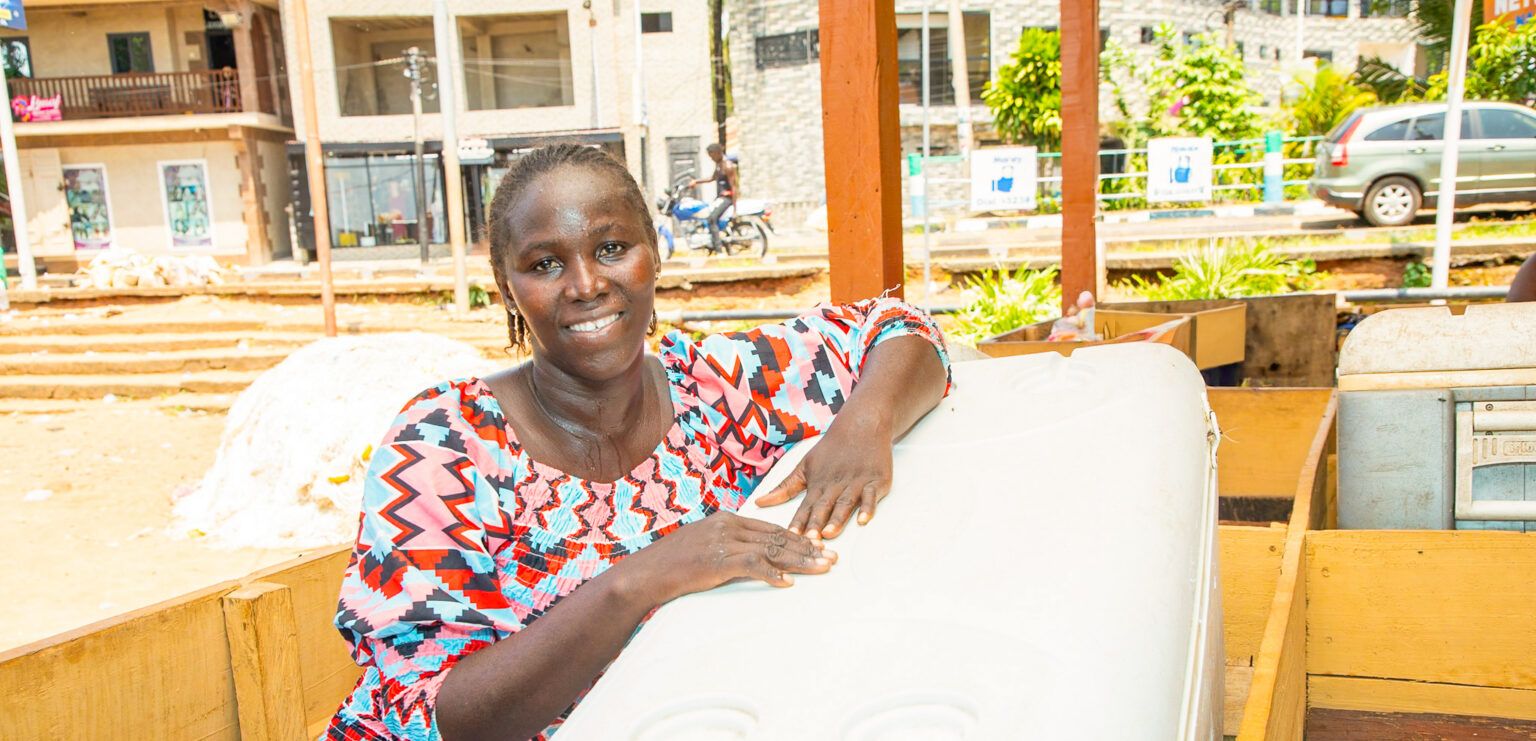
“The difference is great. We do not have to worry about the rain or the sun anymore. We are no longer at the mercy of the weather,” Fatmata says.
Before the market was built, Fatmata typically purchased four bags of ice every day to preserve her fish. Each bag cost NLe100 (approximately €4), meaning she spent around NLe400 (approximately €17) daily on ice alone.
With access to freezers, she now buys only one bag of ice for displaying fish at her stall. This has reduced her ice expenses by around 75%, allowing her to save approximately NLe7,200 (around €300) every month.
Protecting Income and Building a More Secure Future
The savings have created new possibilities for Fatmata and other women traders at Tambakula.
Money previously spent replacing melted ice can now be invested in their businesses, used to support household needs and help pay for their children’s education. Better storage also means fewer fish are lost to spoilage, allowing traders to make better decisions about when and where to sell.
Customers have also benefited from the improved environment, with a safer market space protected from rain and extreme heat.
“All that GOAL has done for us is better. I now save compared to before. Even customers are happy because they no longer have to stand under the sun or rain when they come to buy fish. It is truly a blessing,” Fatmata says.
The traders hope to see further improvements, including a fish-drying oven and a more reliable water supply. However, the new market has already transformed their daily reality.
For Fatmata, the change is simple: she no longer spends each day worrying about whether rain, heat or spoilage will take away her earnings. Instead, she can focus on growing her business and providing for the four children who depend on her.
