
 Stories
February 20, 2026 • 4 min read
Akobo’s extensive waterways create significant opportunities for fishing-based livelihoods, particularly when agriculture and local markets are disrupted. However, widowed mothers and people living with disabilities have long been excluded due to physical, social, and economic barriers, leaving many vulnerable households reliant on external assistance. The THRIVE project, generously funded by UK Aid and implemented through a GOAL-led consortium, is working to expand inclusive access to this sector, strengthening household incomes and improving food security.
Akobo County is endowed with seasonal rivers, wetlands, and floodplains that support abundant fish stocks throughout much of the year. Fishing offers a critical source of food, nutrition, and income, particularly when agriculture and markets are disrupted by conflict, flooding or economic shocks. However, access to this sector has historically been limited for vulnerable groups, including people living with disabilities and widowed mothers. Physical barriers, lack of equipment, safety concerns, and social norms have excluded many from participating, contributing to ongoing food insecurity and poverty. This exclusion not only affects individual households but also limits the ability of the wider community to fully benefit from available natural resources. Addressing these gaps is essential to ensure livelihoods programming is inclusive, sustainable and contributes to longer-term local economic resilience.
Exclusion from a Viable Livelihood
Despite the strong potential of the fishing sector in Akobo, many vulnerable community members have been unable to benefit from it. People living with disabilities and widowed mothers often face barriers that prevent their participation, even when natural resources are readily available. As a result, some of the most at-risk households remain dependent on external assistance and struggle to meet basic needs in contexts where greater inclusion in viable livelihood sectors could support increased self-reliance.
One such individual is Pidor Kueth, a father of eight and a person living with a disability. Once an active and productive member of the community, Pidor lost one of his legs during a conflict with a neighbouring community, an event that changed his life dramatically.
“Everything changed when I became disabled,” Pidor shared. “I was a provider and a proud father of five, but the incident changed everything. I felt ashamed, even to step outside my house”.
Pidor’s experience reflects a wider challenge in fragile contexts: unless livelihood programmes deliberately address barriers to participation, those most in need are often least able to benefit from economic opportunities.
Inclusive Support Through the THRIVE Project
When the THRIVE project, generously funded by UKaid and implemented through a GOAL-led consortium, began operations in Akobo County, it identified fishing as a high-potential livelihood sector. At the same time, the project recognised that people living with disabilities and widowed mothers had limited access to benefit from this opportunity. These groups were therefore deliberately prioritised as project participants to ensure that support reached those facing the greatest structural barriers to participation.
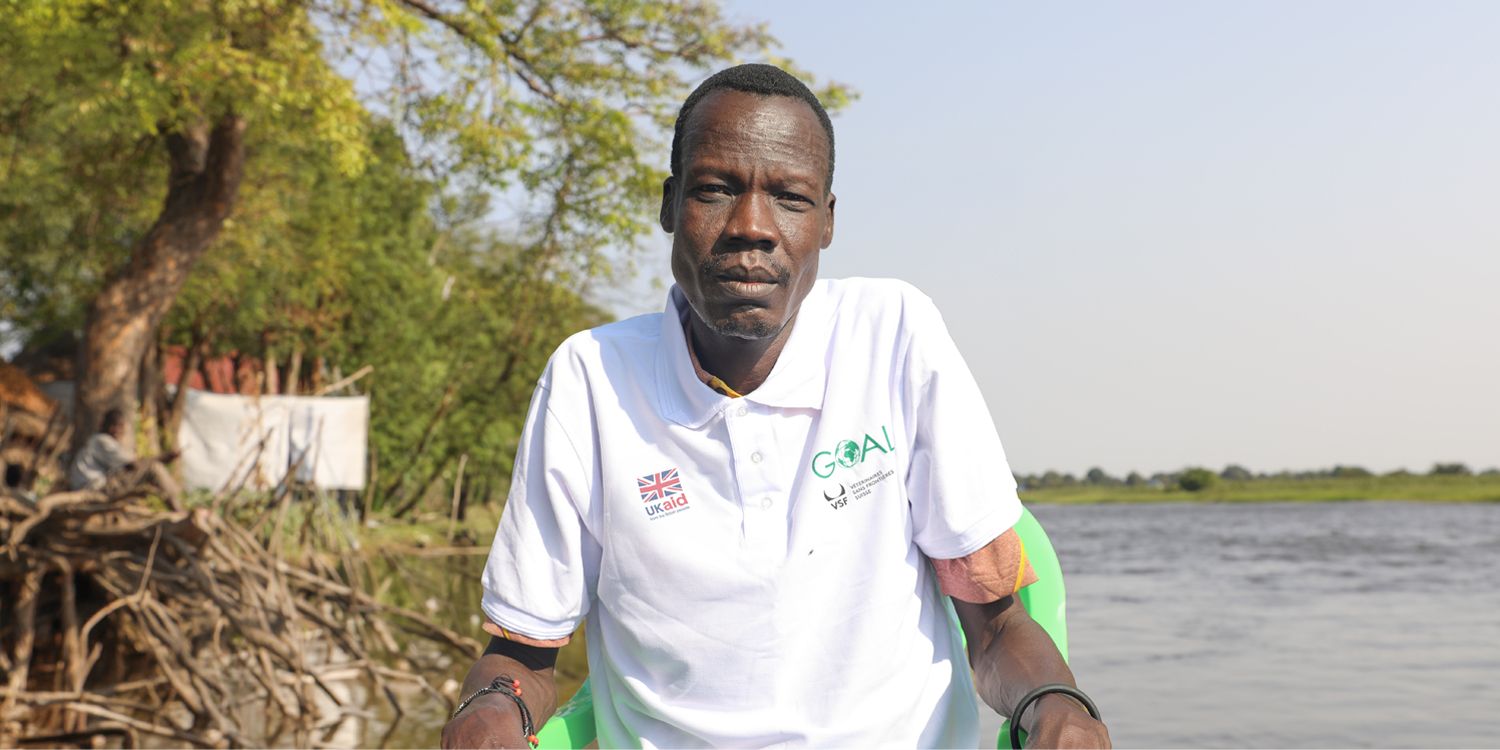
Pidor was selected alongside 30 other vulnerable community members to receive an integrated package of support that combined practical training, tools, and ongoing mentoring designed to strengthen both household resilience and participation in the local market system.
“Like in other activities, we identified most vulnerable members of the community,” explained Reat Chuni, THRIVE Project Economic and Market System Development Officer with VSF Suisse. “The support was not just about providing materials. We delivered integrated, practical training sessions that helped participants understand that disability does not determine their future. We focused on building skills, confidence, and the ability to manage resources in ways that support both business growth and household needs”.
Restored Confidence and Growing Businesses
With new skills, equipment, and continued guidance, the group began working collectively within the fish value chain. In a relatively short time, they showed tangible progress, generating income and improving households’ food security stability while also contributing to the strengthening of the local fish market in Akobo.
“It still feels unbelievable to me,” Pidor reflected. “Once I started participating in the group, the shame, anger, and darkness began to fade. When I was able to provide it again, my confidence and pride were restored. I am grateful for the support and empowerment provided by VSF, GOAL, and other partners. But there are many people like us in the community who still need support. I urge all partners to continue this assistance until we are fully able to sustain our business and strengthen the sector as a whole”.
Building on their success in fishing and fish distribution, the group is now planning to expand into complementary activities, including opening a small food restaurant and other related businesses in Akobo. These next steps aim to further strengthen livelihoods and contribute to local economic resilience, highlighting the importance of sustained investment in inclusive market systems in fragile settings.
Read more about the THRIVE project