

 Stories
May 27, 2026 • 5 min read
Far out on the western edge of the island of Hispaniola, where Haiti extends a hopeful toe into the Caribbean, you’ll find the commune of Bon Bon. Those who call this home mostly rely on the sea for their livelihood – be it from fishing or the income that accompanies weekend visitors to the town’s sandy horseshoe beach and tropical turquoise waters. Making ends meet here can be a real struggle. But there is another source of revenue, and it’s growing in potential.
In the hills a few miles outside of Bon Bon, along the only road in and out of town, you’ll find the home of Ilarion Celestin. His quiet and unassuming demeanor conceals an inner passion – one that’s been a hundred years in the making and has defined his life. All you need to do is ask him about bees.
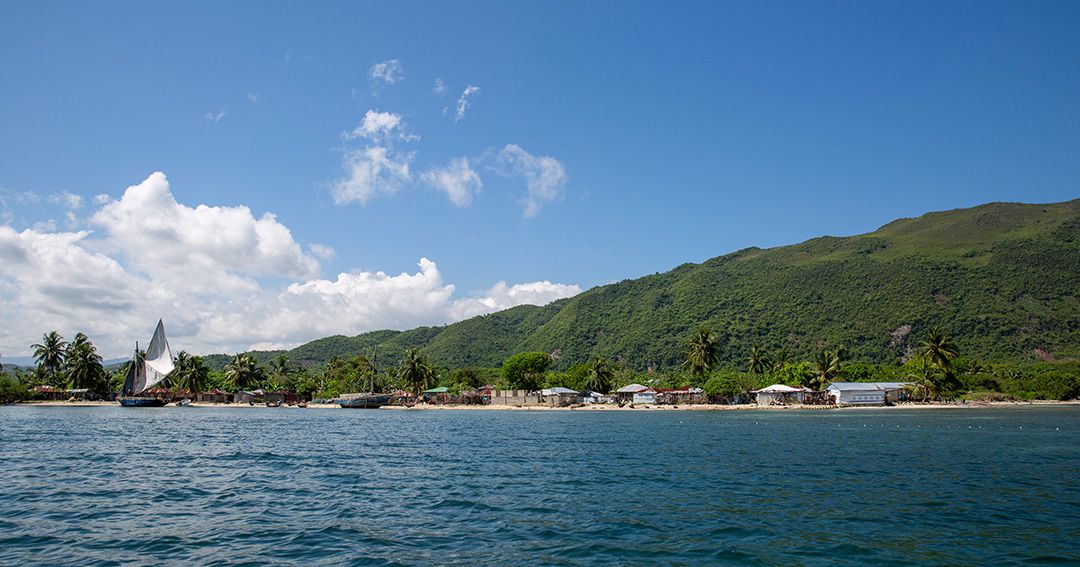
The commune of Bon Bon is surrounded by forested hills, ideal for apiculture.
“I have taken up the mantle as the third generation of my family in apiculture,” he says. “My father Dieudonne was a beekeeper, and so was his father before him, Destina. This is my profession – I’ve been doing it for 30 years, and I love it.”
A Family Legacy of Beekeeping
In the shade of the breadfruit, mango, and Haitian oak trees that cling to the rocky hillside at the back of the Celestin homestead, you’ll find his beloved swarms. They inhabit a mixed collection of traditional and modern hives, the latter built with milled timber and designed for access and efficiency, the former made simply from hollowed logs. There are about 40 in all, accommodating as many as a million bees in peak season. They forage among the undergrowth over a 2km radius, collecting nectar from the flowers of moringa, campeche, la belle mexicaine, and other assorted plants.
“Apiculture has allowed me to take care of my family and send my children to school and university. It is my passion, my treasure. And I am working to pass it on, to leave a legacy for future generations,” explains Iliaron.
Training the Next Generation of Beekeepers
And that’s where GOAL comes in. Partnering with local organisation, Ayiti Apik, the Jérémie-based team has been supporting a programme of apiculture training, environmental protection, and business development. “We know there’s real potential for income generation here,” according to GOAL’s Pierre Sansariq Lutherking. “The terrain and the flora are ideal for bees. What we need is to spread the knowledge, and support those who want to get involved.”
Watching Iliaron host a training session for budding beekeepers on his back porch, it’s clear he’s in his element. You can almost feel the passion radiating from him as he passes on three generations’ worth of wisdom to the assembled trainees. And then comes the best part. A fire is set to feed the smoker, the class dons protective gear, and they make their way into the Jaden Bwa – the forest garden that hosts the Celestin apiary.
Hives are opened, calming smoke dispensed, and each swarm inspected, analysed, and discussed at length. Much of apiculture is about observation. Iliaron spends hours here each day, simply watching, reflecting, and learning. If zen is your thing, this might just be the greatest job of all.
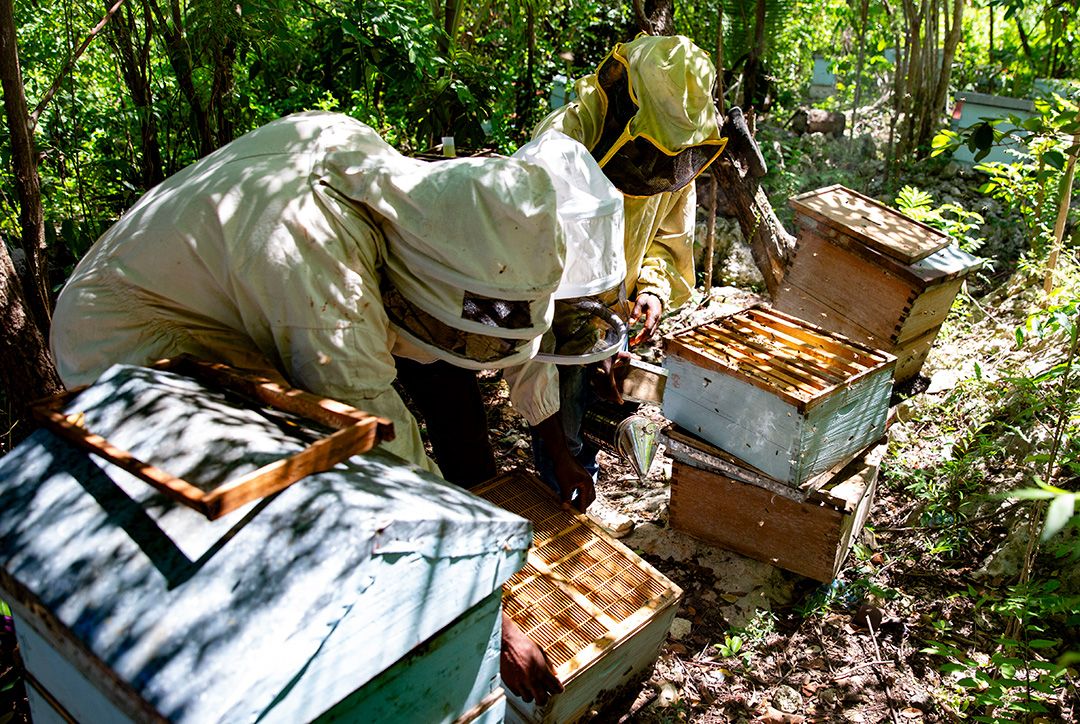
Iliarion, his son Manlay, and a trainee apiculturalist inspect a hive.
However, beekeeping is not all a bed of roses, or even acacias. These little buzzers live life on the edge – extreme heat, heavy rain, pests, and disease are among the factors that can decimate a bee population. And one of the biggest threats – very real in this part of the world – is deforestation. “My most important mission is to protect the forests,” says Iliaron. “I visit my neighbors, who cut down trees to make charcoal, and speak to them about the importance of the trees. I go to the schools and educate children on the topic, so they will convince their parents to conserve the natural environment. Trees are the key to everything.”
A New Generation Steps Forward
Among today’s group of trainees is the next member of the Celestin beekeeping dynasty – young Manlay, a recent agronomy graduate. And he has high ambitions to bring apiculture in this part of Haiti to the next level. “I want to take all of the accumulated knowledge and build on it. We can modernise production techniques and transform the business aspect of apiculture. We want to establish a cooperative and I see this place becoming a reference point for the future of beekeeping in Haiti,” he says.
GOAL’s Lutherking agrees that the potential is there. “We are supporting these communities with training, equipment, and business insights. We’re also helping to develop synergies with those involved in the conservation of the mangroves along the coast. Already there are hives located within the mangroves, delivering positive outcomes for both the environment and the incomes of local fishing families.”
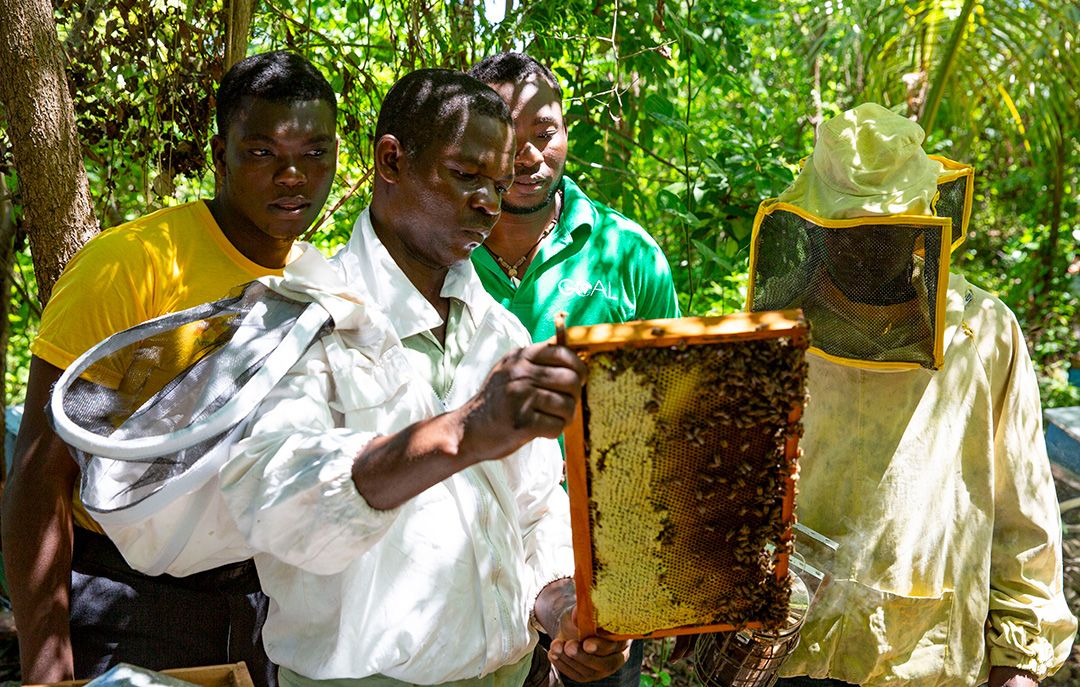
GOAL’s Pierre Sansariq Lutherking looks in on an apiculture training session
As we go to take our leave of the Celestin bee sanctuary, Iliaron produces a honeycomb, cuts off an oozing amber corner, and invites us to sample the fruits of his and his tiny friends’ shared labor. If you haven’t slurped freshly harvested honey from a wax comb under the shade of a mango tree on the slopes of a Caribbean island, you should definitely put it on the wish list. We know a man who’d be happy to help.
Supporting Sustainable Livelihoods in Haiti
GOAL, with generous support from Irish Aid through Ireland’s Civil Society Partnership (ICSP), is working with coastal rural communities and local organizations in Haiti to develop sustainable livelihood opportunities while helping to preserve the natural environment.
