

 Stories
November 27, 2025 • 4 min read
Livestock production in Ethiopia is significantly constrained by limited access to quality and affordable animal feed, especially in drought-affected areas like East Hararghe. Through the US Government–funded RFSA/Ifaa program, GOAL Ethiopia partnered with a local entrepreneur to establish a small-scale feed processing facility that improves feed availability for smallholder farmers. The partnership supported machinery provision, technical training, and market linkages that enabled the business to scale production and reach more farmers. Today, the enterprise is supplying diverse livestock feed products, reducing input shortages, and strengthening household resilience across multiple woredas.
The RFSA/Ifaa program, funded by the United States Government and implemented by a consortium of partners, aims to improve food security and resilience in vulnerable communities. GOAL Ethiopia leads interventions in the livestock value chain, focusing on chicken and goat production and market systems development. By engaging the private sector and promoting locally driven solutions, the program works to increase farmers’ access to essential inputs and services.
Limited Access to Affordable Livestock Feed
Ethiopia’s livestock sector is central to employment, export earnings, and household food security. Yet farmers face recurring shortages of quality feed, which can account for up to 70% of production costs. These challenges are especially acute in the drought-prone areas of East Hararghe, where smallholder farmers rely heavily on livestock but struggle to access commercial feed.
A 2018 FAO assessment noted that while 32 private feed processors operate nationally, their distribution is uneven. Many administrative zones lack any commercial feed enterprise, including East Hararghe. This gap significantly limits production, market participation, and resilience for rural households.
To address this, the RFSA/Ifaa program launched a targeted intervention to stimulate local feed production through private sector engagement. The initiative supports the chicken and goat value chains in nine woredas, aiming to expand the availability, accessibility, and affordability of essential inputs.
Partnering with Local Enterprise for Feed Production
Babile Woreda was identified as a strategic location for a small-scale feed processing facility due to its access to infrastructure and raw materials. A public call attracted local entrepreneurs, and GOAL Ethiopia selected a partner based on technical capacity and willingness to co-invest. GOAL provided essential machinery, including a chopper, mixer, and miller, along with basic tools to initiate production.
However, delays in securing three-phase electric power prevented the first partnership from progressing. After reclaiming the equipment, GOAL reopened the call for expressions of interest and used FM radio to reach a wider pool of candidates.
This time, Mr Dereje Mulugeta, a 45-year-old entrepreneur with more than seventeen years of experience in poultry farming, has now been selected. He has been producing chicken feed using single-phase machines and demonstrated strong technical knowledge and readiness to invest.
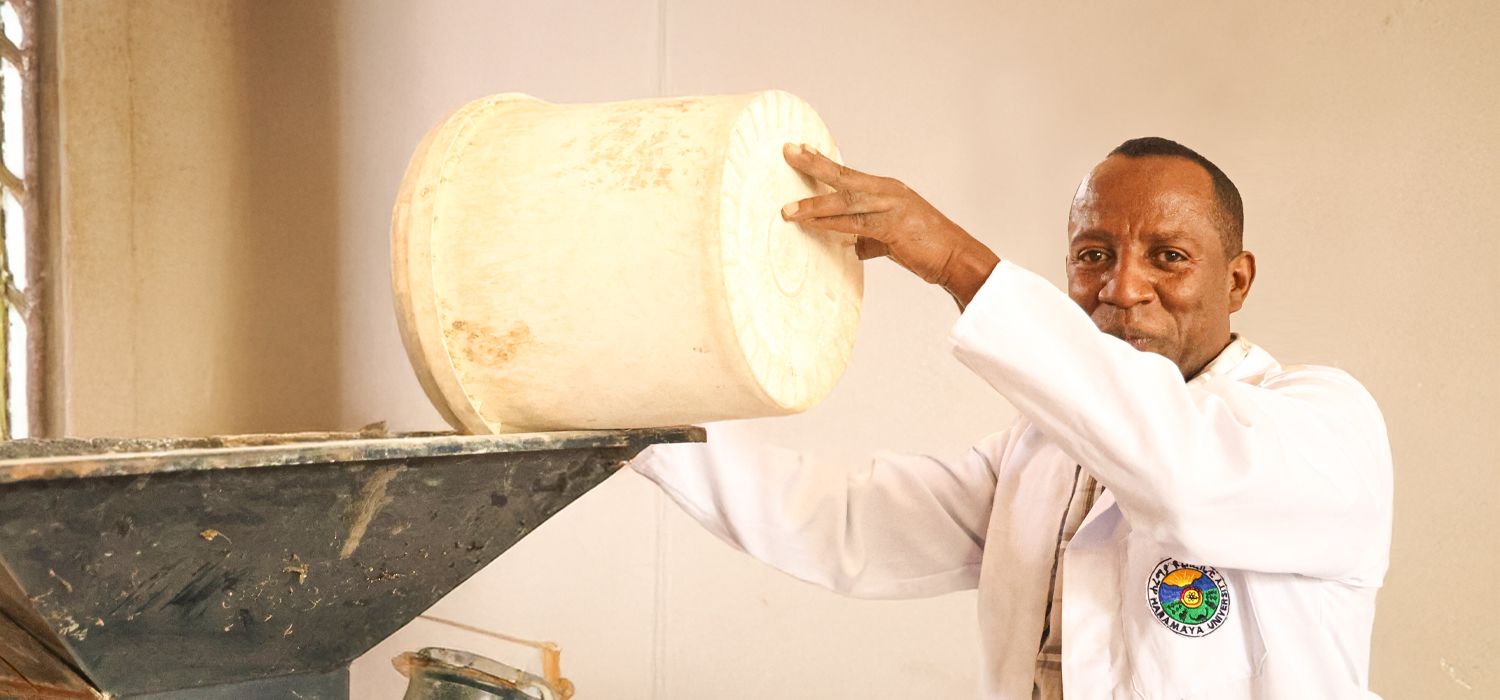
To ensure sustainable operations, GOAL collaborated with Selam Village to provide maintenance and safety training, enabling Mr Dereje and his staff to operate the machinery independently. Additional support from Haramaya University introduced training on feed formulation and handling, strengthening the quality and consistency of production.
Improved Feed Access and Stronger Local Markets
Today, Mr Dereje’s facility is operating at full capacity, producing a diverse range of high-quality animal feeds, including chicken starter and grower feeds, as well as goat and cattle feeds. Through GOAL’s support in organising business-to-business workshops, he has successfully established a robust distribution network comprising 30 agro-dealers and 22-day-old chick growers across RFSA-supported woredas. This network has significantly reduced distance and cost barriers for smallholder farmers, making access to essential inputs more affordable and convenient.
One notable innovation is his local production of Dicalcium Phosphate (DCP) using bones sourced from abattoirs. This reduces reliance on imported mineral supplements and contributes to a more self-sustaining livestock sector.
As part of its support, GOAL Ethiopia purchased 300 quintals of pullet grower feed through a cost-sharing arrangement, enabling 5,000 Productive Safety Net Programme participants to access discounted feed using a voucher system. The enterprise went on to produce and supply an additional 100 quintals of cattle feed and 300 quintals of DCP.
The private partner has received full accreditation and competence certificates from the Ethiopian Agriculture Authority (EAA), officially recognising its production standards, quality control, and technical capacity in compliance with EAA’s stringent requirements.
To date, the business has generated more than 10 million ETB in revenue and significantly improved feed availability across the zone. Reflecting on the partnership, Mr Dereje shared:
“There was a time when the lack of market opportunities shattered my business, and hope began to slip from my hands. But through my partnership with GOAL Ethiopia, I found a new beginning. Producing animal feed for farmers in need not only restored my livelihood, but it also brought back my smile and renewed my hope.”
The RFSA/Ifaa program continues to strengthen sustainable market systems through public–private partnerships. By supporting local enterprises and expanding access to essential inputs, the program is helping communities build more resilient livelihoods amid ongoing shocks.
