

 Stories
July 1, 2026 • 3 min read
In Bakelo displaced people camp many wanted more than humanitarian assistance, they wanted the opportunity to rebuild their lives with dignity. Through USG supported project and a partnership led by GOAL, unused land was transformed into productive vegetable gardens where displaced households now grow food, earn income, and regain a sense of purpose.
Debre Birhan, located in Ethiopia’s Amhara Region, has hosted thousands of internally displaced people since the northern conflict began in 2020 Many families arrived after losing their homes, farms, and livelihoods and continue to face uncertainty and limited economic opportunities.
Seeking More Than Aid
The displaced population placed significant pressure on local services and resources. Since the beginning of the crisis, GOAL has supported displaced communities through health and nutrition services, cash assistance, non-food items, psychosocial support, and other humanitarian interventions. Despite this support, many displaced people wanted more than emergency assistance.
“After we come here and start living in the shelter, we are not doing anything. We were farmers producing surplus harvests back home. Some of us were business owners and engaged in different activities that supported our lives. But here we were sitting idle, doing nothing but waiting for others’ generosity” says Aklilu Getachew, a representative of the displaced community in Bakelo camp.
Turning Unused Land into Opportunity
Near the Bakelo displacement site, a 6.4-hectare plot of land owned by a local polytechnic college remained unused. Working through a platform that brought together the city administration, sector offices (such as health, water, and women’s affairs), higher education institutions, and the private sector, GOAL secured access to five hectares of the land for displaced families.
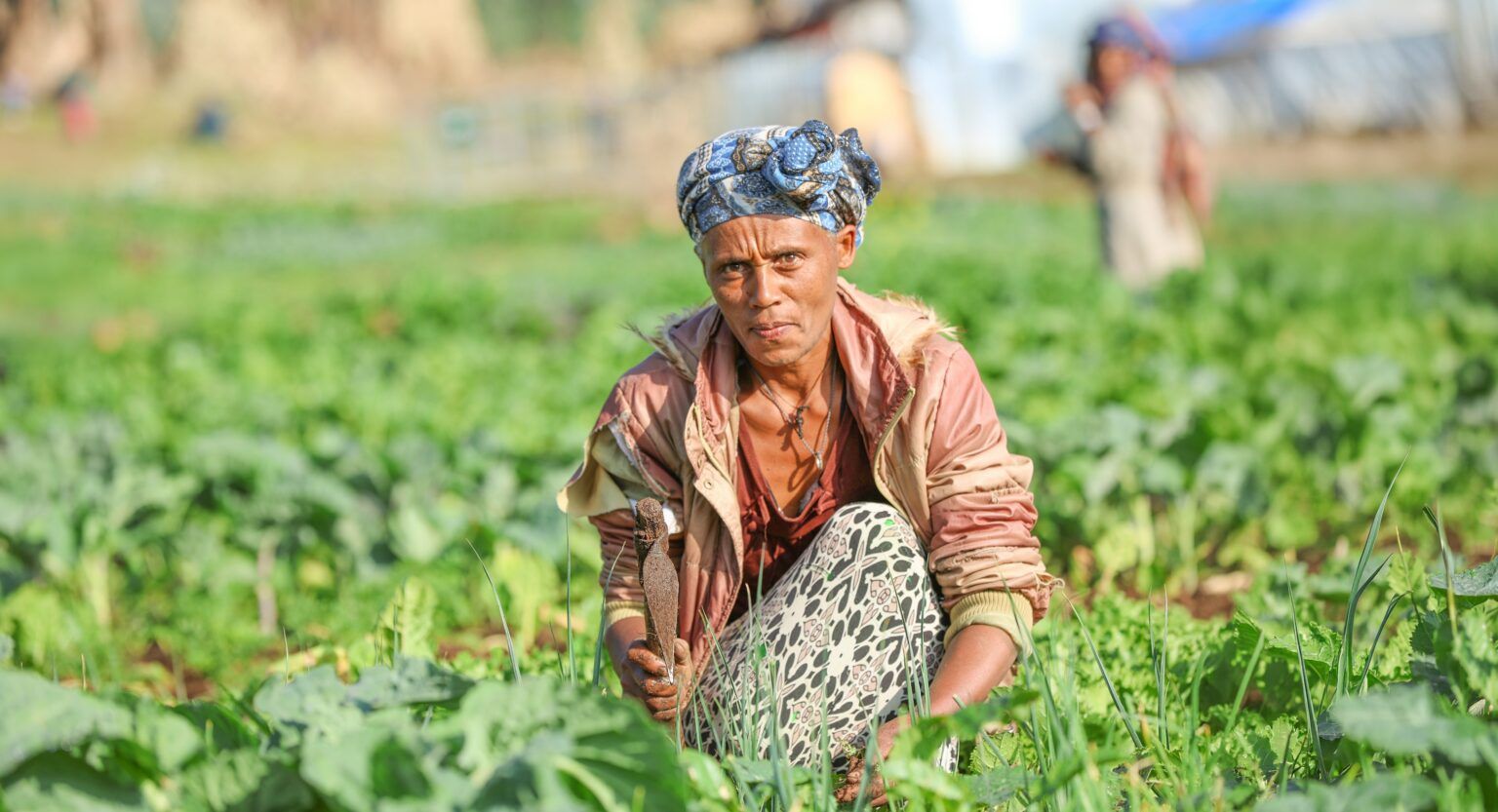
With support from a United States Government-funded Emergency Response project, more than 300 households received seeds, farming tools, and five water reservoirs to begin cultivating vegetables. Of the five hectares secured, 1.5 hectares have been transformed into a vegetable garden producing carrots, cabbages, tomatoes, hot peppers, and other crops, with the remaining 3.5 hectares set to be used in the future.
Families who had spent years waiting for assistance now start their mornings tending crops, collecting vegetables for their own households, and selling produce in local markets.
Harvesting Food, Income and Wellbeing
For many participants, the garden offers more than food and income.
“After we received this land and started working, it is not a vegetable garden to me anymore. It is somewhere I come to find peace. Whenever I feel sad, remembering what has been lost, I come here and nurture the seedlings or clear the weeds, and in no time I feel better. We are growing not only nourishment for our bodies but also relief for our minds,” says Debritu Bekele, a resident of Bakelo camp participating in the project.
The Bakelo vegetable garden is increasingly seen as a model of collaboration and a practical example of how displaced communities can move from dependency to productivity when provided with opportunities and support.
“What has been achieved here did not happen in a few weeks. It is the result of continuous negotiation with the landowner, mobilising resources with funding partners, and working with different stakeholders,” says Tesfaye Getahun, GOAL’s Area Manager in Debre Birhan.
“I am grateful to everyone who contributed to this model site, which proves that internally displaced people have potential and can contribute to society. There are many displacement sites across Ethiopia, and I hope this example encourages more strategic thinking for the long term and helps people see displaced communities not as a burden but as a contributing part of society.”
