

 Stories
January 23, 2026 • 3 min read
In Twic County, families navigate a fragile balance between environmental change and food security, where recurring floods shape daily life and children’s health. When crops are lost and diets become less diverse, young children are often the first to suffer from malnutrition. By combining early detection, treatment, and hands-on nutrition education rooted in local foods, GOAL is helping communities respond more effectively to these challenges. Backed by European Union, these interventions are saving lives while strengthening households’ ability to cope with future shocks.
Seasonal flooding in Twic County, Warrap State, replenishes pastures and supports the livelihoods of local livestock herders. At the same time, it affects household crops, threatening families’ access to sufficient and diverse nutrition. The community has developed resilient ways to adapt to these cycles, drawing on local knowledge and creativity. GOAL’s nutrition programme complements these efforts by providing treatment for malnutrition, strengthening health services, and guiding caregivers on preparing healthy, affordable meals, helping families nurture their children and build a stronger, healthier future.
Flooding, Food Insecurity, and Child Malnutrition
Turalei, one of the administrative units in Twic County, experiences frequent flooding. While post-flood moisture supports grass and bushes for livestock, it often destroys crops grown for household consumption. As a result, families face food shortages, limited dietary diversity, and increased cases of malnutrition, particularly among young children.
Abuk Deng, a 22-year-old mother of two, experienced this firsthand in 2024 when her second-born child became ill and stopped eating.
“It didn’t happen at once. It was her sickness that affected her appetite, and later she became weak and unresponsive. When her condition started to get worse, I brought her to the center and they identified her malnutrition and other complications,” Abuk shared.
Her daughter required urgent treatment, close follow-up, and access to nutritious food to support recovery.
Treating Malnutrition and Preventing Its Causes
GOAL’s team in Twic County recognised that malnutrition in the area is driven by multiple factors, including food insecurity, waterborne diseases, and limited awareness of affordable and diverse diets.
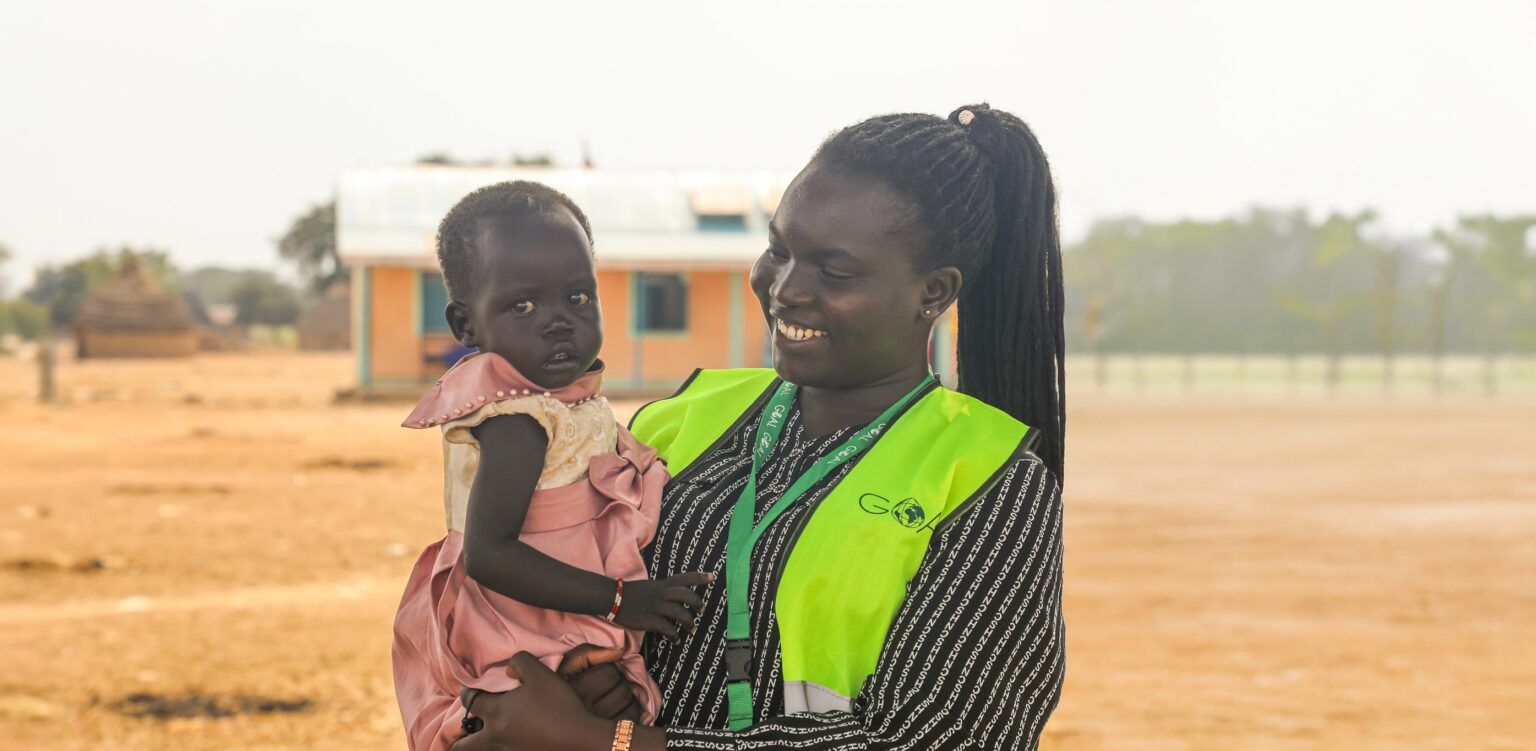
“We couldn’t respond to the impact and forget the root cause, so we designed our approach to address both the cause and the result,” said Atimaku Christine, GOAL’s Nutrition Manager in Twic County. “We trained individuals to go from village to village and assess and identify any malnutrition cases. We are able to treat children with malnutrition and mostly save them before it grows into a severe condition.”
In addition to case identification and treatment, GOAL conducts regular community awareness sessions focused on preventing malnutrition and on preparing nutritious, low-cost meals using locally available foods. These sessions are complemented by a small vegetable garden established within the health facility compound, serving as a practical learning space for the community.
“It is not only through theoretical means that we have a slot of land in the health facility, and we practically show them how to do it in their backyard,” Christine added.
Recovery, Community Trust, and Ongoing Needs
With consistent medical care and nutritional support, Abuk’s daughter recovered steadily. She transitioned from stabilisation centre care to outpatient therapeutic feeding and eventually made a full recovery.
“We would like to extend our heartfelt gratitude to GOAL and its supporter, the EU, for supporting our community and saving many children,” said Joseph Lual Aguer, the clinical officer in charge of the health facility.
“We are working in collaboration to identify, treat, and educate the community about malnutrition and how to prevent it, and we are decreasing the cases significantly. But the task is not over yet. We have to make sure that other communities that we couldn’t reach due to resource constraints should be reached and empowered to manage similar cases on their own,” Joseph concluded.
With support from the European Union Humanitarian Aid and the dedication of GOAL’s health professionals, children like Abuk’s daughter are surviving and recovering. However, the scale of need remains high, and sustained investment is required to fully control malnutrition in Twic County and across South Sudan.
