

 Stories
October 22, 2026 • 2 min read
Dasa Alo once travelled 14 km to collect water while raising six children. Now, a solar-powered water point brings water closer and encourages her community to work together to keep it clean.
Desa Dinito 28, is a mother of six who fled her home in Chiena because of conflict. She now lives at Kelkelo internally displaced people (IDP) site in Dahas Woreda. In Kelkelo access to clean water was a daily struggle. Families in the IDP site travelled long distances to collect water. The nearest underground water source powered by old diesel generator lay far from the site. Women caring for children found these journeys especially hard.
“We were forced to travel 14 km to Borbor just to access clean water. It’s difficult for a mother like me, especially when I was pregnant, to carry many litres of water over that distance,” Dasa recalls.
Raising six children already demanded much of Dasa’s time and energy. The long trips made daily life harder. Carrying heavy containers during pregnancy added to the strain.
Solar Power Brings Water Closer
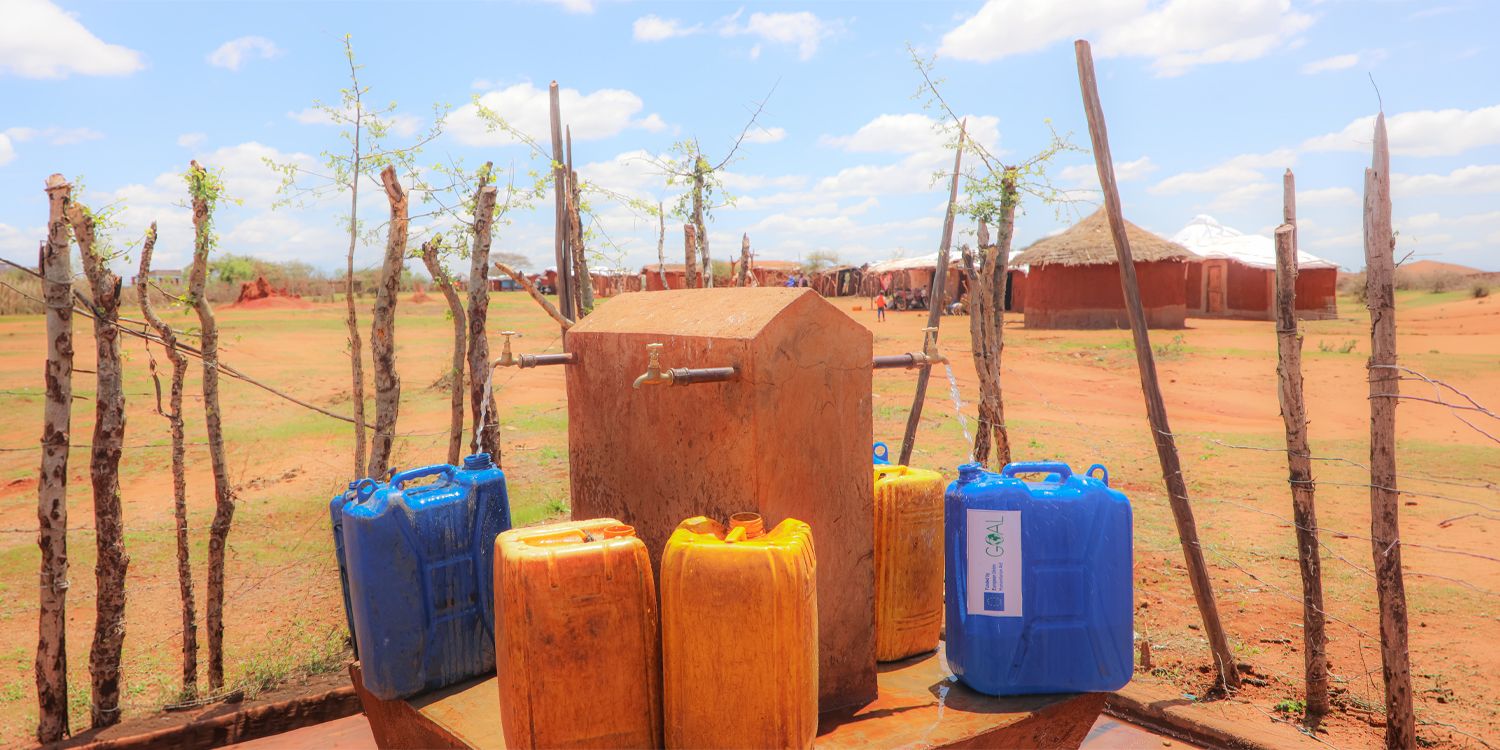
With funding from the European Union, GOAL replaced the old diesel generator with a solar power system that use sunlight to generate electricity. The new system provides enough power to run the water pumps without relying on costly diesel fuel.
The pumps send water to a large storage tank that can hold 75,000 litres. From there, water flows to three water points for families to collect. The system can serve up to 7,000 people in Raro and nearby villages. By using sunlight instead of diesel, it also reduces the need to buy and transport fuel.
For Desa and other displaced families, the improved water supply means less need to travel long distances to meet daily household needs.
“This water point has ended a long-time burden, when we were forced to travel long distances to fetch water,” Dasa says.
Hygiene Awareness Encourages Community Action
The community’s efforts go beyond collecting water. Hygiene awareness activities encourage displaced families to keep the water point clean and care for the surrounding area.
“We take care of this water point. We contribute when it needs fixing. We clean the site as a team, and we have schedules,” Dasa explains.
Community members follow cleaning schedules and contribute towards repairs when needed. Their shared efforts help keep the water point clean and working for everyone who relies on it.
For Dasa, having water closer to home has eased a daily burden. She also values the way community members work together to protect this essential resource.
