

 Stories
July 9, 2026 • 3 min read
Facing the challenges of raising six daughters as a single mother, Luul Jama transformed her sewing skills into a sustainable livelihood with support from GOAL and its partners. Through a small investment in equipment and materials, she began producing reusable cloth bags, providing income for her family while addressing plastic pollution in her community.
For Luul Jama, every day was a struggle to provide for her family. As a single mother of six daughters, including two living with disabilities, she carried the full responsibility of caring for her children while trying to earn enough income to meet their basic needs. Working as a hired seamstress, Luul spent long hours sewing for others, yet her earnings were often insufficient to support her family.
“Life was a challenge for me and my family,” Luul recalls. “I was raising six children on my own, and two of my daughters require specialized care. Providing food, education, and daily support was a constant struggle.”
Despite the hardships, Luul remained determined to create a better future for her children.
A Small Investment, A Big Opportunity
Recognizing both her vulnerability and determination, GOAL, in partnership with the Women and Children’s Affairs Office of Jigjiga City, supported Luul through a flexible fund provided by St Giles Church in Exhall, Coventry, United Kingdom.
The initiative sought to strengthen the livelihoods of economically vulnerable women while promoting environmentally friendly alternatives to single-use plastic bags, locally known as festal. Given Luul’s sewing experience, she was well positioned to seize the opportunity.
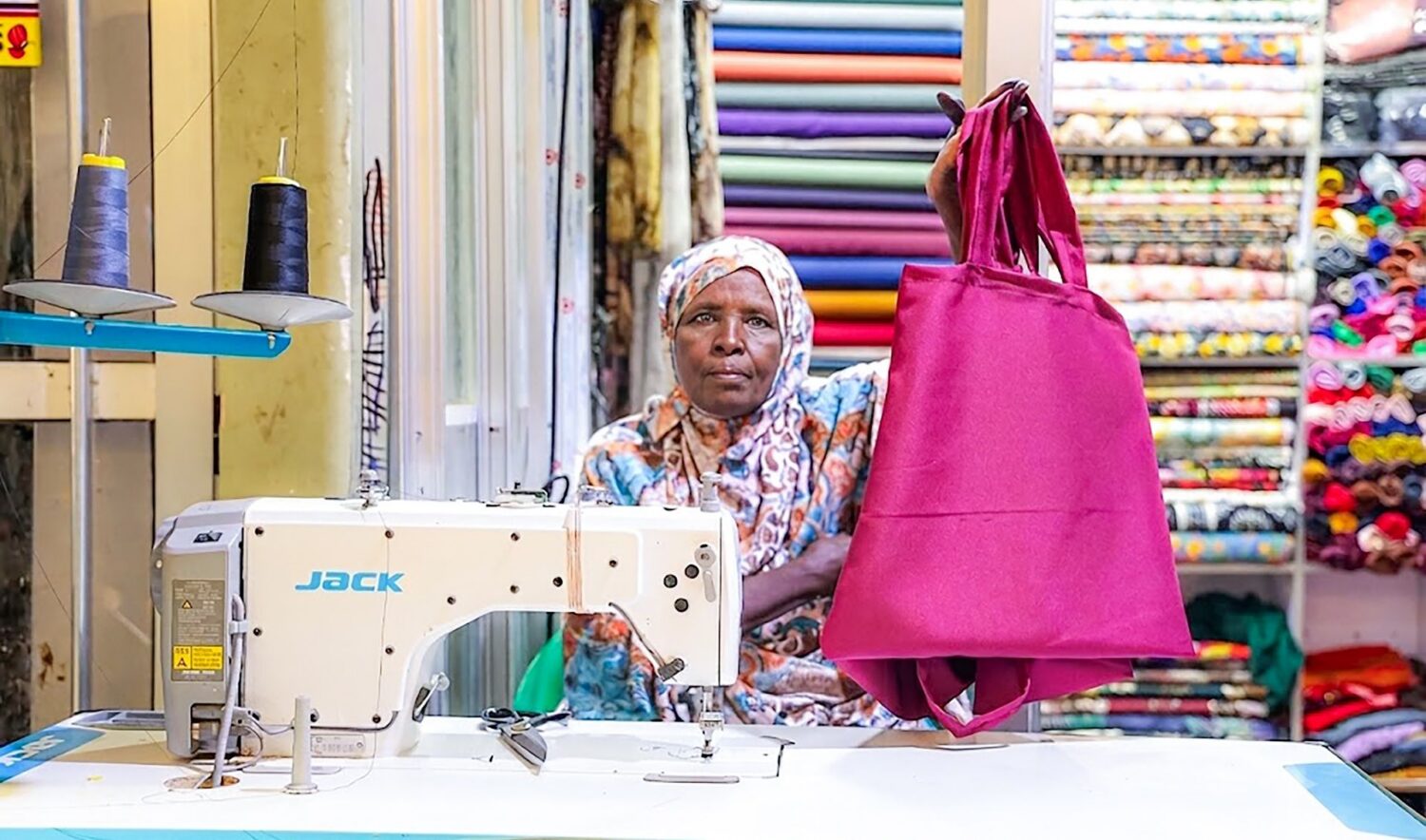
Through the project, she received a sewing machine and raw materials to begin producing reusable cloth bags. The support enabled her to transform an existing skill into a sustainable source of income while contributing to efforts to reduce plastic pollution in her community.
From Livelihood Support to Community Impact
With renewed confidence and improved resources, Luul began producing durable cloth bags and selling them at affordable prices within her community. As demand grew, more people started adopting reusable bags as an alternative to single-use plastics.
The initiative not only improved Luul’s income but also contributed to growing public awareness of the environmental impacts of plastic waste on communities, livestock, and local ecosystems.
As the use of reusable bags increased, discussions around plastic pollution gained momentum across the Somali Region, where discarded plastic bags had become a growing environmental concern.
From Local Enterprise to Regional Change
Inspired by efforts to promote sustainable alternatives and supported by growing evidence of the harmful effects of plastic pollution, the Somali Regional Cabinet took decisive action. The regional government introduced landmark legislation banning the manufacture, distribution, and use of single-use plastic bags across the Somali Region while promoting the transition to reusable alternatives.
According to the city’s Women and Children’s Affairs Office, initiatives such as Luul’s cloth bag enterprise demonstrated the practicality of community-led solutions and helped showcase how environmentally friendly alternatives could be produced and adopted locally.
To support implementation of the regulation, the regional government introduced enforcement measures, including penalties for violations of the ban. The policy marked a significant step toward reducing plastic waste while creating new opportunities for local producers of reusable bags.
Building a Better Future
Today, Luul’s enterprise has become a source of both livelihood and pride. Demand for reusable cloth bags continues to grow, creating opportunities for expansion and employment.
“I currently work from a rented space,” Luul says. “If I had additional materials and machinery, I could produce much more. My dream is to train young people and teach them how to make these bags so that together we can meet the growing demand.”
For Luul, the journey represents far more than an improvement in income. What began as a small livelihood intervention has evolved into a story of resilience, environmental stewardship, and community leadership. Today, she is supporting her family with dignity while contributing to a broader movement that is helping protect the environment and create sustainable opportunities for others.
