

 Stories
September 3, 2026 • 3 min read
After escaping conflict in South Sudan, Nyapai Tang arrived in Ethiopia with her two children after a difficult two-week journey, facing the added challenges of living with a physical disability. At Tormorok reception centre, a hot meal provided an immediate sense of comfort and stability as the family began rebuilding their lives.
When conflict erupted in South Sudan, 30-year-old Nyapai Tang had to flee with her two young children. Living with a physical disability, she was unable to make the journey on her own and relied on the kindness and support of fellow travellers. After a two-week journey from Ulang, Upper Nile State, South Sudan, she finally reached Ethiopia.
A few weeks later, Nyapai and her children are living at the Tormorok reception centre in Ethiopia. They arrived exhausted and with almost nothing. For newly displaced families like Nyapai’s, the first days after arrival can be especially difficult as they try to meet basic needs while adjusting to an unfamiliar environment.
Upon arriving at Tormorok Reception Centre, Nyapai was identified by GOAL’s community outreach team as a particularly vulnerable individual due to her physical disability and the challenges she faced during displacement. Following verification by the camp chairperson, she was referred to GOAL’s EU-funded hot meal programme and received her first hot meal on the day of arrival. For Nyapai and her children, the meal provided immediate relief after weeks of hardship and uncertainty.
A difficult journey to safety
For Nyapai, reaching Ethiopia was only the beginning of a new struggle. Her physical disability makes it difficult to move independently, leaving her reliant on family members and others for many everyday activities.
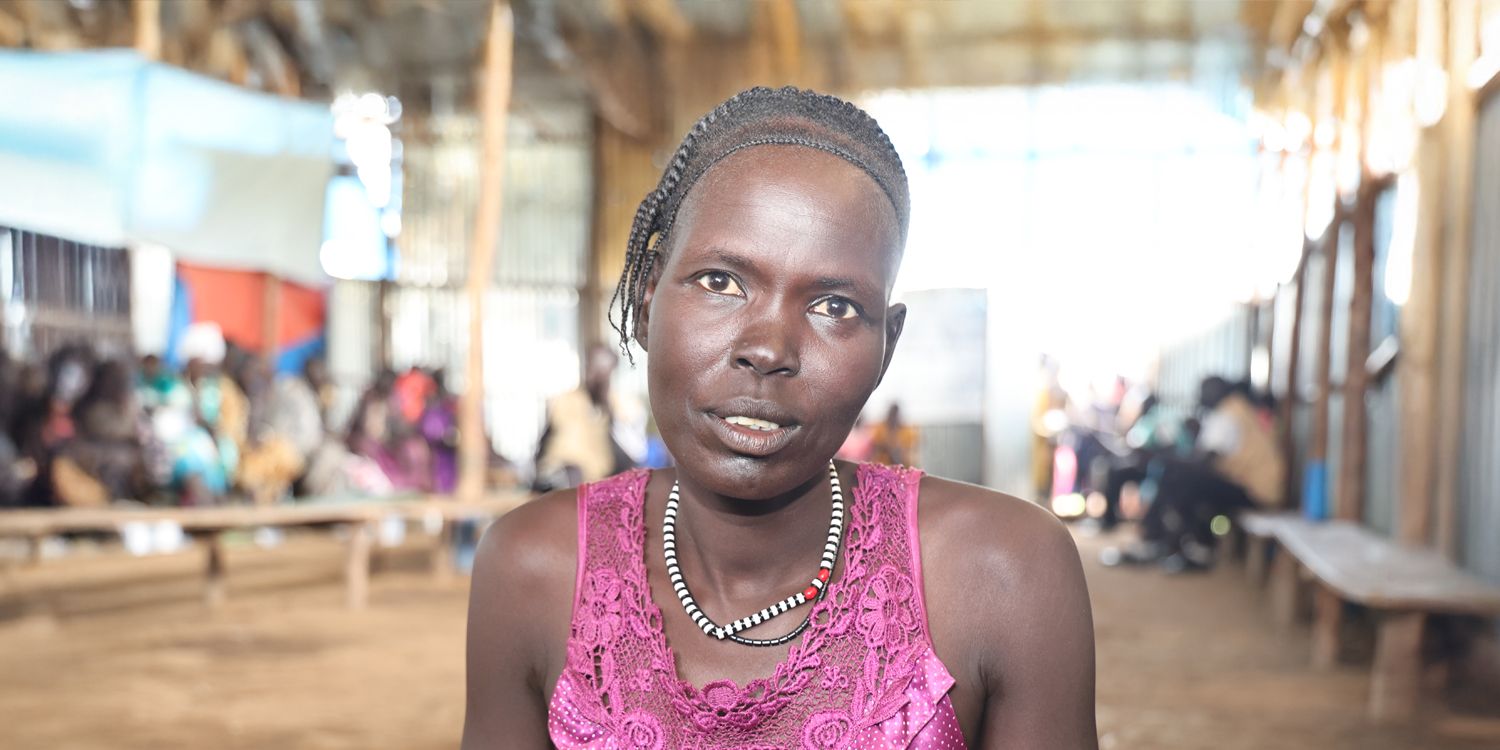
“Ever since we arrived here, we have been very happy with the hot meals GOAL has been providing us,” she says.
For those who arrive at the reception center, food is an immediate priority, but for people living with disabilities, access to mobility aids and essential household items can also be just as important to restoring independence and dignity.
A hot meal when it matters most
GOAL’s hot meal service provides a practical lifeline for newly arrived families in Tormorok. Depending on daily arrivals and assessed needs, between 2,500 and 4,500 people receive hot meals each day. Since June 2024, more than 40,000 newly arrived refugees have been supported through the hot meal provision, funded by EU.
When the service began, teams had to overcome challenges around registration, logistics and organising distribution points. These systems have since been strengthened, allowing the programme to operate more efficiently and reach thousands of people each day.
“When this service first began, we stretched every available resource to respond to the overwhelming need,” says Dr Maru Yenehun, GOAL’s Project Manager. “Over time, we resolved the initial challenges around registration, logistics and distribution, with UNHCR and RRS and others and we are now able to provide the hot meal, and health services. We are extremely grateful to the EU for funding this operation.” Dr. maru, said
“The hot meal service is more than simply a food assistance programme; it also serves as an important entry point for integrated nutrition, health and protection services. Through the service, GOAL teams can screen children and other vulnerable people for malnutrition and health concerns, identify protection needs, and refer individuals to appropriate services and partners.” Maru concluded.
The integrated approach helps ensure that newly arrived families receive not only immediate food assistance, but also timely access to the wider services they need.
From immediate relief to a safer future
For Nyapai and other newly displaced families, a hot meal offers more than food. It provides immediate relief at a time when people may have travelled for days, lost their belongings and arrived with few resources.
“Access to hot meal is the most pressing need, but we also need additional things beside the hot meal. As you can see, I cannot move freely like others, so I need a wheelchair. I would also be grateful for household items and other necessities.”
As reception centres continue to receive new arrivals, complementary assistance including mobility devices for people with disabilities, shelter materials and essential household items can help families regain greater safety, independence and dignity.
For Nyapai, the journey to safety may have begun with someone carrying her across the border. With the right support, the next chapter can be about helping her move forward with greater independence.
