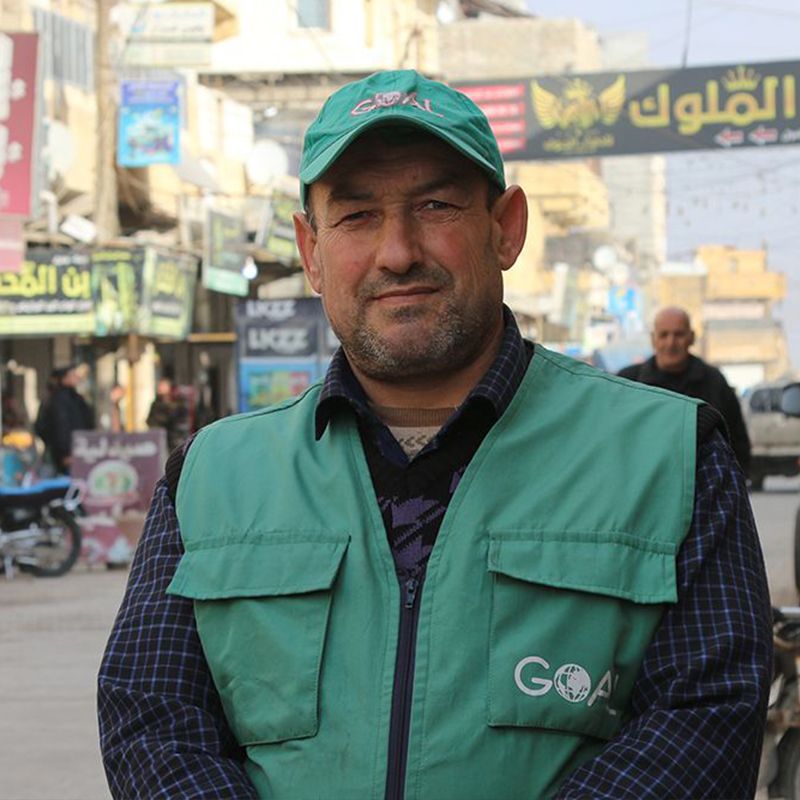

A Flicker of Hope
Syria’s 14 years of intense and devastating conflict came to an unexpected, but deeply welcomed, end in late 2024 with the fall of the Assad regime. The war claimed at least 580,000 lives and forced 13 million Syrians from their homes within its first decade. Entire communities were torn apart, and vital infrastructure, including water systems millions depended on, was left in ruins.
As the country faces the monumental task of rebuilding, families like Mohammad’s are struggling to piece their lives back together. This is the story of one man and his family’s journey through loss and resilience, and how, with support from GOAL and the EU, a fragile sense of hope endures.
Where Water is Life
An estimated 3.5 million people in Aleppo depend on a partially functioning water system. With infrastructure operating at less than 50% efficiency, ongoing emergency interventions remain vital to ensure access to basic Water, Sanitation and Hygiene (WASH) services. This fragile system is the legacy of more than a decade of relentless bombardment, which shattered critical infrastructure and left access to water in ruins as Syria emerged from its long civil war.
Through the EU-funded SANAD II programme, GOAL is helping returnee families in Syria, like Mohammad Ahmad Ismail’s, by restoring access to clean water and sanitation. The support of water stations now delivers safe, reliable water to communities, safeguarding health and helping families rebuild their dignity.
Mohammad's Story
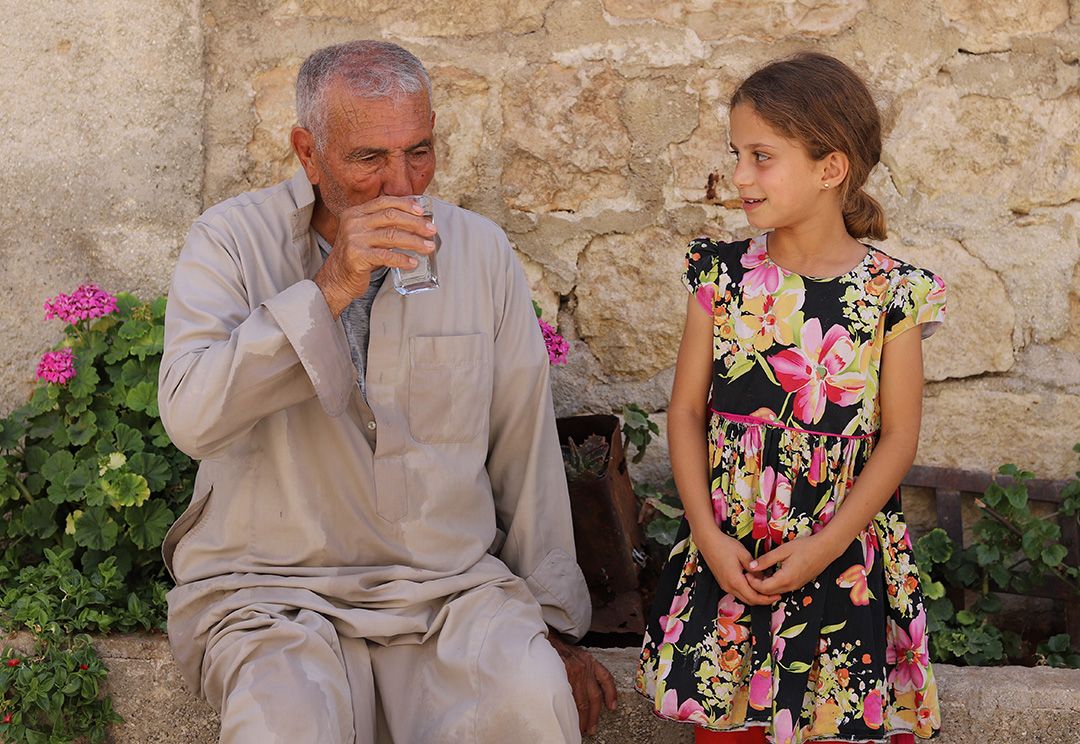
Mohammad Ahmad Ismail, 85, grew up in Urem Al-Kubra – just 10 km from Aleppo city – working the land he inherited from his father and grandfather. It was once a place of simple rural life, where Mohammad cultivated crops, raised sheep, and depended on the earth for sustenance.
“I raised five sons and three daughters here,” Mohammad recalls. “We lived from our land, eating what our hands produced.”
But war would turn this life upside down. Most of his livestock was lost to bombardment, and some were sold to cover debts. What had been a life of modest stability became a struggle for survival.
Become a GOALie
Join GOAL's free supporter newsletter to learn more about GOAL's lifesaving work in Syria, Gaza, Sudan and beyond.
Those days were among the harshest of my life. Moments of helplessness I will never forget.
Displacement and Destruction
Because of its proximity to Aleppo city, Urem Al-Kubra endured relentless shelling and battles. Like many families, Mohammad and his loved ones were displaced multiple times, fleeing to nearby villages whenever bombardment intensified and returning only when it temporarily subsided.
“My house was destroyed more than once,” he explains. “The last time, warplanes struck directly, and the walls collapsed over our heads. My wife, my grandson, and I were inside. I was injured in my back, but we survived. The house, however, became nothing but rubble.”
With nowhere else to go, the family moved into an unfinished, abandoned house on the edge of the village.
“We slept on the cold ground with no blankets, no furniture, nothing. The winter cold pierced our bones. Those days were among the harshest of my life moments of helplessness I will never forget,” he recalls.
Despite repeated loss, Mohammad’s determination never wavered.
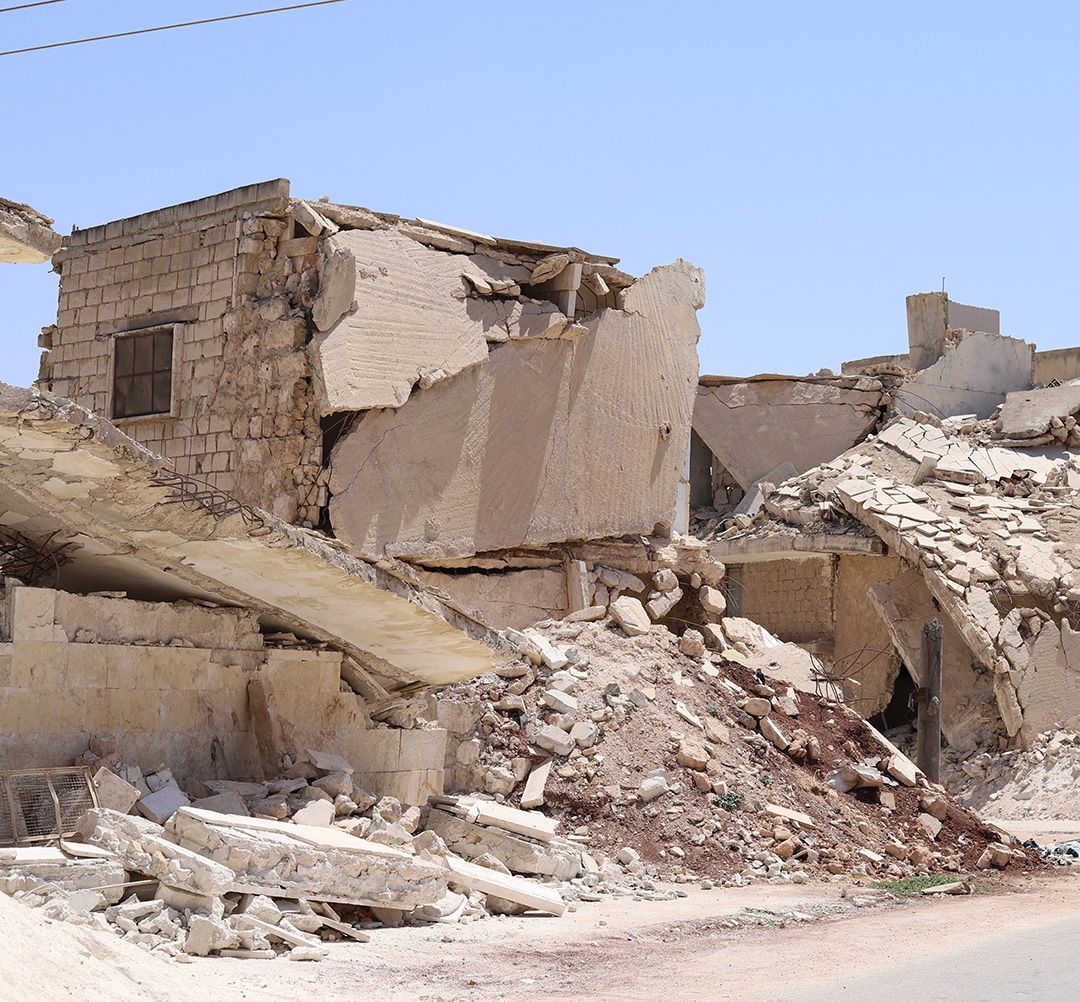
“I told my sons, I will not leave my land or my home, no matter what. I have worked all my life here, and I will die here even if it is under the rubble,” Mohammad says.
Struggling to Access Water
Together, with limited resources and under difficult security conditions, Mohammad and his family rebuilt their home. For him, staying was not a choice; it was an act of dignity and a matter of belonging.
While the guns eventually fell silent on Sunday, December 8, 2024, survival remained difficult. Prices soared, incomes shrank, and public services were almost non-existent. For Mohammad, one challenge overshadowed all others: water.
“The hardest thing was the water”, he says. “The village’s stations stopped working years ago. We had to bring tankers from Kafr-Naha, five kilometers away, at costs we couldn’t afford.”
Often, the family sacrificed food to pay for water. With his children and grandchildren returning after liberation, consumption increased, and the need for weekly tankers pushed them deeper into hardship.
“We could eat less food, but we could not live without water,” Mohammad explains. “At times, we reduced water use so much that even the children’s hygiene suffered. Plants and trees withered before our eyes.”
A Lifeline from GOAL
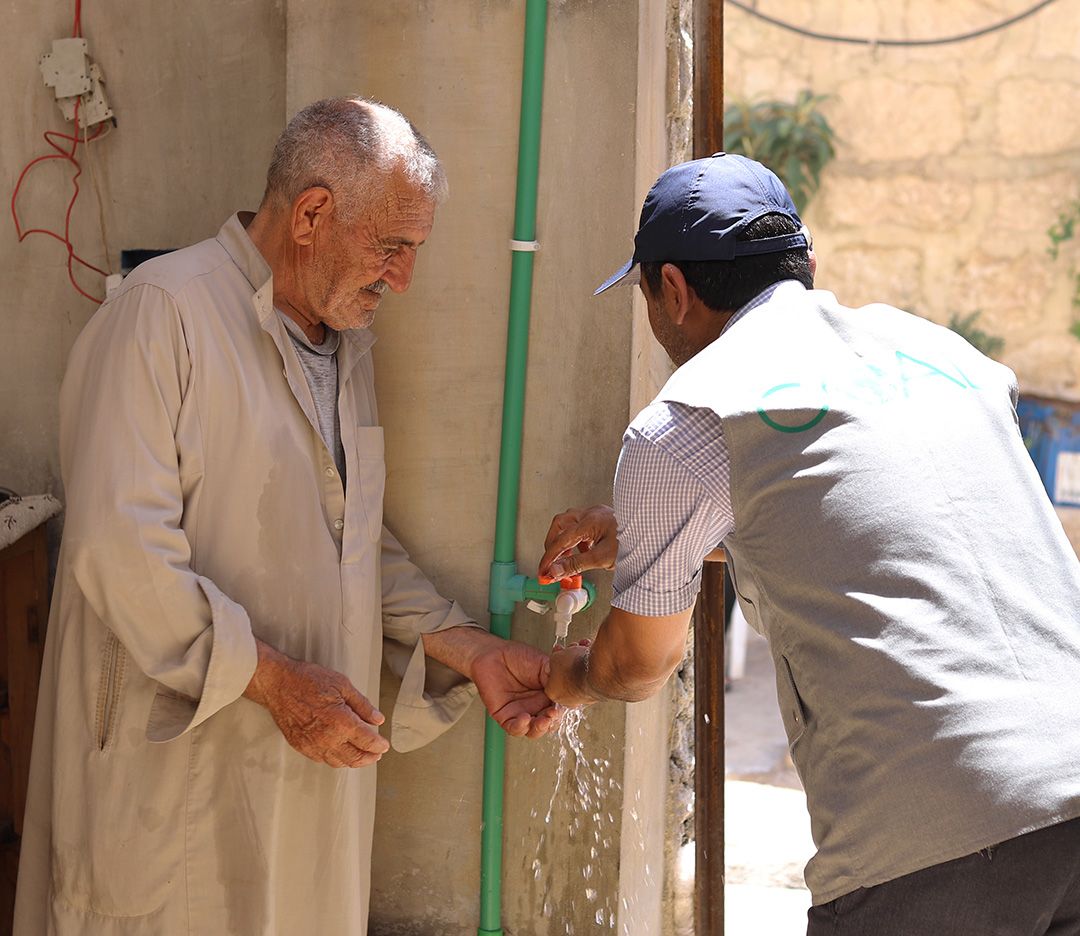
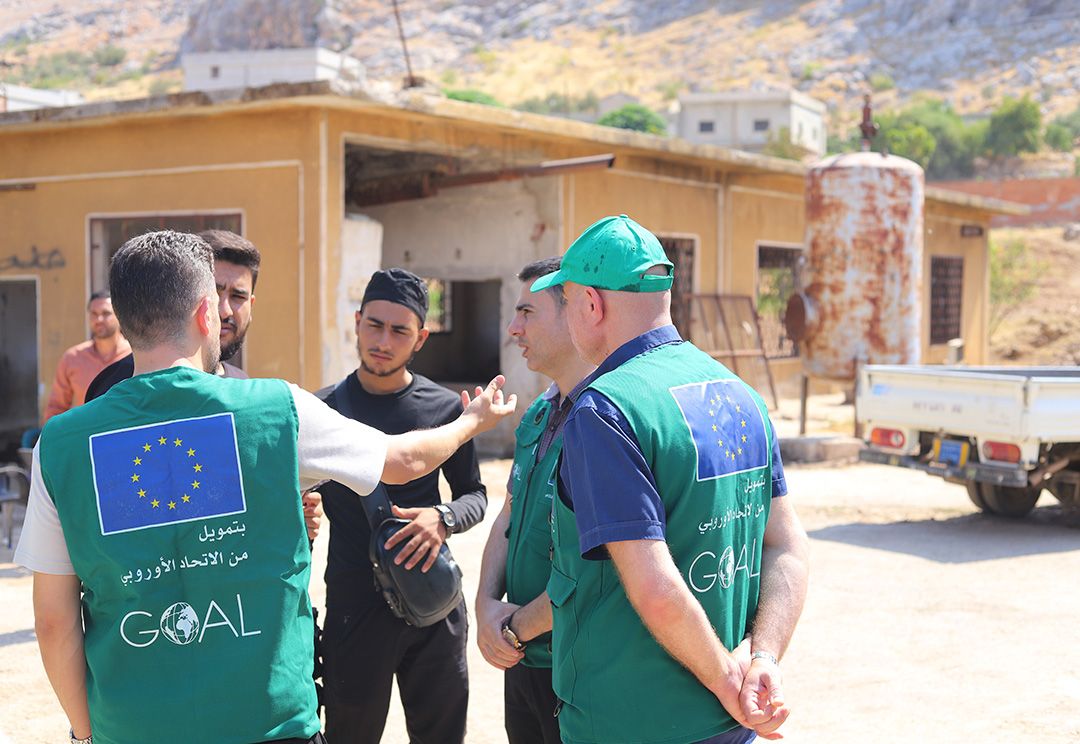
The struggle of accessing water changed when GOAL began supporting water stations in Urem Al-Kubra. Networks were rehabilitated, and fuel was supplied to power the stations.
“Today, water reaches our homes every two days, enough to fill our tanks. It is clean, sterilised and monitored. We feel reassured about the health of our children.” Mohammad shared.
The family no longer spends their scarce income on expensive tankers. Instead, they can direct money toward food and the needs of children.
“This support lifted a heavy burden from our shoulders and gave us back part of the life we lost.”
Mohammad's Wish
For Mohammad, water is more than just a means of survival; it is life itself.
“Water is the foundation of everything. Without it, we cannot live,” he reflects.
He hopes that similar support will extend to other essential services, such as electricity, sanitation, schools, and medical care, so that life in his community can be rebuilt fully.
As he looks back on a long and difficult life, his hopes are simple.
“I am an old man. I do not have much life left. My last wish is for security and stability in our country, for love among our people, and for God to grant me the strength and sustenance to perform the pilgrimage before I leave this world.”
While emergency interventions in Urem Al-Kubra restored immediate access to water, GOAL’s EU-funded SANAD II programme also focuses on long-term solutions. The Al Laj water system in Jabal Al-Zawiya, Idlib, serving over 150,000 people across 35 villages, is being rehabilitated with five stations, springs, and new wells to ensure safe, reliable water. This approach combines urgent relief with sustainable infrastructure to support health, stability, and local livelihoods.
Today, water reaches our homes every two days, enough to fill our tanks. It is clean, sterilised and monitored. We feel reassured about the health of our children.
A Lasting Impact
Through the EU-funded SANAD II programme, GOAL inaugurated the Al Laj Water Stations Rehabilitation Project in Jabal Al-Zawiya, Idlib, to strengthen water infrastructure and ensure continuous access to clean water.
The project includes five water stations with springs and wells, modern pumps and storage tanks, repaired station buildings, and upgraded pipelines and conversion centers to ensure safe and reliable water delivery across the villages.
Taha Juma, WASH Program Manager, stated:“Rehabilitating the Laj water stations will represent a qualitative leap in providing clean and sanitised water, reducing water-related burdens, improving health conditions, limiting waterborne diseases, and creating a safe environment for the return and stability of residents in their original communities.”
About EU Civil Protection and Humanitarian Aid
The European Union and its Member States are among the world’s leading donors of humanitarian aid, providing lifesaving relief to millions affected by conflict and disaster worldwide. The EU’s humanitarian assistance is delivered through its Directorate-General for European Civil Protection and Humanitarian Aid Operations (DG ECHO) based on needs, impartiality, and respect for human dignity.

GOAL in Syria
After more than a decade of conflict, over 6.8 millions Syrians are internally displaced. 70% of Syrians are in need of humanitarian assistance and relying on aid to survive day-to-day.
GOAL teams have been working on the ground in Syria since the conflict began in 2012. In 2023, GOAL's emergency response programme has reached over 287,000 newly displaced people with food, cooking supplies and financial assistance. As GOAL engineers repair damage to water network infrastructure, more than 1.3 million people are now able to access clean drinking water in their homes. A further 430,000 people are benefitting from GOAL's bakery programme in North-West Syria.
Impact in Numbers
+1.6 million
Providing clean water to over 1.6 million people
+430,000
Delivering bread to over 430,000 people daily
2.8 million
People supported in 2024
2012
GOAL begins operations in Syria
Louay's Story
Louay Tajiddin, a GOAL Water and Sanitation Engineer in Syria, shares his personal experience of having to leave his job and home due to conflict in Syria.
He highlights the challenges faced by Syrians due to the protracted conflict and the importance of access to basic needs, particularly clean water.
To help vulnerable communities in Syria, Louay used his skills and experience for humanitarian work.
"Seeing more and more vulnerable families suffer under conditions of displacement and conflict was difficult. But I knew that this did not have to be the way. I felt I could do more for my people as someone with expertise in maintaining public service infrastructures. Something that was desperately needed in my community."
Learn more about how Louay and other GOAL staff in Syria, thanks to funding from the European Union, are repairing and delivering clean water to over 800,000 people in northwest Syria.