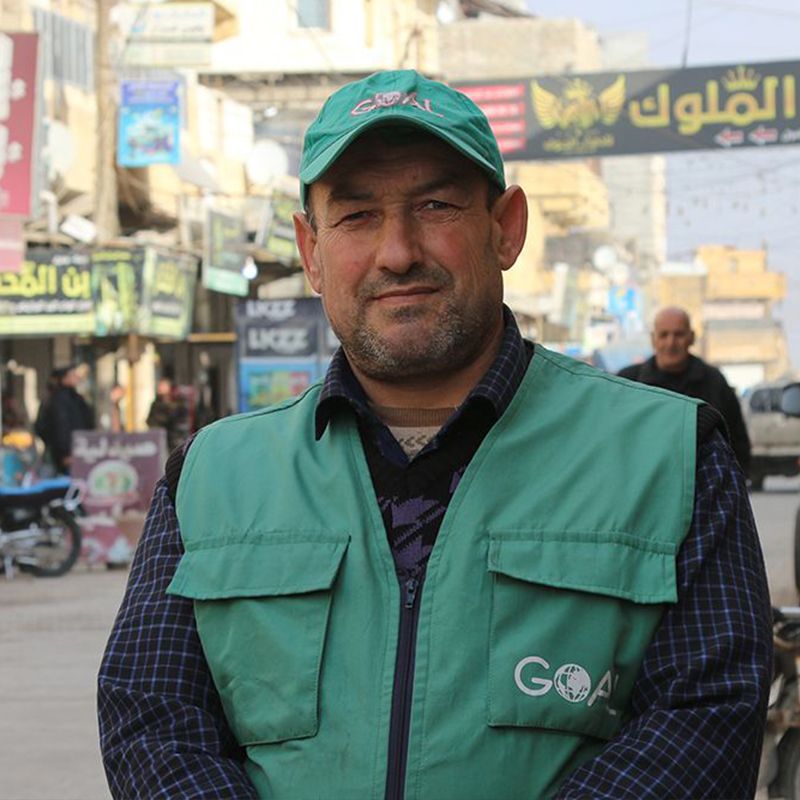

A Flicker of Hope
In December 2024, the fall of the Assad regime marked a historic turning point in Syria’s 14-year civil war. For millions of Syrians displaced by years of violence, there was a flicker of hope - hope for peace, return, and rebuilding. But while the headlines signalled change, the reality on the ground remained complex and fragile.
The war had forced more than 13.5 million Syrians from their homes, leaving behind shattered infrastructure and a devastated economy. Nearly 1.8 million displaced people, both internally and abroad, have returned. Yet for many, the journey home is fraught with new challenges: destroyed homes, unsafe living conditions, and a lack of basic services.
Through the EU-funded SANAD programme, GOAL teams are supporting families like Ahmed al-Ibrahim’s as they return to rebuild their lives. After years of displacement, Ahmed and his family have come back to their village despite the damage inflicted by conflict and regime control. Thanks to targeted cash assistance, they are now able to meet essential needs, restore a sense of dignity, and take the first steps toward a more hopeful future.
This is their story.
A Life Uprooted by War
For Ahmed al-Ibrahim, 45, from the village of Haysh, 60 kilometers south of Idlib, war has meant more than just the loss of a home. It has been over a decade of displacement, separation, and survival.
Ahmed is a father of eight. His youngest, Fatima, is just a year and a half old; his eldest, Khaled, is 18.
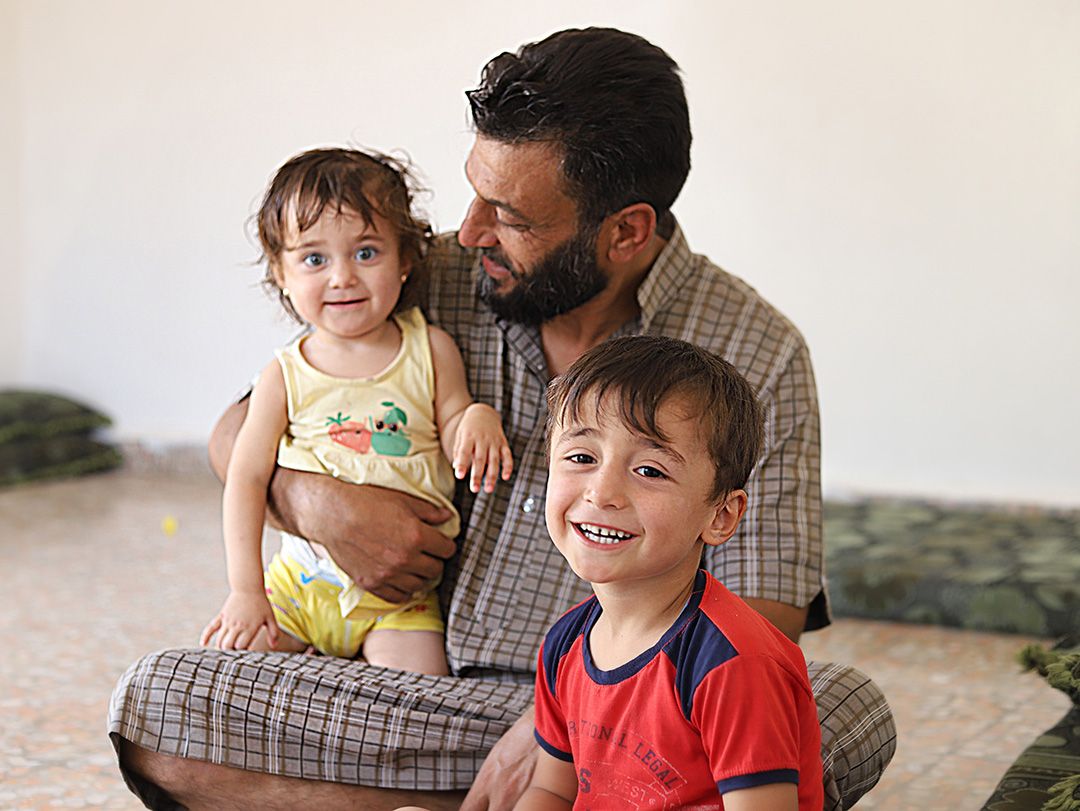
When the conflict reached Haysh in 2012, the shelling intensified. Fearing for their lives, Ahmed sent his wife and children to Lebanon, while he remained displaced in the Idlib countryside. For two years, he lived without stable work before returning to his village in 2014, despite the ongoing bombardments.
But in 2019, another wave of violence forced Ahmed to flee again, this time with his entire family. They resettled in the Deir Hassan camps, where they faced unbearable conditions: no electricity, no clean water, no sewage system, and no access to schools or healthcare. Their suffering was deepened by the declining health of Ahmed’s elderly parents, who required constant care.
Become a GOALie
Join GOAL's free supporter newsletter to learn more about GOAL's lifesaving work in Syria, Gaza, Sudan and beyond.
Not only was our village liberated, but all of Syria. The joy was indescribable… I cannot put it into words.
The Reality of Return
Ahmed and his family returned to their village on the 16th of March 2025, just three months after the fall of the regime.
“We never imagined that we would return to it. At some point, we believed that camp life was our reality and that it would never change. But thank God, not only was our village liberated, but all of Syria. The joy was indescribable… I cannot put it into words,” shared Ahmed in utter jubilation.
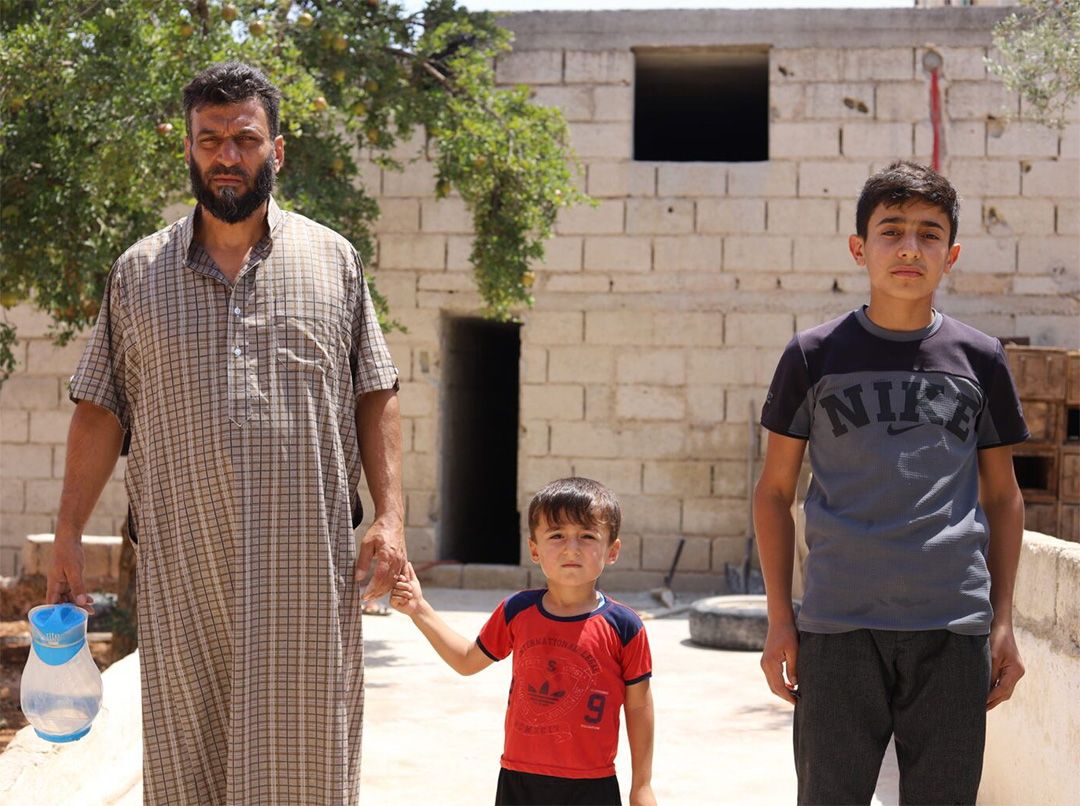
But their return came with overwhelming challenges. Their house had no doors or windows, several walls were destroyed, and the roof was cracked. Ahmed and his children began restoring their home, but it required extensive and costly repairs.
Public services in the village remain almost non-existent: no clean drinking water, no functioning water network, no electricity, no bakeries, no proper sewage system, and no medical or educational services. Schools are mostly destroyed, with only one school currently being prepared for the new academic year.
Prices in the region, formerly under Assad's regime control, remain prohibitively high. With few local shops available, residents are often forced to travel long distances to Idlib city just to purchase basic necessities such as bulgur, rice, cooking oil.
The soaring cost of building materials and labour makes home repairs nearly impossible for many returnees, pushing some families back into displacement camps despite their hopes of rebuilding.
Agricultural lands, once the backbone of rural livelihoods, have been left devastated. Most olive and pistachio trees have been cut down or burned, leaving the soil dry and neglected.
The area remains perilous, littered with landmines and unexploded ordnance. Tragically, three children from the village recently lost their lives while playing and collecting plants in the fields, a stark reminder of the hidden dangers that persist even after the fighting has stopped.

A Lifeline from GOAL
These challenges have prevented many families from returning to the village, leaving them stuck in cycles of displacement.
“Despite all these difficulties, we felt a psychological relief that we had been deprived of for nearly 14 years. Thank God, there is no more shelling, war, destruction, or airstrikes on cities and villages daily. The cities are now open, and people can move freely,” Ahmed said.
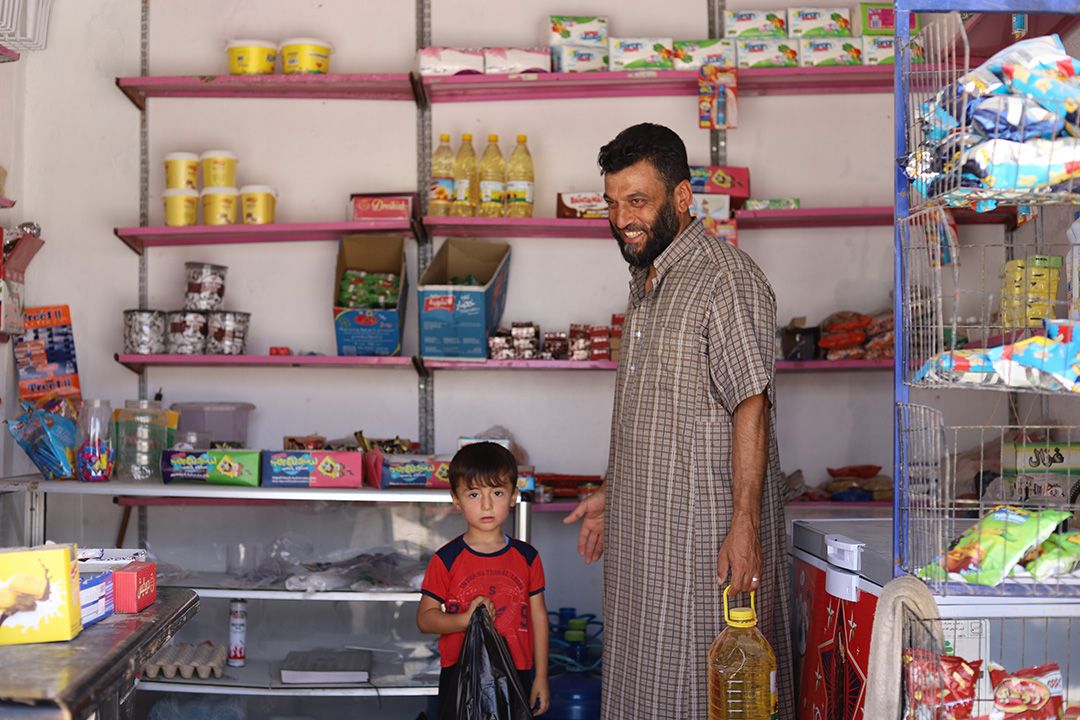
Ahmed Al-Ibrahim -45 years old- shopping for essential supplies in Haysh village after receiving GOAL's cash assistance.
Ahmed now works as a primary school teacher, earning a salary of only 120 US Dollars, barely enough to cover even the most basic needs for his large family. To get by, he often takes out loans and uses firewood for heating and cooking to cut costs.
Recently, Ahmed and his family received cash assistance from GOAL, offering a vital lifeline to help them meet urgent needs and regain some sense of stability.
“Thank God, we were able to cover most of our basic needs, especially food, which is the most important thing for a family with many young children. Although the amount wasn’t large, it helped us greatly given the high prices.”
Ahmed dreams of a stable future for his village, one where all residents can return and rebuild their lives in peace. He places his hopes in his eldest son, Khaled, who is preparing for his high school exams. Ahmed wishes to see him pursue a degree in civil engineering, so that one day, Khaled can help restore their shattered homeland and shape a better future for the next generation.
Thank God, there is no more shelling, war, destruction, or airstrikes on cities and villages daily. The cities are now open, and people can move freely.
The Road Ahead
Thanks to the support of the European Union and other valued partners, GOAL teams continue to deliver critical assistance - like cash transfers - to families like Ahmed’s, helping them regain a sense of dignity and stability.
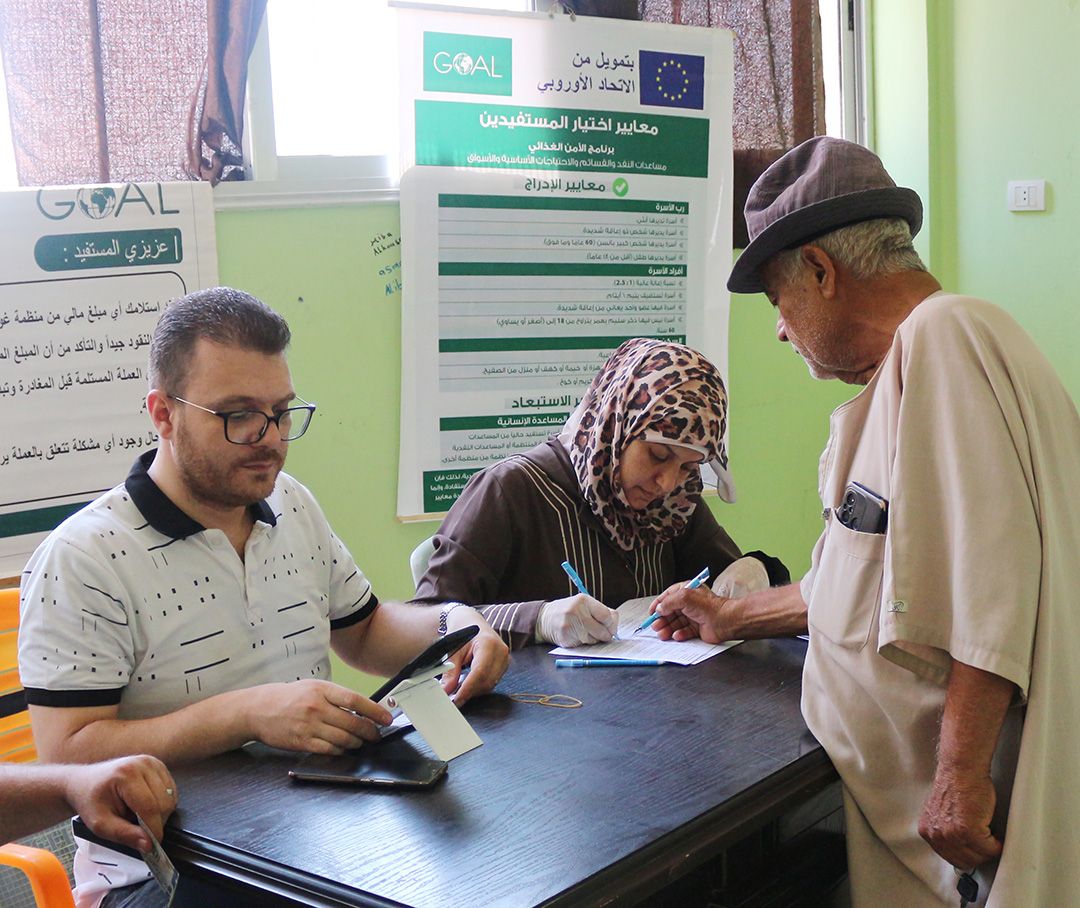
In Haysh village, recently returned residents gather at a cash assistance distribution point, where GOAL Syria team members Fatema Alzawrri (MPCA) and Salah Abbas (Finance) support families in meeting their basic needs
But the needs across Syria remain staggering. As the country navigates an uncertain future, millions still face the daily realities of poverty, grief, and insecurity.
Without sustained and increased international support, families who have already endured so much risk being left behind, trapped in a cycle of displacement and despair.
About EU Civil Protection and Humanitarian Aid
The European Union and its Member States are among the world’s leading donors of humanitarian aid, providing lifesaving relief to millions affected by conflict and disaster worldwide. The EU’s humanitarian assistance is delivered through its Directorate-General for European Civil Protection and Humanitarian Aid Operations (DG ECHO) based on needs, impartiality, and respect for human dignity.

GOAL in Syria
After more than a decade of conflict, over 6.8 millions Syrians are internally displaced. 70% of Syrians are in need of humanitarian assistance and relying on aid to survive day-to-day.
GOAL teams have been working on the ground in Syria since the conflict began in 2012. In 2023, GOAL's emergency response programme has reached over 287,000 newly displaced people with food, cooking supplies and financial assistance. As GOAL engineers repair damage to water network infrastructure, more than 1.3 million people are now able to access clean drinking water in their homes. A further 430,000 people are benefitting from GOAL's bakery programme in North-West Syria.
Impact in Numbers
+1.6 million
Providing clean water to over 1.6 million people
+430,000
Delivering bread to over 430,000 people daily
2.8 million
People supported in 2024
2012
GOAL begins operations in Syria
Louay's Story
Louay Tajiddin, a GOAL Water and Sanitation Engineer in Syria, shares his personal experience of having to leave his job and home due to conflict in Syria.
He highlights the challenges faced by Syrians due to the protracted conflict and the importance of access to basic needs, particularly clean water.
To help vulnerable communities in Syria, Louay used his skills and experience for humanitarian work.
"Seeing more and more vulnerable families suffer under conditions of displacement and conflict was difficult. But I knew that this did not have to be the way. I felt I could do more for my people as someone with expertise in maintaining public service infrastructures. Something that was desperately needed in my community."
Learn more about how Louay and other GOAL staff in Syria, thanks to funding from the European Union, are repairing and delivering clean water to over 800,000 people in northwest Syria.