

 Stories
May 5, 2026 • 3 min read
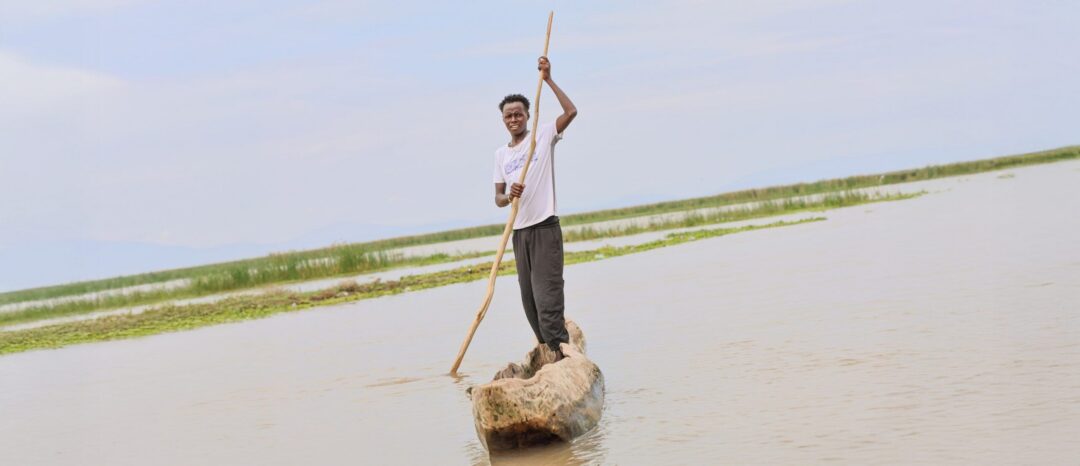
In Dasenech district of South Omo zone in Ethiopia, Flooding from the Omo River has forced communities to relocate. However, for 19-year-old Lisho Kamate and members of his fishing group, the floodwaters also created new, shallow water bodies that offered an unexpected livelihood opportunity. With funding from the European Union and technical support from Food and Agricultural Organisation (FAO), GOAL is strengthening the group's fishing skills, improving product preservation, and building long-term financial security.
Turning Challenges into Opportunities
Communities in Ethiopia’s South Omo Zone frequently face environmental changes that affect traditional livelihoods. In Dasenech district, flooding from the Omo River has displaced households across the region and altered the local landscape. Whilst these environmental changes have brought hardship to families forced to flee their home, it has also created unexpected opportunities, including the chance to develop new skills in fishing.
Lisho Kamate is a 19-year-old living in Guburbur Kebele in Dasenech district, South Omo zone. He leads a local fishing group made up of 25 members. Lisho and his community previously lived in a village called Koro, about 10 kilometres from their current settlement. However, when the nearby Omo River started to flood their village, they were forced to relocate. The flooding brought significant challenges, but it also reshaped the landscape. As the water receded, several shallow lakes were left in its wake. creating new water sources from which they could fish.
In response, the community began to resettle near one of these lakes and began exploring fishing as a new livelihood.
“When we started fishing, everything was difficult,” Lisho explains. “We lacked canoes, fishing nets, and the skills needed to make fishing productive. But we kept trying and continued working together as a group.”
Strengthening Skills and Building Capacity
Although fishing provided an important source of income for their new reality, the group’s lack of resources limited restricted their ability to grow. Without the proper equipment, technical knowledge and access to markets, their progress remained slow.
With support from European Union Humanitarian Aid, delivered through the Food and Agriculture Organisation (FAO), GOAL identified Lisho’s group as a community that would benefit from targeted assistance through its Pastoral Value Chain Intervention. Under this project, GOAL is working with local fishing groups to strengthen livelihoods by providing technical training, improved fishing equipment, and value-chain development.
Mantegaftot Yohanes, a Senior Value Chain Officer with GOAL, explains the support they provided, “We started supporting and strengthening the group through technical training focusing on fishing skills, preserving their product, saving from their income and other basic skills. Considering the needs they have, we are closely working with our donor FAO to provide motor-powered boats, fishing nets, and other materials that support their businesses.”
The training focused not only on fishing techniques but also on practical business skills, including savings and product preservation, helping the community create a long-term, sustainable model to support resilient livelihoods.
Growing a Sustainable Livelihood
Since putting their training into practice, the group has already started to see meaningful change. Members have begun setting aside part of their income into a savings account and using fish-drying techniques to preserve their catch. This not only extends the shelf life of their products but also enables them to sell in larger markets where prices are more stable.
Lisho says these changes have given the group a clearer vision for the future.
“We transitioned from displacement to a potentially sustainable livelihood. We are already saving to buy the materials we need, and we hope GOAL and its funding partner will also support us so that this can grow from a small business into a larger sector.”
With continued support from FAO, GOAL, and local government partners, fishers like Lisho are transforming a challenging situation into a long-term livelihood opportunity. Their goal is not only to provide for their families today, but to build a stronger, more sustainable fishing sector that can benefit the wider community for years to come.
A Broader Impact
GOAL’s approach reflects our strong commitment to localisation. By partnering with communities to understand their immediate priorities and needs, we support locally led solutions that deliver sustainable, long-lasting impact, ensuring that change is driven from within and continues long after GOAL’s interventions end.
