

 Stories
May 11, 2026 • 6 min read
The fall of the Al-Assad regime in December 2024 brought an end to the 14-year conflict. However, the legacy of destruction that marked this crisis continues to shape daily life for millions of people. In Heish town, Idlib, GOAL is supporting returnee families with rehabilitated homes under the European Union SANAD II programme. As part of this initiative, GOAL is supporting women to reclaim safe, dignified spaces for their families.
Life After Conflict
After 14 years of conflict, the fall of the Al-Assad regime in December 2024 marked a turning point in Syria. However, the humanitarian crisis remains severe. While more than 1.9 million internally displaced people have returned to their areas of origin, around 7 million remain unable to return due to destroyed homes, a lack of basic services, and limited recovery resources. Women, especially widows and female-headed households, bear a disproportionate burden, as they are often responsible for caring for children and managing daily household needs in unsafe and inadequate living environments.
GOAL and the European Union
In this context, GOAL, through the EU-funded SANAD II programme, implemented a shelter rehabilitation project in Heish town, Idlib governorate, where 439 houses were identified as requiring moderate repairs. Efforts focused on restoring homes to ensure dignified living conditions, including installing doors and windows; repairing walls and floors; rehabilitating water, sanitation, and electricity systems; and improving internal rooms to reduce overcrowding, in line with family size.
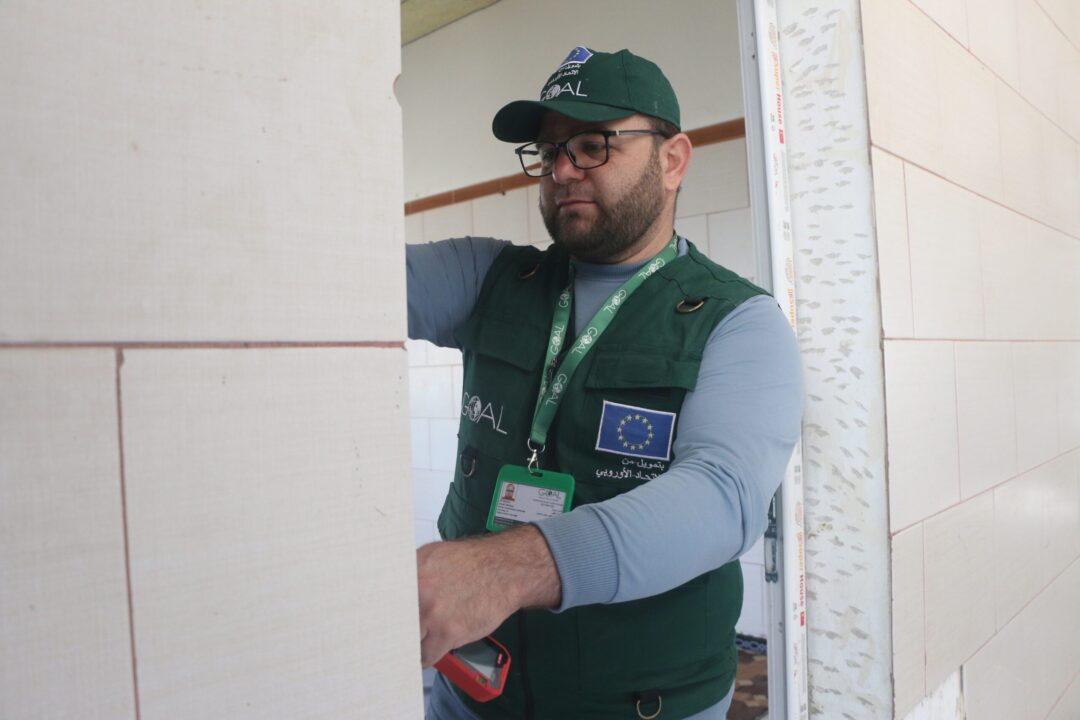
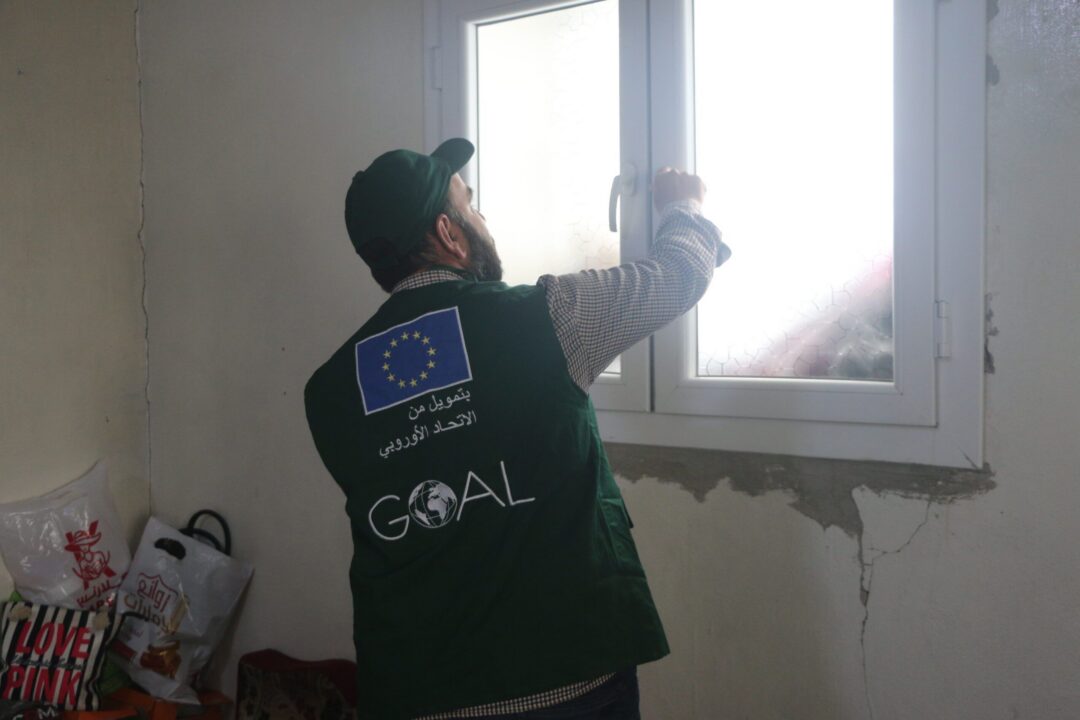
Marwan Al-Bakour, GOAL Rehabilitation Engineer, conducts a routine follow-up visit to a rehabilitated house in Heish, Idlib governorate.
Stability After Years of Displacement
Living in damaged shelters caused continuous psychological stress due to insecurity and unstable conditions. Following rehabilitation, families experienced improved emotional well-being alongside better living conditions.
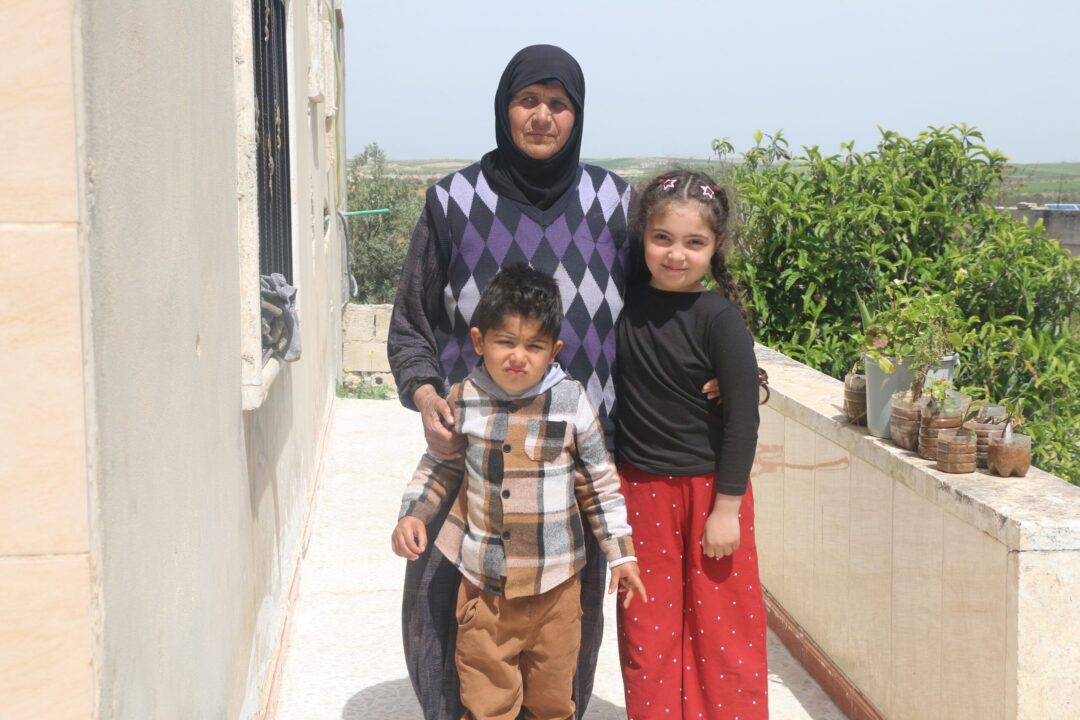
Hayat Abdulmajeed, 73, a widow supporting an extended family, at her rehabilitated home with her grandchildren in Heish town, Idlib governorate.
Accounts from Returnees
After years of displacement, Hayat Abdulmajeed, 73, a widow caring for an extended family, reflects on how the war reshaped her life. She lost a son and two daughters as a result of the conflict. Following the rehabilitation of her home, the family was finally able to return. She says, “We finally feel at ease and have stability. There is no more fear, and having strong doors gives us a strong sense of safety and dignity.”
*The images highlight the transformation before and after the intervention:
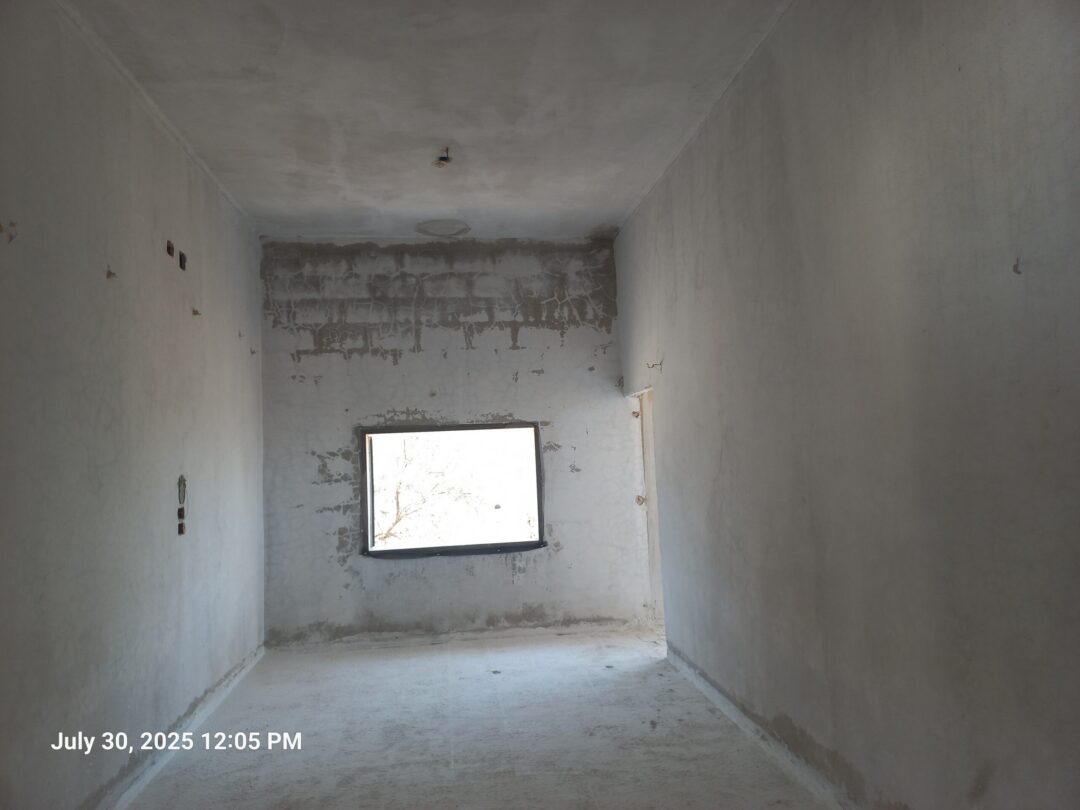
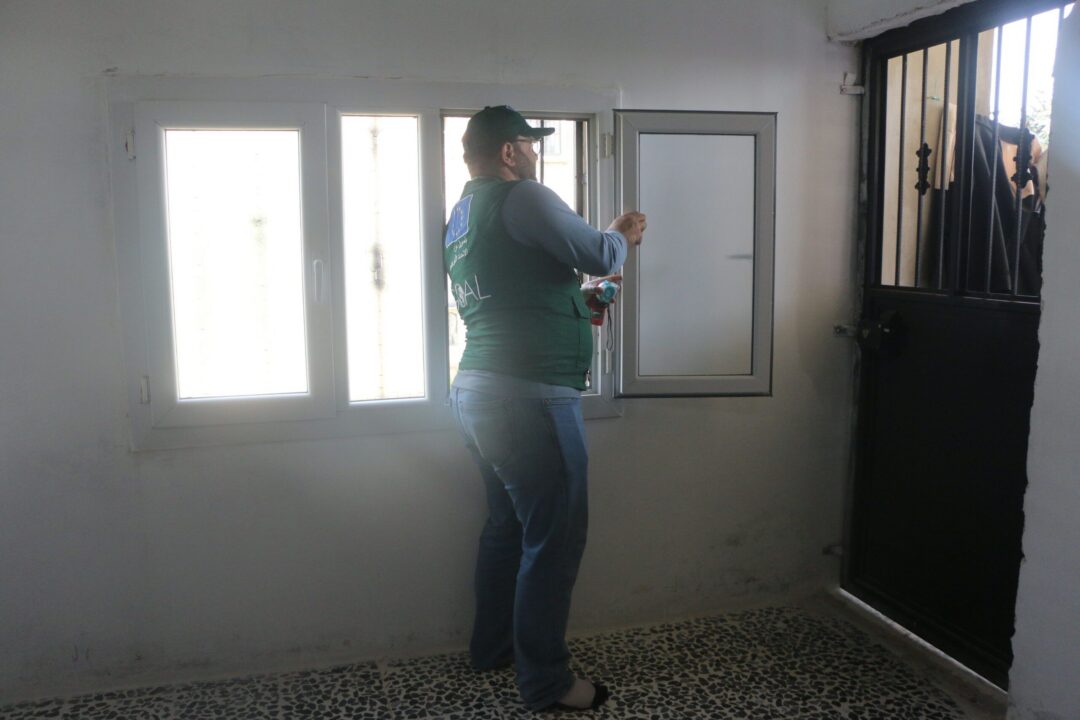
On 30 July 2025, Hayat’s house showed a window without glass, and following room rehabilitation, the space was improved into a restored living area.
Safer Living Conditions
Before the intervention, the absence of proper toilets, sewage systems, and clean water sources exposed families, especially children and the elderly, to daily health and protection risks. Following rehabilitation, sanitation conditions improved through repaired bathrooms, functioning sewage networks, and installed water tanks, significantly enhancing hygiene and protection inside homes.
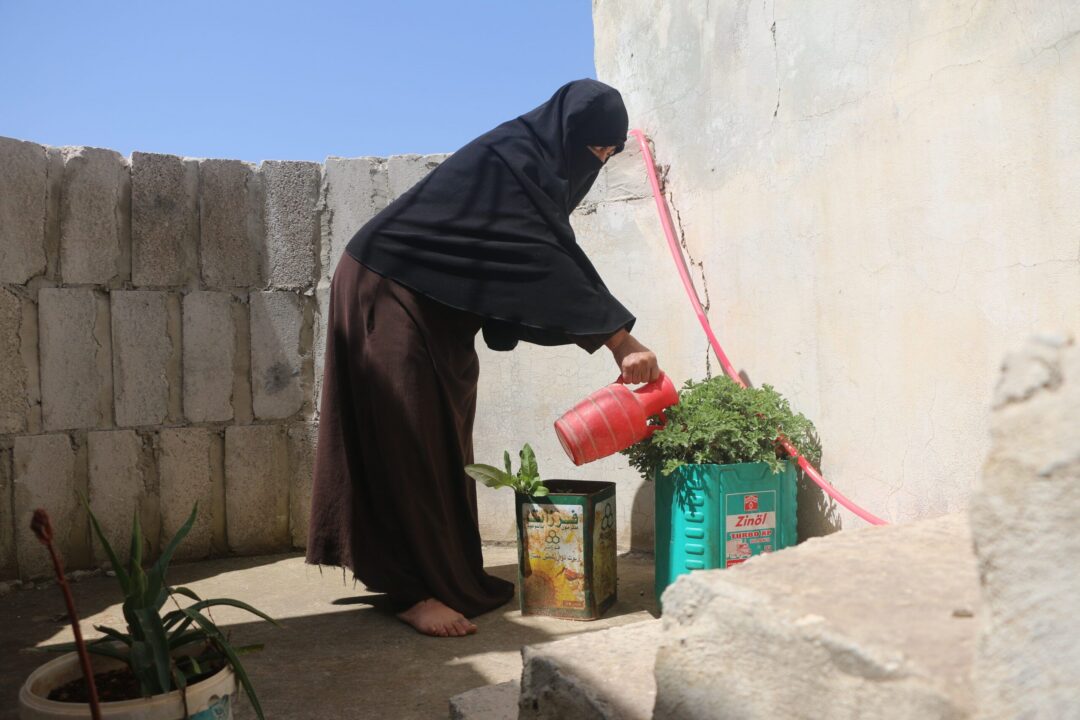
Safaa Al-Saloum, 47, a widow and mother of three, waters her plants outside her rehabilitated home, in Heish town, Idlib governorate.
Safaa Al-Saloum, 47, lived in a house without basic sanitation facilities, making daily life extremely challenging, particularly as chronic illnesses plagued the family and her eldest son, the main provider, suffered a spinal injury. Reflecting on her experience, She said, “I used to wash dishes while sitting on the floor because we had no proper sink, and it was very difficult due to my diabetes and blood pressure. Today, we finally have a proper sink, and we feel much more comfortable.”
Following rehabilitation, living conditions improved significantly with renewed access to water and essential facilities.
*The images highlight the transformation before and after the intervention:
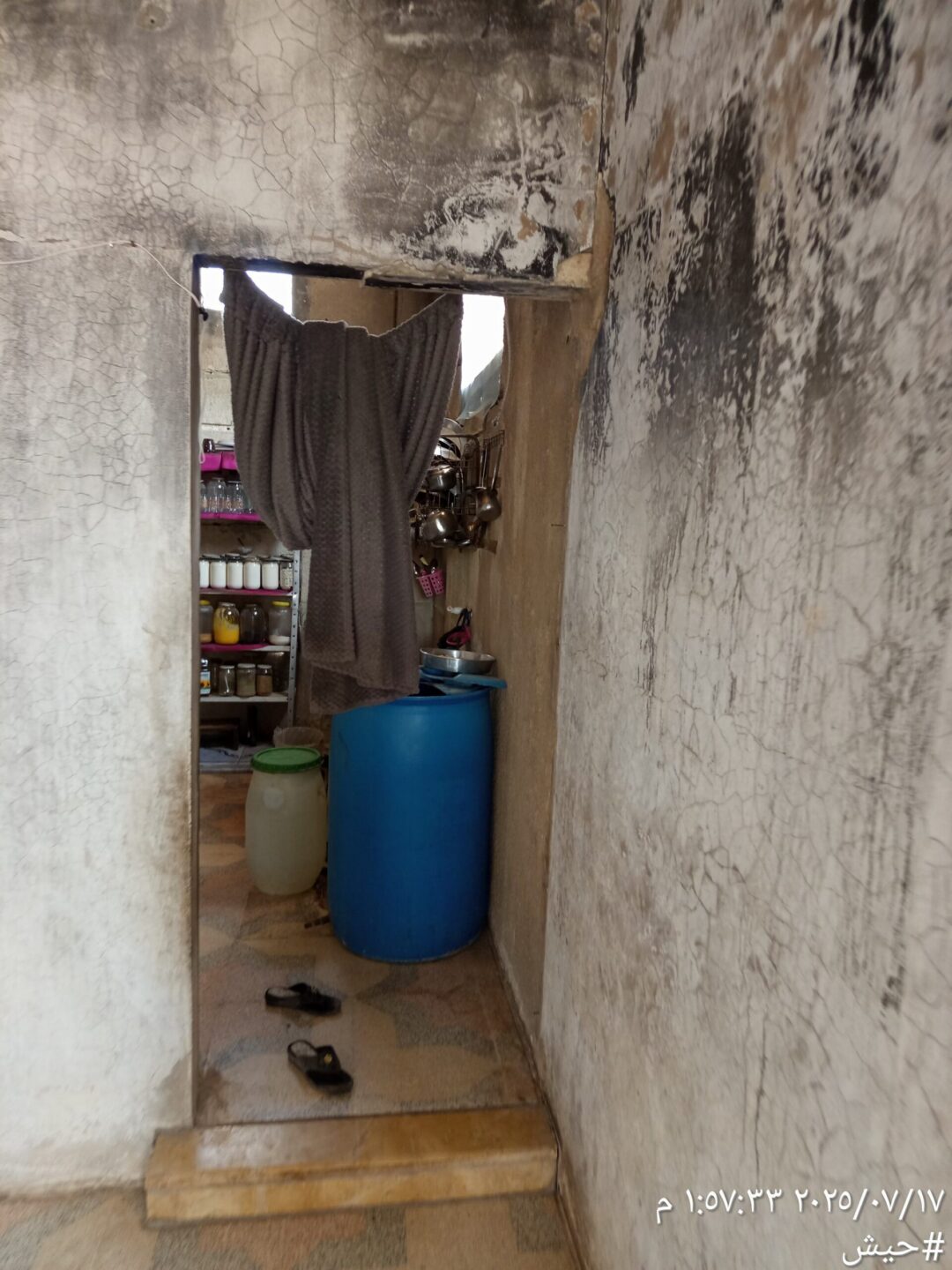
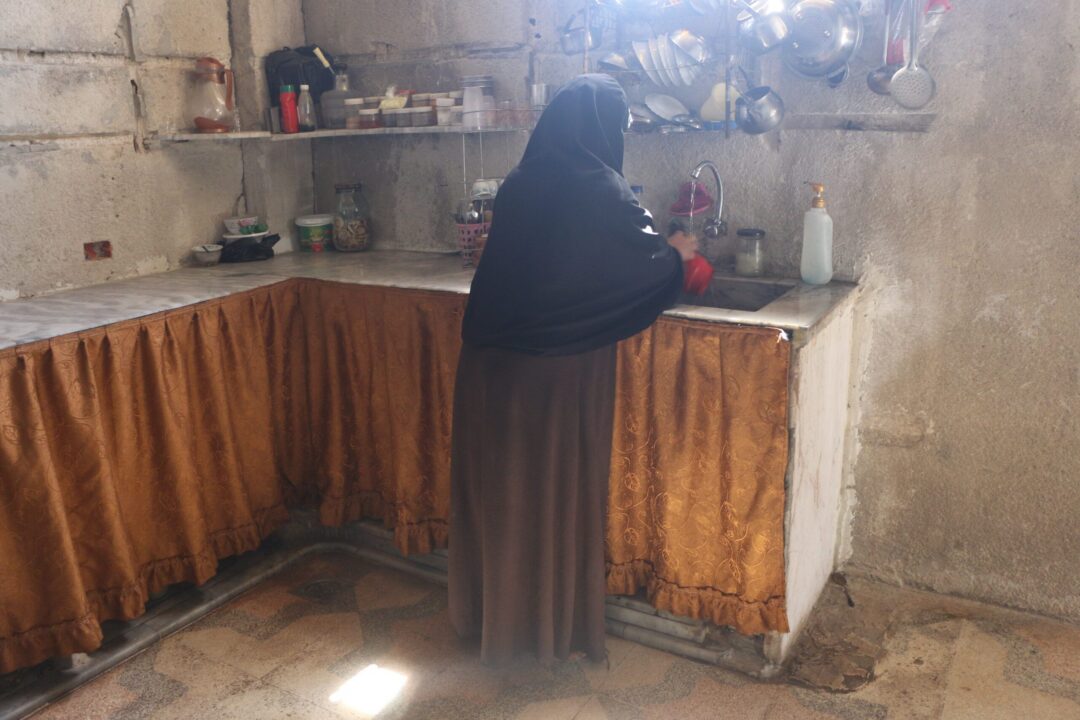
On 17 July 2025, Safaa’s kitchen was old and non-functional, following the installation of a sink and a dedicated dishwashing and cooking station, the kitchen was upgraded into a usable space.
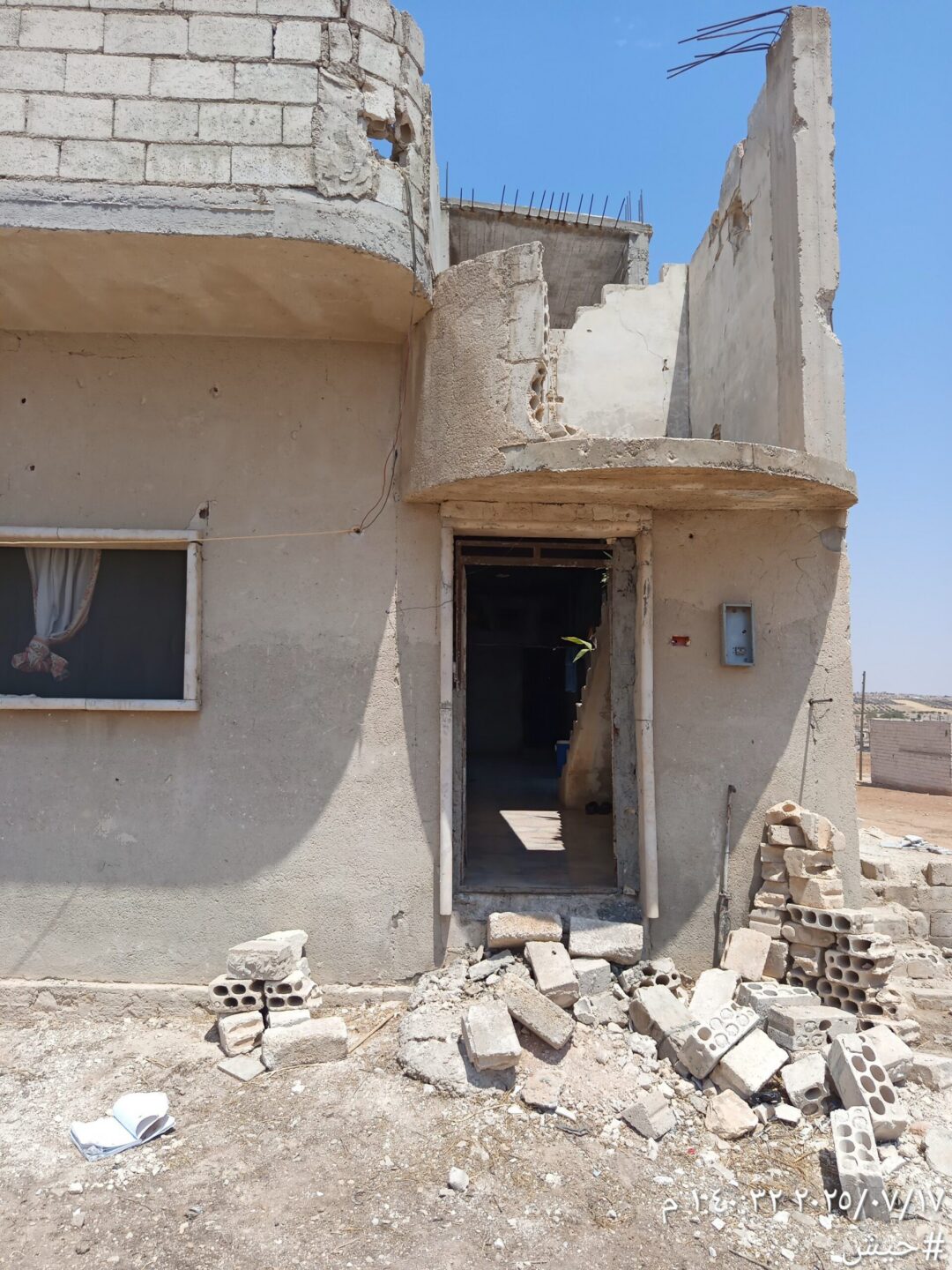
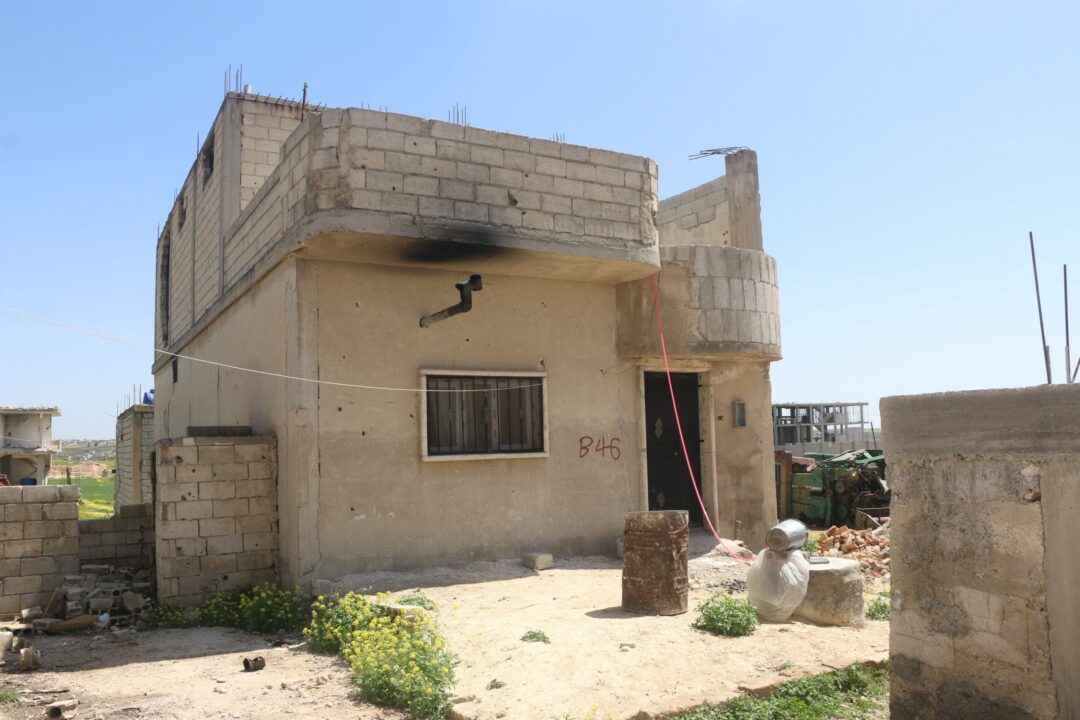
On 17 July 2025, Safaa’s house exterior front was damaged. Following rehabilitation works, the façade was restored.
Restoring Privacy Inside Homes
Many families previously lived in a single room without internal separation, resulting in a complete lack of privacy. The intervention improved internal layouts through repairing and adding rooms, allowing better distribution of space within homes and supporting dignified living standards for families in fragile contexts.
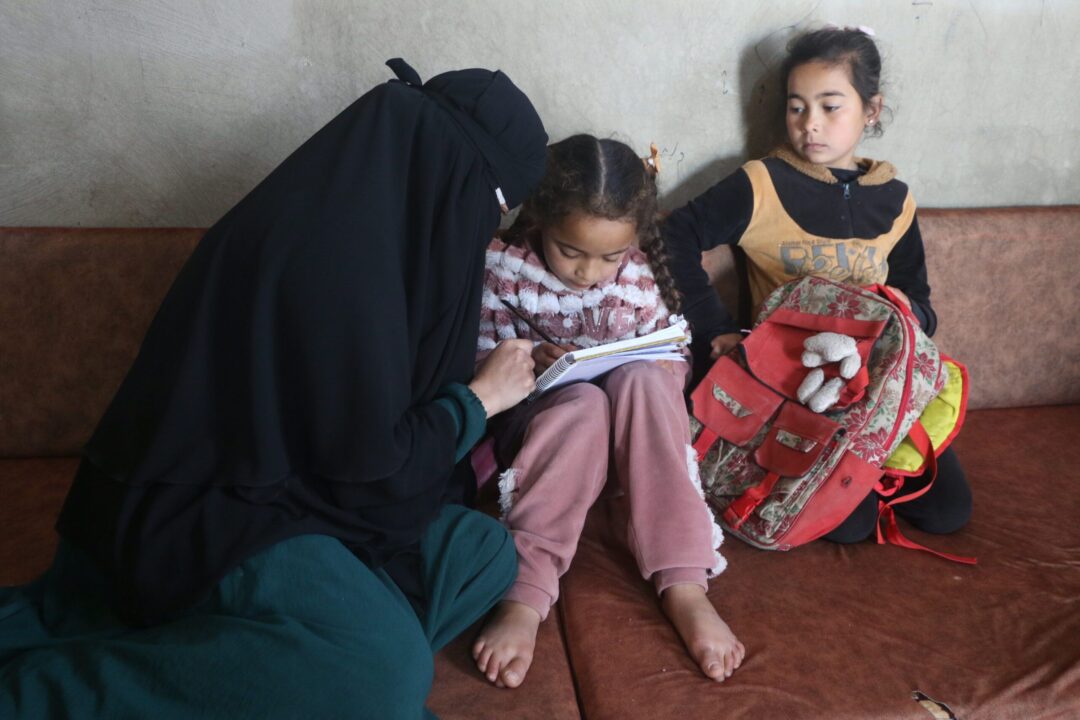
Alifa Suwadi, 28, heads her household, teaches her daughters in their rehabilitated home in Heish town, Idlib governorate.
Alifa now supports a household of six after losing both parents. Previously, the household was confined to living in a single damaged room. Following rehabilitation, the family received three rooms. Reflecting on the impact this has had on her family, she said, “We now have more than one room instead of just one, and our home has changed a lot. We also feel more protected, and this has helped the children in playing and studying.”
*The images highlight the transformation before and after the intervention:
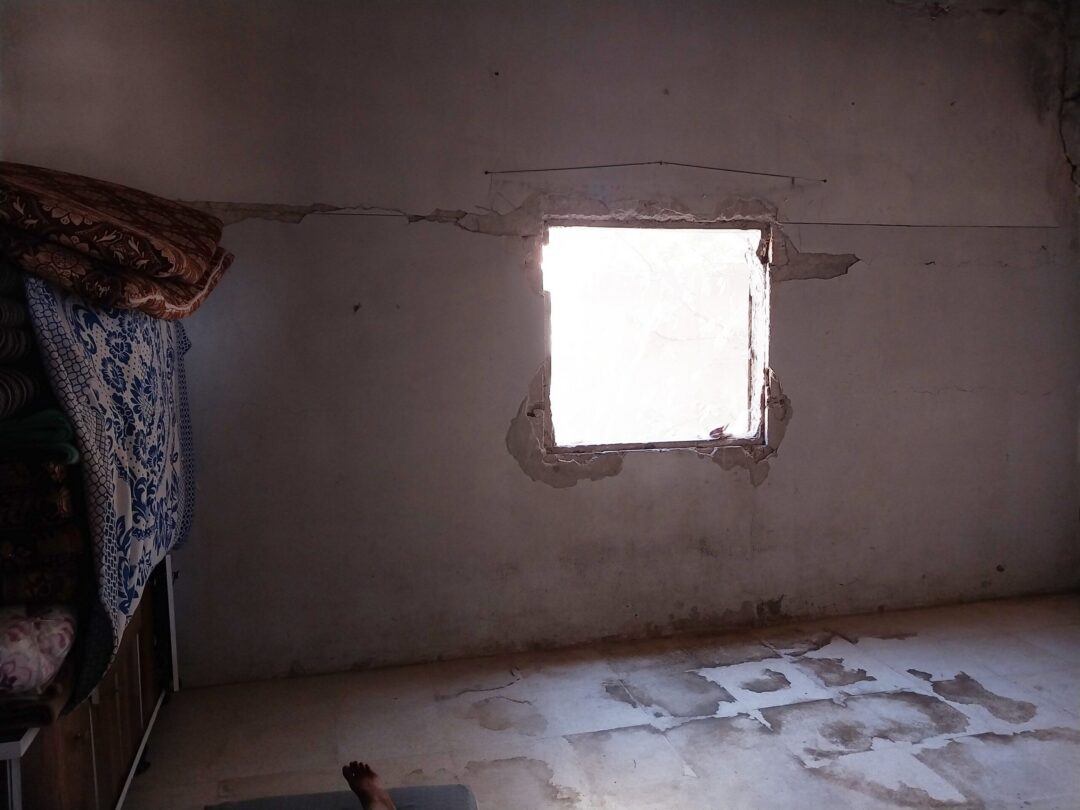
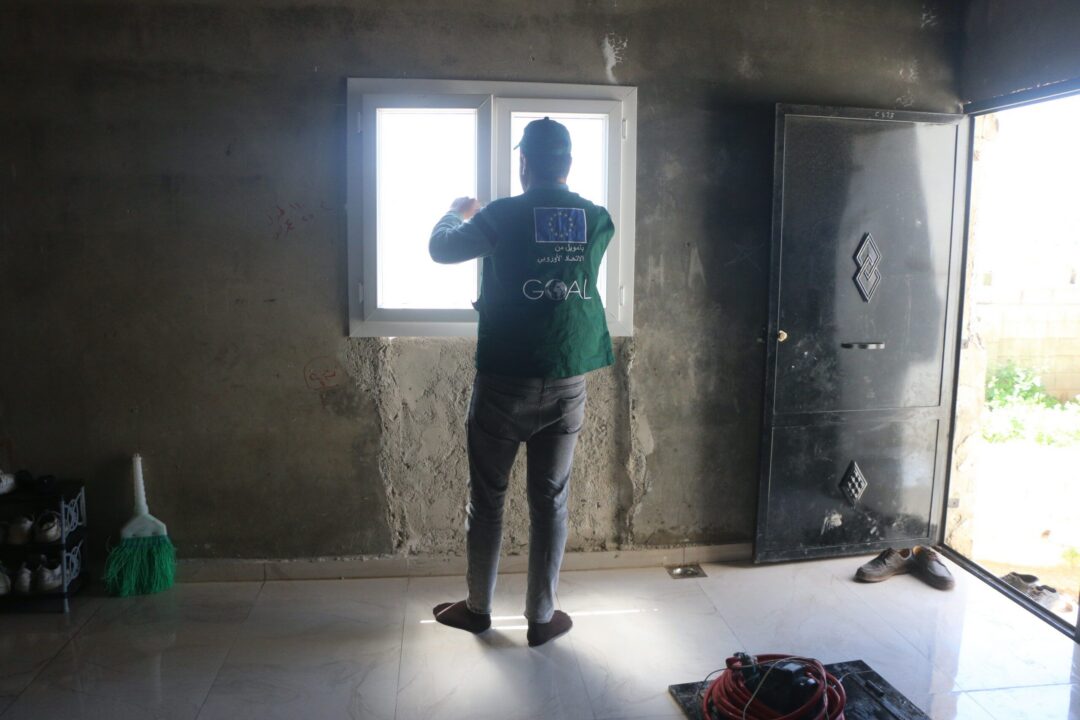
On 3 August 2025, Alifa’s house showed a window without glass, and following room rehabilitation, the space was improved into a restored room.
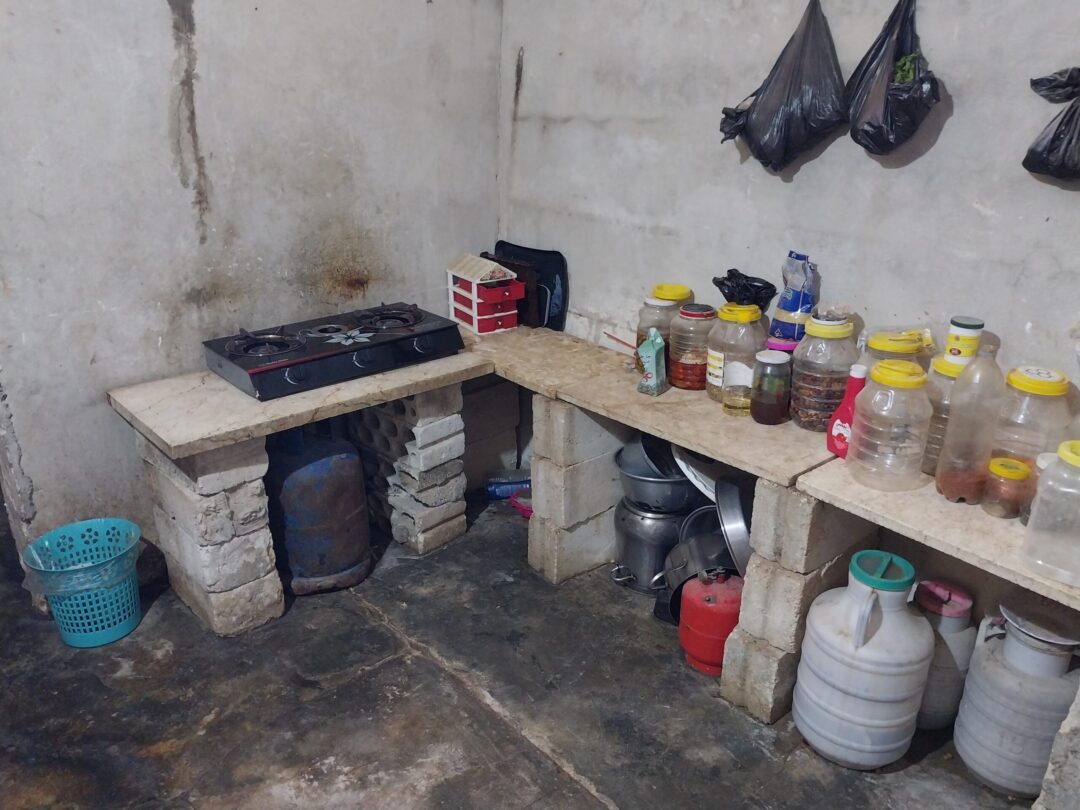
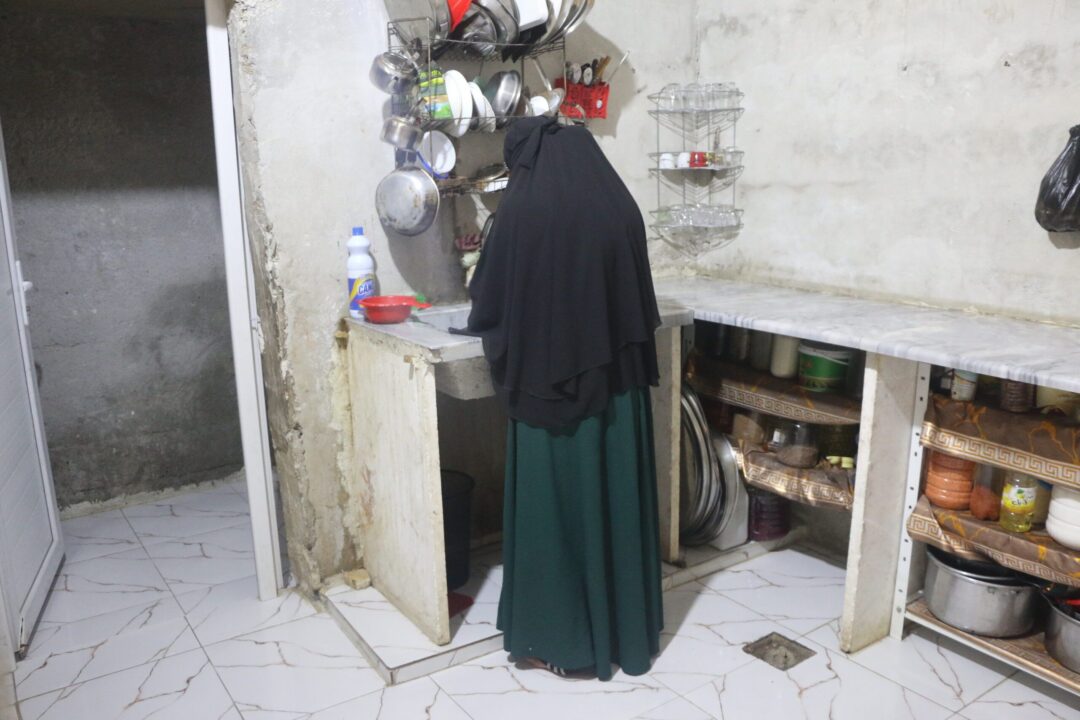
On 3 August 2025, Alifa’s kitchen was in an old condition, and following rehabilitation with the installation of a sink and cooking station, it was upgraded into a functional kitchen.
Safer and More Secure Homes
The absence of doors and windows previously left homes exposed and unsafe to live in. The project restored basic protection by installing doors and windows, adding protective steel bars, and repairing damaged structures.
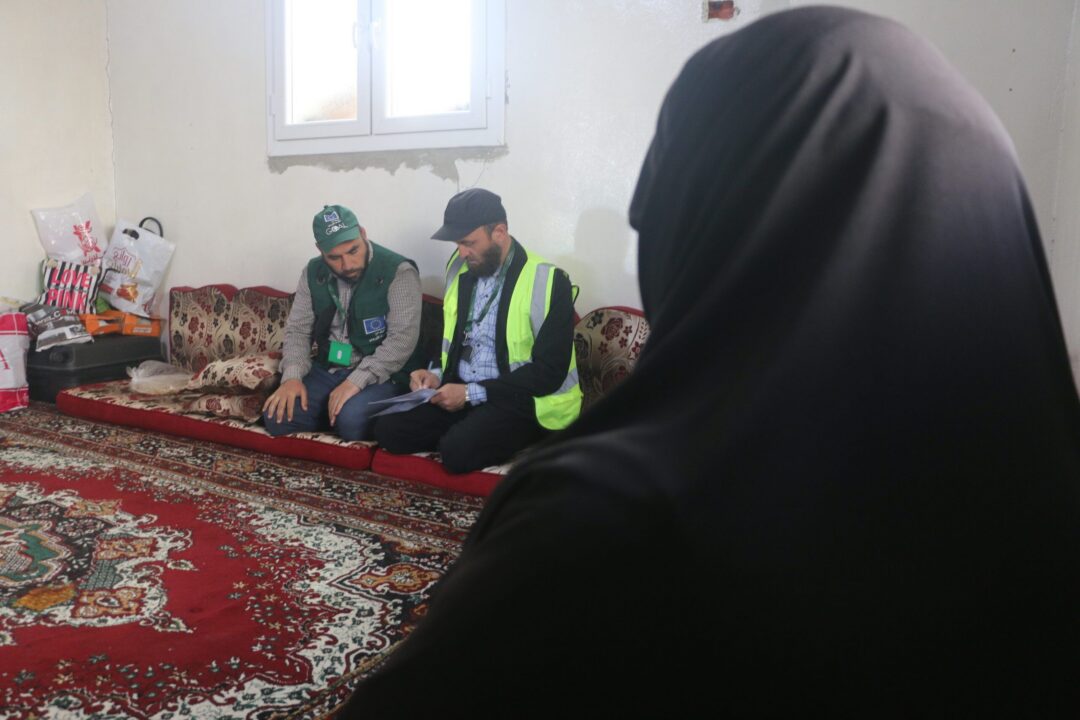
Mahmoud Isteaf, GOAL Rehabilitation Engineer, and Qutaiba Alrahmoun, GOAL Rehabilitation Assistant, meeting with Sabrieh Al-Yasin, a 45-year-old widow and mother of five orphaned children, inside her rehabilitated home in Heish town, Idlib governorate.
Sabrieh lived in a house without doors or windows, which created constant fear for her children. Following the rehabilitation, the home became secure. She shared,
“Everything in our home has changed. Our life is completely different now, and we feel stable and at peace.”
*The images highlight the transformation before and after the intervention:
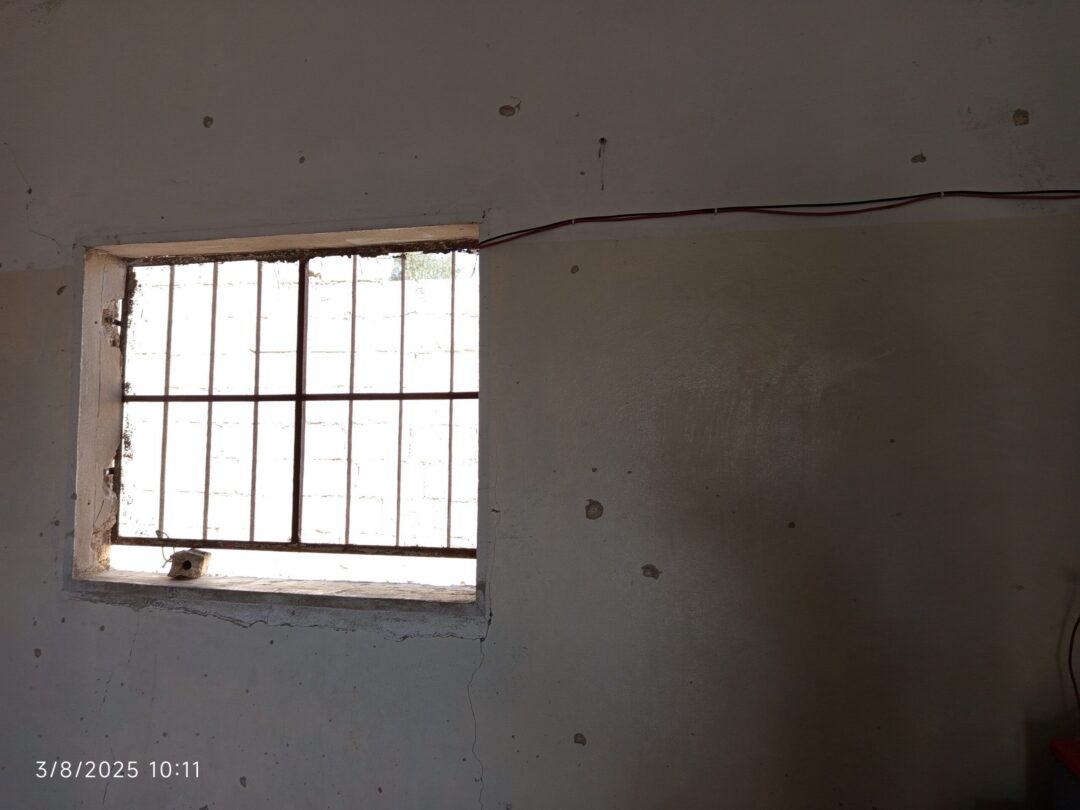
On 3 August 2025, Sabrieh’s living room showed a window without glass, and following rehabilitation works, the room was restored into a usable living space.
Ongoing Need
Despite the intervention, the need for shelter rehabilitation in Syria remains extensive, with thousands of families still living in damaged or uninhabitable homes, lacking basic services and facing overcrowding and infrastructure gaps. Continued support to shelter programmes remains critical for supporting long-term recovery and stability.
Shelter rehabilitation is not only about repairing structures, but also about improving health conditions, restoring privacy, ensuring safety, and rebuilding psychological well-being, ultimately contributing to family stability and quality of life.
About EU Civil Protection and Humanitarian Aid
The European Union and its Member States are the world’s leading donor of humanitarian aid. Relief assistance is an expression of European solidarity with people in need all around the world. It aims to save lives, prevent and alleviate human suffering, and safeguard the integrity and human dignity of populations affected by natural disasters and man-made crises.
Through its Civil Protection and Humanitarian Aid Operations department, the European Union helps millions of victims of conflict and disasters every year. With headquarters in Brussels and a global network of field offices, the European Union provides assistance to the most vulnerable people on the basis of humanitarian needs.