

 Stories
April 17, 2026 • 3 min read
In Twic County, South Sudan, worsening floods and droughts have repeatedly destroyed sorghum crops, deepening food insecurity and leaving many households dependent on aid. In response, GOAL, with support from Irish Aid, has worked alongside communities to transform flood-prone lowlands into productive rice fields, enable farmers to adapt climate-resilient practices and shift from humanitarian dependence to sustainable agricultural livelihoods.
Climate Pressures and Traditional Livelihoods
For generations, communities in Twic, South Sudan, have depended on two main pillars for survival, livestock as a form of income and sorghum, a popular drought-resistant grain, used for both household consumption and animal feed. However, shifting climate patterns have made this way of life increasingly fragile. Extreme weather conditions have reshaped the region, with 60-70% of lowlands experiencing seasonal flooding, followed by severe drought once the waters recede.
Although the soil remains fertile and retains moisture from much of the year, sorghum production often fails, either destroyed by floods or lost to drought. As a result, many households have depended heavily on humanitarian assistance to meet their basic food needs.
A Growing Harvest and Growing Hope
Recognising the urgent need for a more sustainable solution, GOAL, with the support of Irish Aid and in collaboration with local government authorities, introduced a pilot rice-farming initiative three years ago. At the time, the idea was unfamiliar and widely doubted.
Adongwei Aguer, a local resident and mother of seven, remembers how the community initially reacted to the pilot, “At first, some people in our village didn’t understand why we chose to attend GOAL’s skills training when other organisations were providing cash or in-kind support. They questioned why we were investing our time. We believed in the long-term value of learning, so we continued to attend and build our skills.”
The move from sorghum to rice production proved challenging for many farmers, who were unfamiliar with the significant changes in farming practices required to cultivate the new crop. With consistent support from GOAL, local government extension workers, and strong commitment from the community, the training quickly became embedded in the community’s practice.
“Traditionally, they were sorghum farmers,” explains Jackson Yaac, Director of Agriculture in Twic county. “So, GOAL and our office worked closely with them at every stage, providing technical guidance, tools, and improved seeds, to ensure the transition was effective.”
The community quickly began to see the improvements. In their first farming season, one group harvested 12 bags of rice, enough to demonstrate that rice could genuinely support household food security. By the 2024 season, following refresher training and lessons learned from earlier harvests, production increased dramatically. The group harvested 75 bags of rice after carefully managing the entire farming cycle from land preparation to harvesting.
“We are very excited,” says Agoth Malith, another local resident. “Especially this year, when most organisations that used to give us cash and in-kind support left. We are still here with the knowledge and skills we gained from GOAL. Now, those who laughed at us are asking for seeds and requesting that we teach them how to start rice farming.
Planting Seeds of Change
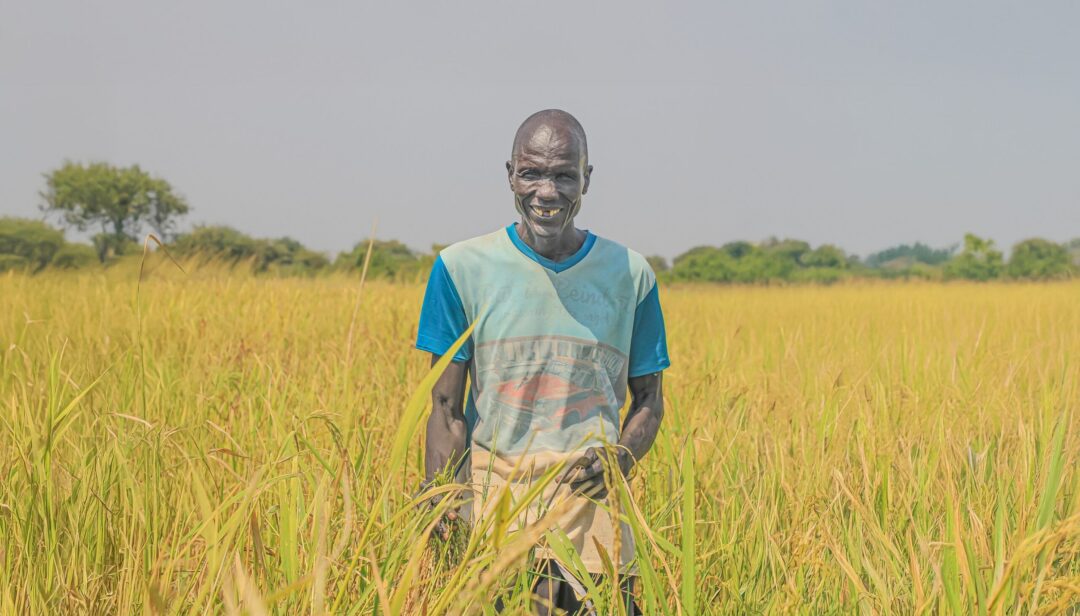
What began as a small pilot is now becoming a powerful driver of change. Rice plots are expanding across the county, and more households are adopting the practice. Communities that once relied almost entirely on humanitarian assistance are now producing food for themselves and even generating surplus.
“We are deeply grateful for the generous support of Irish Aid, which made this pilot possible,” says Alfred Shitemi, GOAL Greater Gogrial Area Programme Operations Coordinator. “Previously, our main concern was whether families could produce enough food to last year. Now, our concern has shifted to market access and networking because they are producing surplus. This year alone, they are expecting more than 100 bags of rice. We hope our collaboration with Irish Aid will continue so we can expand this initiative at scale with relatively modest investment.”
Building Climate Ready Livelihoods
In Twic, rice farming is no longer just a pilot project but a path to resilience, driven by farmers who chose to believe in a different future despite the obstacles. Through adaptive response measures, GOAL is equipping communities in Twic County with the skills and knowledge needed to navigate rapidly changing environments, helping to build resilient, sustainable livelihoods that will endure long after GOAL’s interventions.
