

 Stories
April 29, 2026 • 3 min read
Across South Sudan, access to basic healthcare remains a daily challenge for many families, particularly women and children living in remote and conflict‑affected areas. With preventable illnesses and gaps in maternal care continuing to place lives at risk, reliable community‑based health services are essential. Through support from European Union, GOAL, alongside consortium partners, Save the Children, is helping ensure communities in Abyei can access timely, lifesaving care.
Limited Healthcare Access
Across South Sudan, years of conflict, displacement, weak infrastructure, and recurring disease outbreaks continue to limit access to essential healthcare, particularly for women and children. Long distances to facilities, shortages of medicines and trained staff, and ongoing insecurity mean that many families delay or entirely miss lifesaving treatment. In remote and fragile areas such as Abyei, preventable illnesses like malaria remain a leading cause of illness, while gaps in maternal healthcare place pregnant women at heightened risk.
The Need for Reliable, Community-Based Health Services
For women of reproductive age, access to timely diagnosis, treatment, and antenatal care is critical, not only for their own health, but also for the survival and wellbeing of their children. Consistent, trusted primary healthcare services allow families to seek care early, manage common illnesses, and receive preventive support throughout pregnancy, helping reduce avoidable complications in some of the country’s most vulnerable communities.
In this context, GOAL, with support from the European Union and consortium partners, Save the Children, is supporting the delivery of essential healthcare services such as Agok Primary Health Care Centre (PHCC) in Abyei. The programme strengthens services for mothers, children, and vulnerable households by ensuring access to treatment for common diseases, antenatal care, preventive medicines, and qualified medical staff, helping communities access care closer to home when they need it most.
Adior’s Story
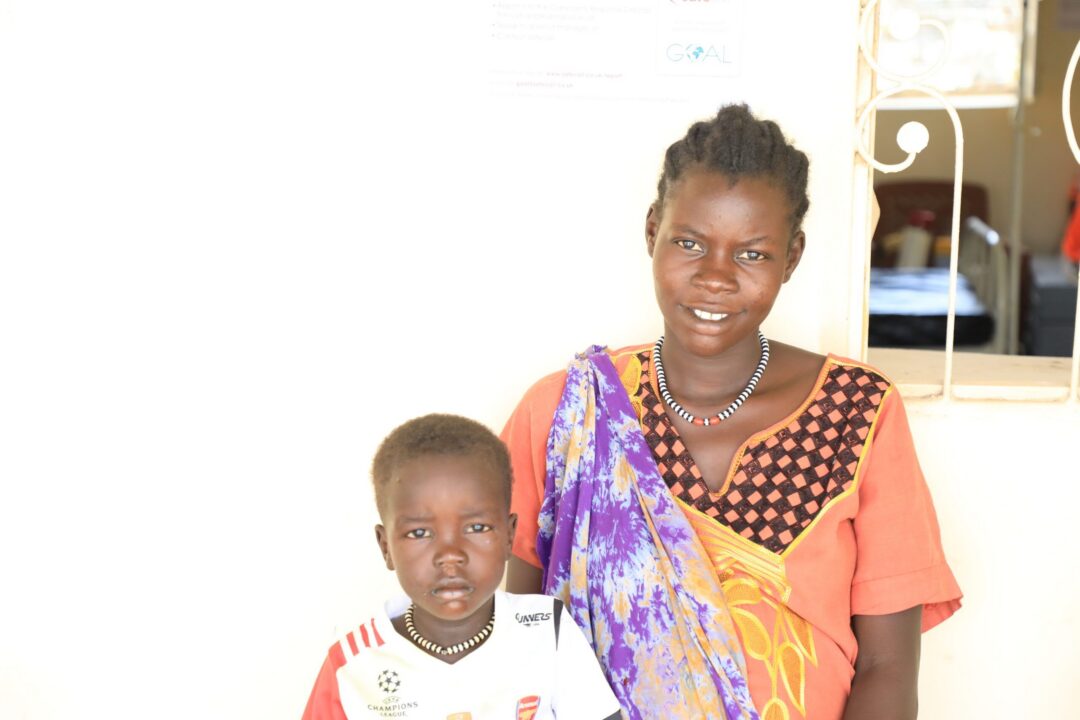
For 21‑year‑old Adior Magok, Agok, PHCC has become a vital place of reassurance during an important stage of her life.
Adior first came to the facility feeling unwell. After assessment by medical staff, she was diagnosed with malaria. During the consultation, health workers also confirmed that she was pregnant.
“I was given medicine, and after taking it I started to feel a real change in my body,” she said. “I felt relief quickly.”
When Adior brought her young son to the facility, he was examined and diagnosed with malaria, alongside an eye infection. He received treatment and the necessary medication, ensuring both mother and child were cared for at the same time.
Since that first visit, Adior has continued returning to Agok PHCC for regular antenatal check‑ups and preventive medicines recommended for pregnant women. Access to timely care has encouraged her to stay engaged with health services throughout her pregnancy.
“I keep coming back because I receive treatment quickly, and you feel relief soon after,” she explained. “I encourage other women to keep coming for check‑ups as well.”
Manyuon Deng, Facility In‑Charge at Agok PHCC, emphasised the impact of this support on daily service delivery.
“With ECHO support, we have been able to provide consistent healthcare services to mothers, children, and vulnerable families,” he said. “This support has strengthened our capacity and helped many people access treatment on time.”
Partnership for Progress
Through this partnership, women like Adior are not only receiving lifesaving care, but also building trust in local health service. They are helping protect their own health and the wellbeing of their children during key stages of life.
