

 Blogs
Blogs
April 30, 2026 • 4 min read
Launched in May 2025, GOAL’s European Union (EU)-funded SANAD II project has built on GOAL’s long-standing presence and strong community support to deliver timely, coordinated, and lifesaving assistance to conflict- and disaster-affected populations across Syria.
At a time when humanitarian needs remain critical, driven by prolonged displacement, economic hardship, and fragile infrastructure, SANAD II provides essential support through Multi-Purpose Cash Assistance (MPCA), Water, Sanitation and Hygiene (WASH), shelter interventions, and emergency response mechanisms, targeting people and prioritising the most vulnerable households.
This is the story of the need and impact of the EU-funded GOAL programme in Syria, as told by GOAL Syria Communications team member Abdulrahman Kayali and external photographer Mohammad Aleido.
Restoring Dignity and Meeting Urgent Needs Across Syria
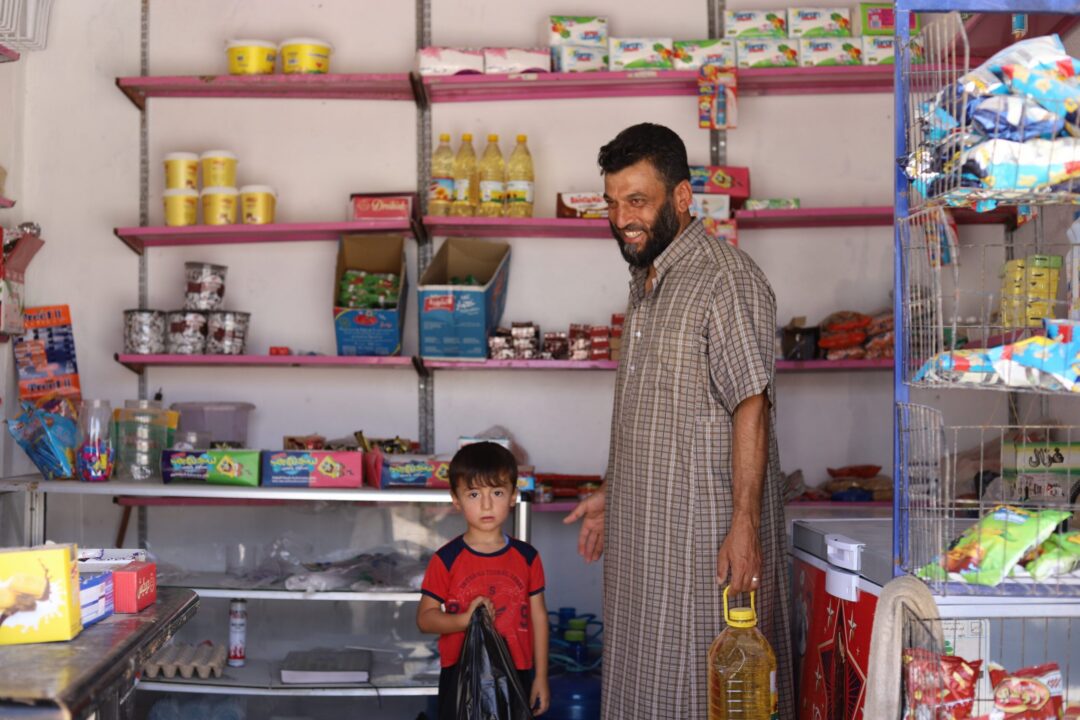
GOAL Syria. Photograph by Abulrahman Kayali.
“Thank God, we were able to cover most of our basic needs, especially food, which is the most important thing for a family with many young children. It helped us greatly given the high prices.”
— Ahmed Al-Ibrahim, 45, Idlib governorate.
Through the EU-funded SANAD II programme, Ahmed and his family received cash assistance from GOAL, offering a vital lifeline to help them meet urgent needs and regain some sense of stability. In total, people were supported through
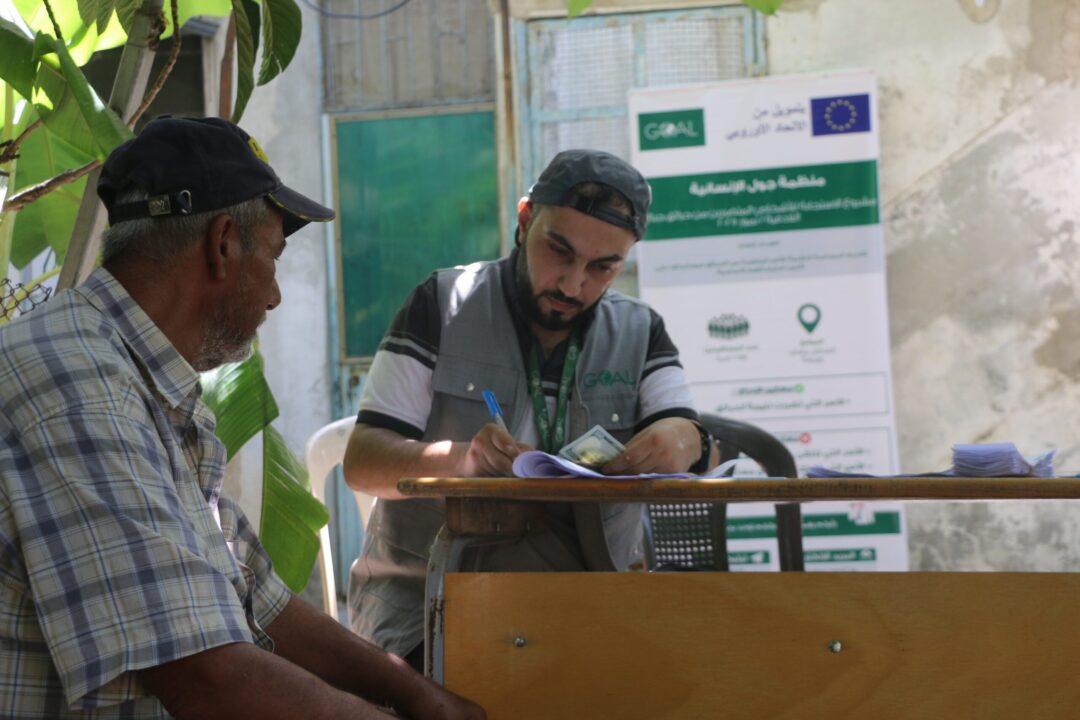
GOAL Syria. Photograph by Mohammad Aleido.
In response to Lattakia Governorate wildfires in July 2025, GOALies addressed the urgent needs of 1,675 affected households through a dual response approach: providing multi-purpose cash assistance and rehabilitating critical water and sanitation infrastructure.
Restoring Access to Clean Water
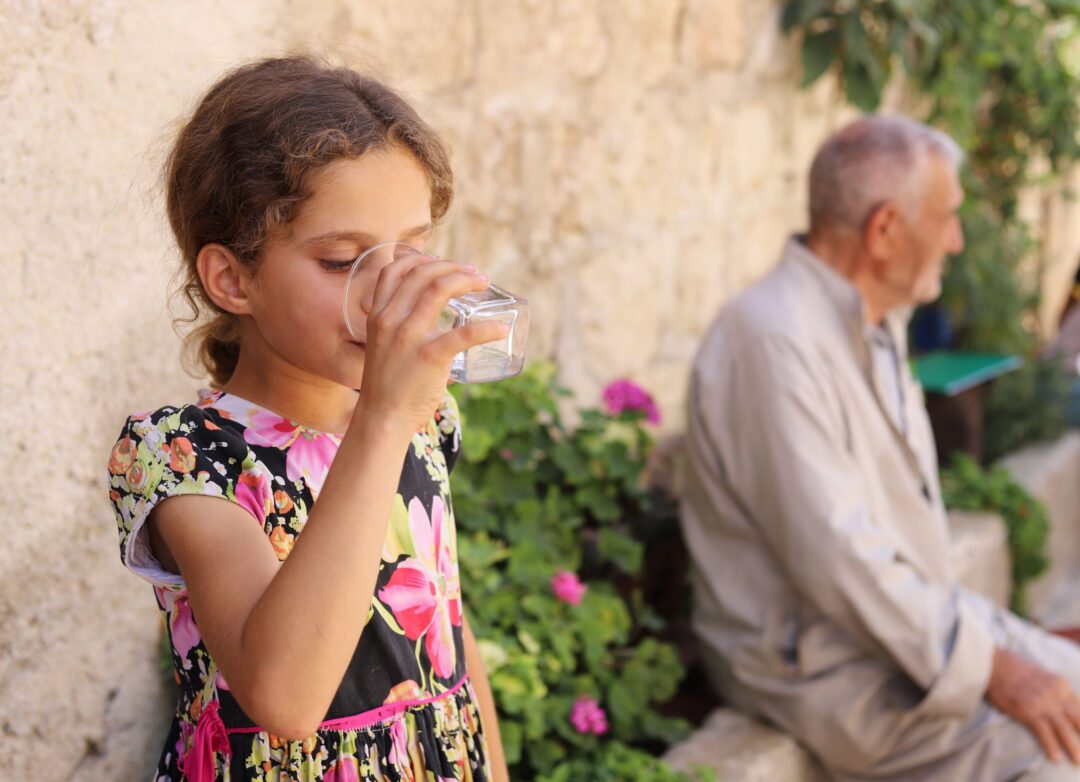
GOAL Syria. Photograph by Abulrahman Kayali.
“Today, water reaches our homes every two days, enough to fill our tanks. It is clean, sterilised and monitored. We feel reassured about the health of our children.”
— Mohammad Ismail, 85, Aleppo governorate.
After GOAL began supporting water stations in Urem Al-Kubra, Aleppo governorate, the struggle of accessing water changed, networks were rehabilitated, and fuel was supplied to power the stations serving 8,100 people.
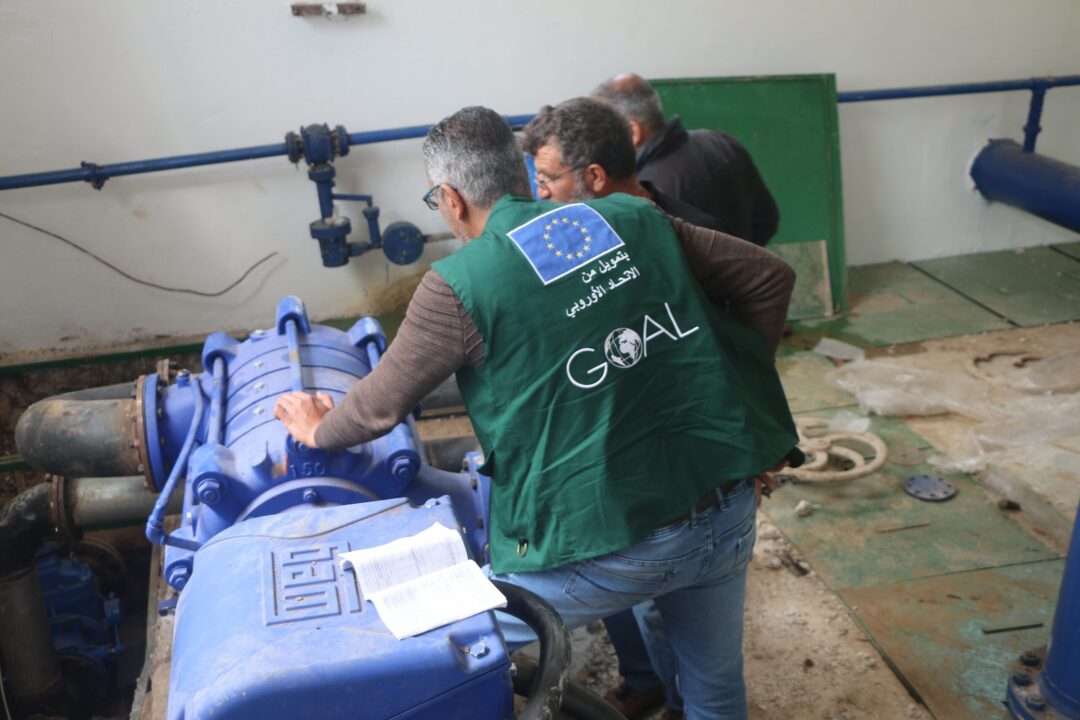
GOAL Syria. Photograph by Mohammad Aleido.
“Our main objective is to help displaced families return to their homes with dignity.”
— GOAL WASH Mechanical Engineer Ali Al-Jasem, Idlib governorate.
In Jabal Al-Zawiya, Idlib governorate, GOAL’s WASH teams are restoring access to safe water by rehabilitating five key pumping stations, including the Al-Laj and Second Wells stations, alongside critical civil works and solar-powered systems. These interventions will support more than 33 villages, helping ensure reliable access to clean drinking water for returning families.
Building Safer Homes for Displaced Families
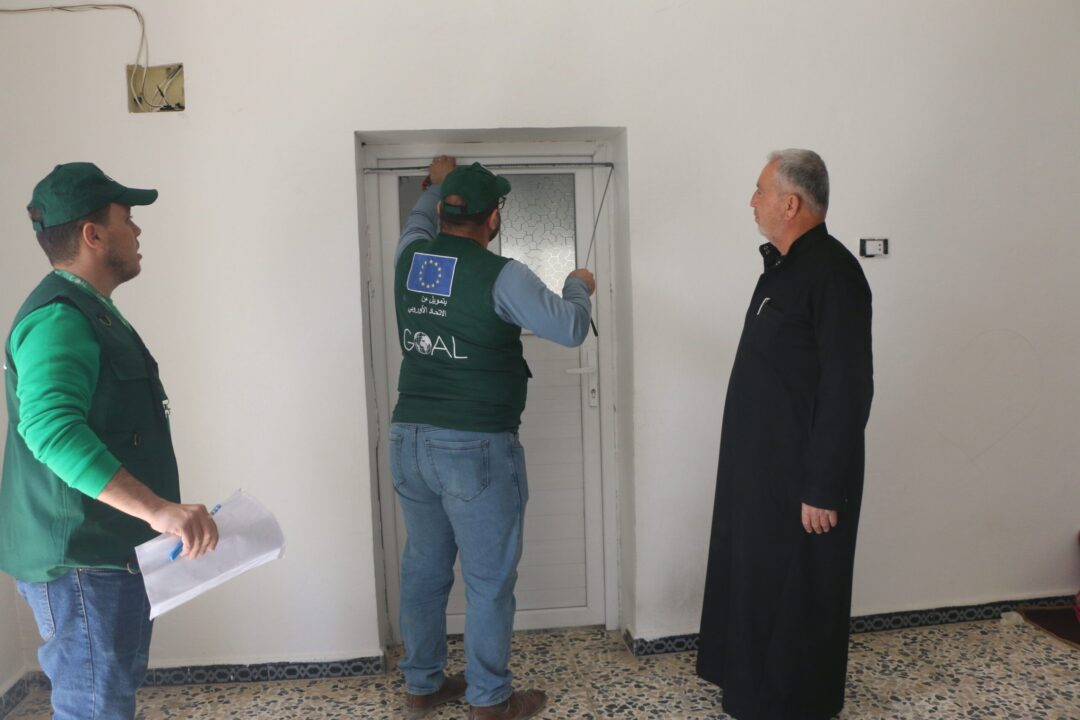
GOAL Syria. Photograph by Mohammad Aleido.
“The aim is to provide safe shelter that protects families from harsh weather conditions and environmental factors.”
— Marwan Al-Bakour, GOAL Rehabilitation Engineer, Idlib governorate.
In Heish town, Idlib governorate, GOAL’s shelter teams are rehabilitating 439 conflict-damaged homes to support returning families in rebuilding safe living conditions. The work addresses both moderate and heavy damage, including structural repairs, wall reconstruction, and installation of essential protective elements to ensure durability and safety.
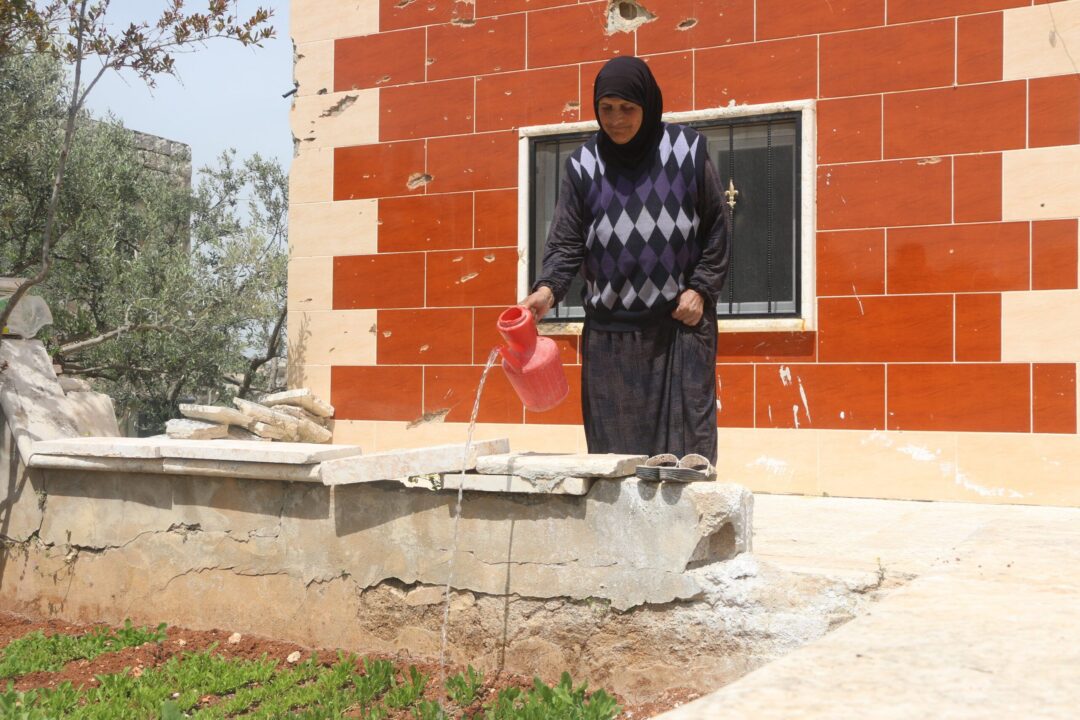
GOAL Syria. Photograph by Mohammad Aleido.
“We finally feel at ease and have stability. There is no more fear, and having strong doors gives us a strong sense of safety.”
— Hayat Abdulmajeed, 73, Heish town, Idlib governorate.
Dignified shelter has given vulnerable people, especially the elderly, the safety and privacy denied to them for years in temporary camps.
Response to Flood
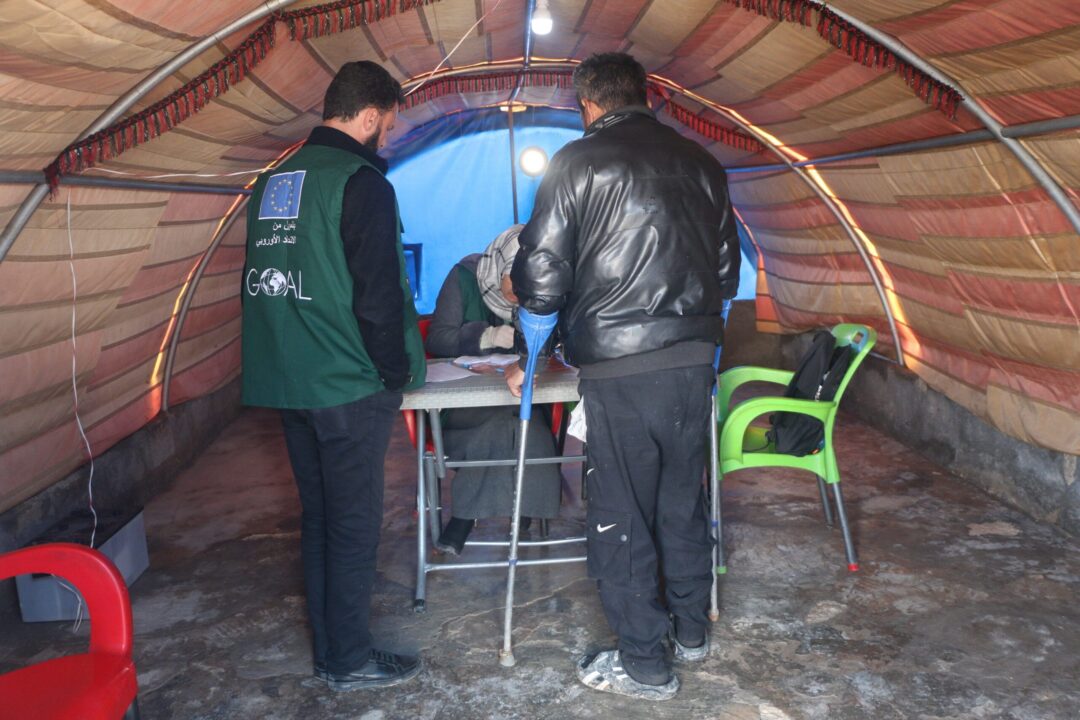
GOAL Syria. Photograph by Abulrahman Kayali.
Severe storms struck the Aleppo and Idlib governorates on 30–31 December 2025, bringing heavy rain and snow that caused widespread flooding. Tents and informal structures across camps were damaged, leaving many families without safe living conditions and forcing them to endure yet another shock amid ongoing hardship.
To help families affected by severe weather conditions to meet their urgent basic needs, GOAL launched diversified responses, reaching ,977 households in Idlib and Aleppo governorates, with a total of $569,850 (approximately €509,922), equivalent to $150 per households.
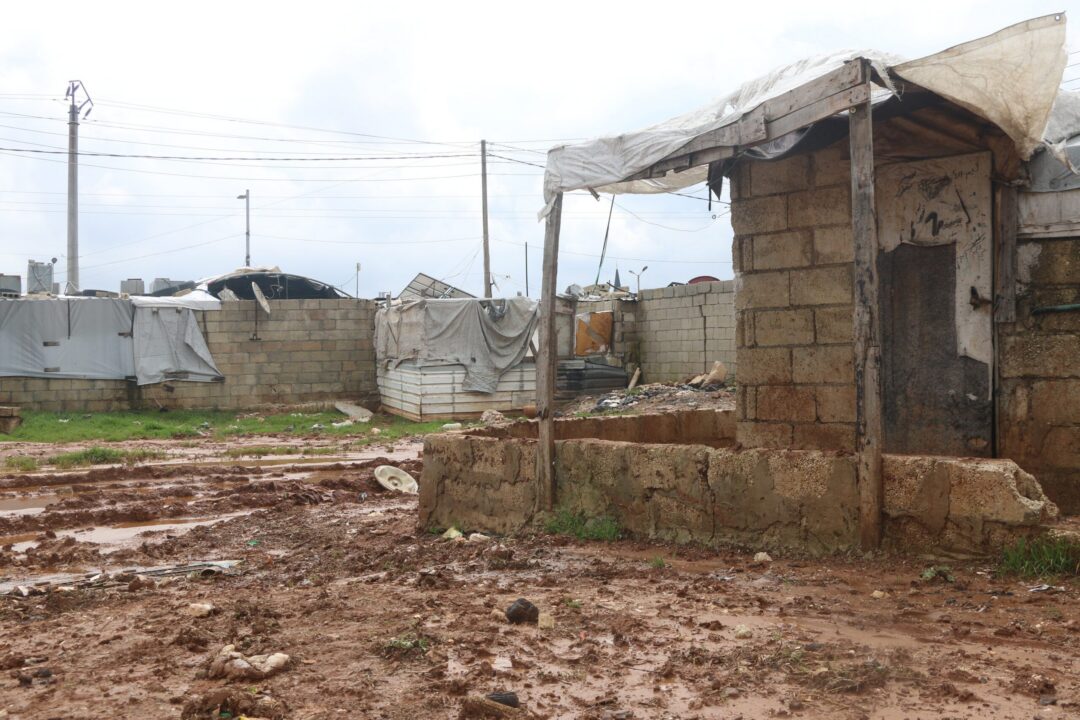
GOAL Syria. Photograph by Mohammad Aleido.
Flooding has compounded already difficult conditions in Al-Aramel and Al-Jisr camps in Azaz, Aleppo Governorate. Unpaved roads have turned to mud, and weak infrastructure has been overwhelmed, disrupting access to shelters and essential services for displaced families.
As displacement continues and vulnerabilities deepen, sustained humanitarian support remains essential to help families survive and rebuild.
Looking Ahead
Despite over a decade of conflict and ongoing humanitarian needs, SANAD II has strengthened local systems and community capacities alongside delivering urgent assistance. By supporting essential services such as water infrastructure, shelter rehabilitation, and emergency coordination, the programme has helped build more resilient, community-based systems that can better sustain services and respond to future shocks.
About EU Civil Protection and Humanitarian Aid
The European Union and its Member States are the world’s leading donor of humanitarian aid. Relief assistance is an expression of European solidarity with people in need all around the world. It aims to save lives, prevent and alleviate human suffering, and safeguard the integrity and human dignity of populations affected by natural disasters and man-made crises.
Through its Civil Protection and Humanitarian Aid Operations department, the European Union helps millions of victims of conflict and disasters every year. With headquarters in Brussels and a global network of field offices, the European Union provides assistance to the most vulnerable people on the basis of humanitarian needs.